 NL·0412
Herbarium of the Nature Library
- Name
- Dendrobates tinctorius
- Family
- Dendrobatidae
- Native to
- Guiana Shield: French Guiana, Suriname, Guyana and adjacent northern Brazil
- Habitat
- Tropical rainforest, Forest floor, Rock outcrops
Dyeing poison frog
Dendrobates tinctorius
Also calledOkopipi, blue form (Tiriyó) · Rana flecha tintórea (Spanish) · Dendrobate à tapirer (French Guiana French)
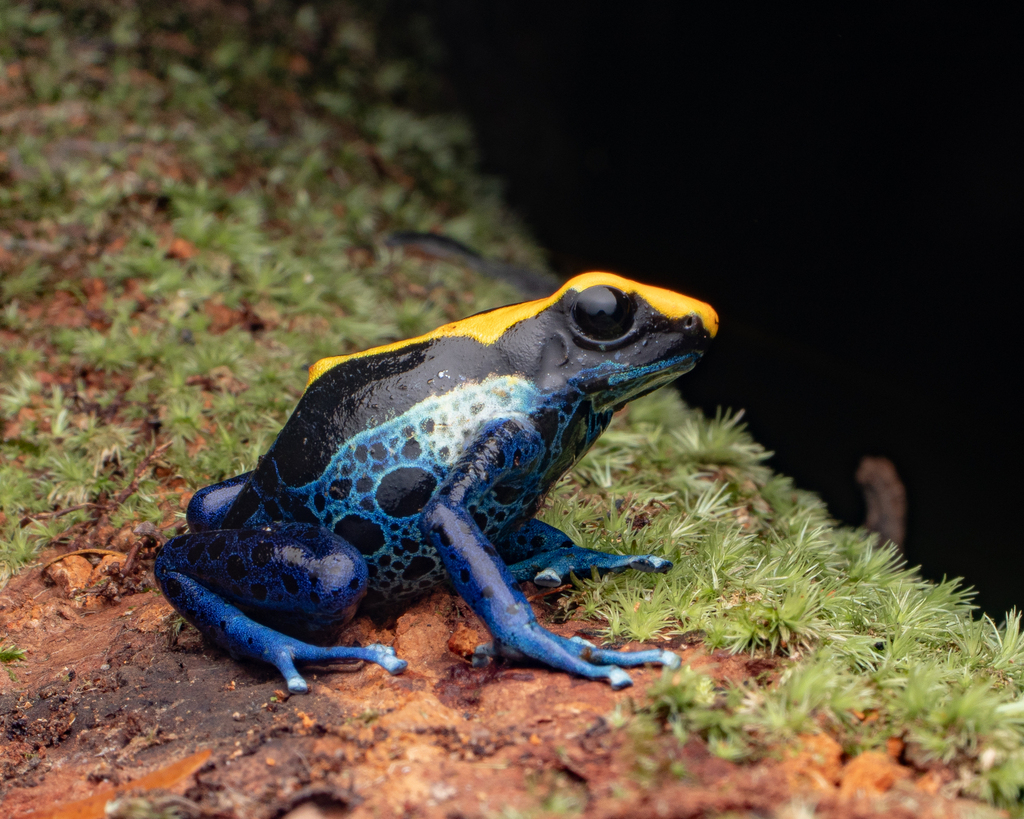
A thumb-sized, brightly patterned frog of the Guiana Shield whose colours warn predators that its skin is laced with alkaloid toxins. Its many colour forms include the electric-blue frogs once treated as a separate species, Dendrobates azureus.
The cobalt dyeing poison dart frog, also known as the cobalt poison frog or tinc, is a species of poison dart frog. It is among the most variably colored and largest species of poison dart frogs, typically reaching snout–vent lengths of about 50 mm (2.0 in). It is distributed in the eastern portion of the Guiana Shield, including parts of French Guiana, Guyana, Suriname, and Brazil. These types of frogs usually tend to stay on the ground as it is easier to catch prey., though in some cases may climb trees as well. They are frequently found in treefall canopy gaps in the Amazon rainforest, as they utilize phytotelmata on the fallen trees for tadpole development. Wikipedia
What it can do
- iStores alkaloid toxins such as pumiliotoxins in its skin, taken from the ants and mites it eats
- iiWarns predators with vivid, highly variable colour patterns (aposematism)
- iiiMales carry newly hatched tadpoles on their backs to small pools of water in tree holes or bromeliads
- ivCaptive-bred frogs fed on other insects lose their toxicity
In the field
Field marks
- aSmall frog with bright, highly variable colours
- bOften black with yellow or white stripes
- cBright blue legs
- dLarge finger discs
- Voice
- Quiet, buzzing calls
- Not to be confused with
- Other dendrobatids are similar; colour morphs vary between populations. Its skin toxins can harm — do not touch.
- Where to see it
- Brownsberg Nature Park (Suriname)
- When
- Resident
Listen
Looking for field recordings…
Life & habits
- Diet
- Small invertebrates: ants, mites, termites, small beetles
- Habitat
- Humid forest floor near streams, boulders and fallen trees
- Size
- 3.5–6 cm
- Lifespan
- 5–10 years; up to ~20 in captivity
Females compete for males and may wrestle rivals. Toxic species like this one are active by day, relying on their warning colours rather than hiding.
Where it lives
Recorded sightings
—
geo-referenced records in GBIF, from museums, herbaria and field observers.
Native range
Guiana Shield: French Guiana, Suriname, Guyana and adjacent northern Brazil
Drag the globe to turn it. Dots are where records exist, not a range map; darker means more records.
In the stacks
Searching the stacks…
Every page naming Dendrobates tinctorius in the Biodiversity Heritage Library →
Marginalia
Its name comes from tapirage, an Amazonian practice reported by European travellers: rubbing a frog's secretions onto plucked parrot skin was said to make the new feathers grow yellow or red. Unlike some relatives, this species was not the main source of dart poisons.
Curiosity
The blue 'Okopipi' frogs of Suriname's Sipaliwini savanna were described as their own species in 1969 but are now considered a colour form of this one.
Kinship




Photographs: iNaturalist contributors under the licences shown. Records: GBIF.org. Historical plates: Source Library (CC BY-SA 4.0; originals public domain). Summary text: Nature Library editors and Wikipedia (CC BY-SA). Medicinal and edibility notes are historical and educational, not advice. iNaturalist taxon 21141.