- Plants
- ›Vascular Plants
- ›flowering plants
- ›Dicots
- ›saxifrages, stonecrops, and allies
- ›stonecrop family
- ›Sempervivoideae
- ›Sedeae
- ›Echeveria
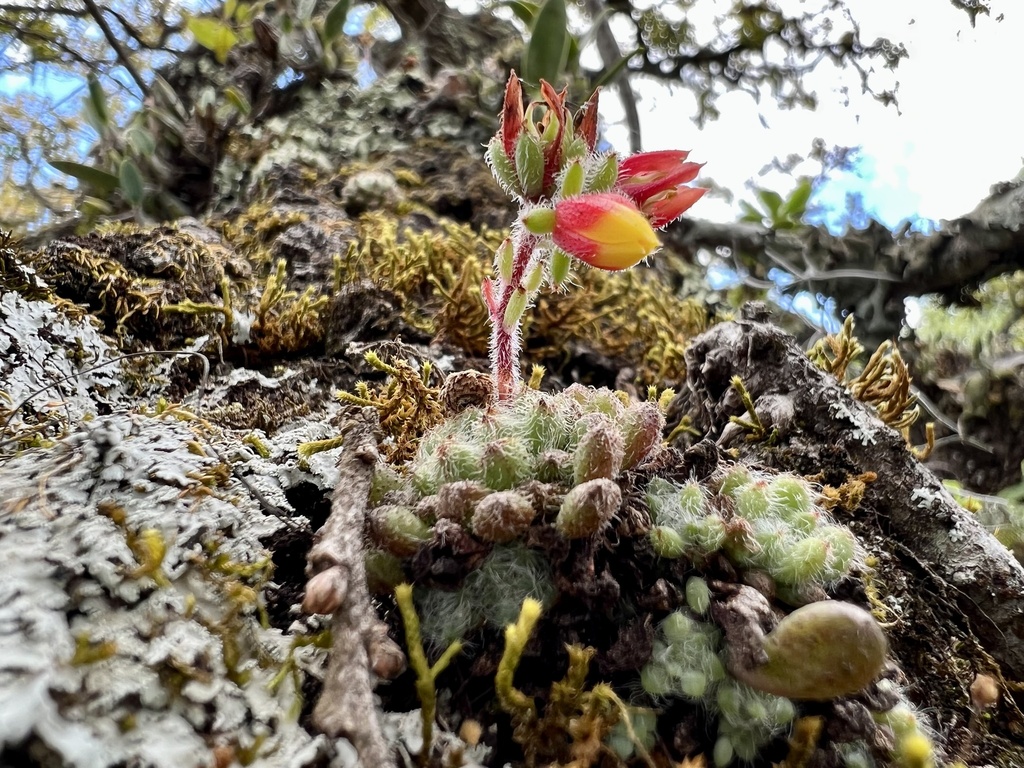
Mexican Firecracker
Echeveria setosa
Echeveria setosa, the Mexican fire cracker, is a species of flowering plant in the Crassulaceae family, native to semi-desert areas of Mexico and common throughout Puebla.
From the article Echeveria setosa on Wikipedia (CC BY-SA), quoted section by section
Description
Echeveria setosa is an evergreen succulent growing to 4 cm (2 in) high by 30 cm (12 in) wide, with spherical rosettes of fleshy spoon-shaped leaves covered in white hairs. These white hairs, known as glochids, can cause irritation to the skin if touched. In spring it bears 30 cm (12 in) long stalks of red flowers with yellow tips.
How it is grown
Echeveria setosa is cultivated as an ornamental plant. It is grown outside in subtropical climates, such as Southern California. As it requires a minimum temperature of 7 °C (45 °F), it must be grown under glass with heat in colder temperate regions. It can be placed outside during the summer months.
Wikipedia: “Cultivation”
In human culture
Echeveria is named for Atanasio Echeverría y Godoy, a botanical illustrator who contributed to Flora Mexicana. Setosa means 'covered with stiff, bristly hairs'.
== References ==
Wikipedia: “Etymology”
Where it lives
Recorded sightings
—
geo-referenced records in GBIF, from museums, herbaria and field observers.
Drag the globe to turn it. Dots are where records exist, not a range map; darker means more records.
In the stacks
Searching the stacks…
Every page naming Echeveria setosa in the Biodiversity Heritage Library →
This page is assembled live from iNaturalist, GBIF, Wikipedia, the Source Library and the Internet Archive. It is not yet part of the hand-edited codex. iNaturalist taxon 206710.