- Plants
- ›Vascular Plants
- ›flowering plants
- ›Dicots
- ›Gentians, Dogbanes, Madders, and Allies
- ›Dogbane Family
- ›milkweeds
- ›Ceropegieae
- ›Stapeliads
- ›Hoodia
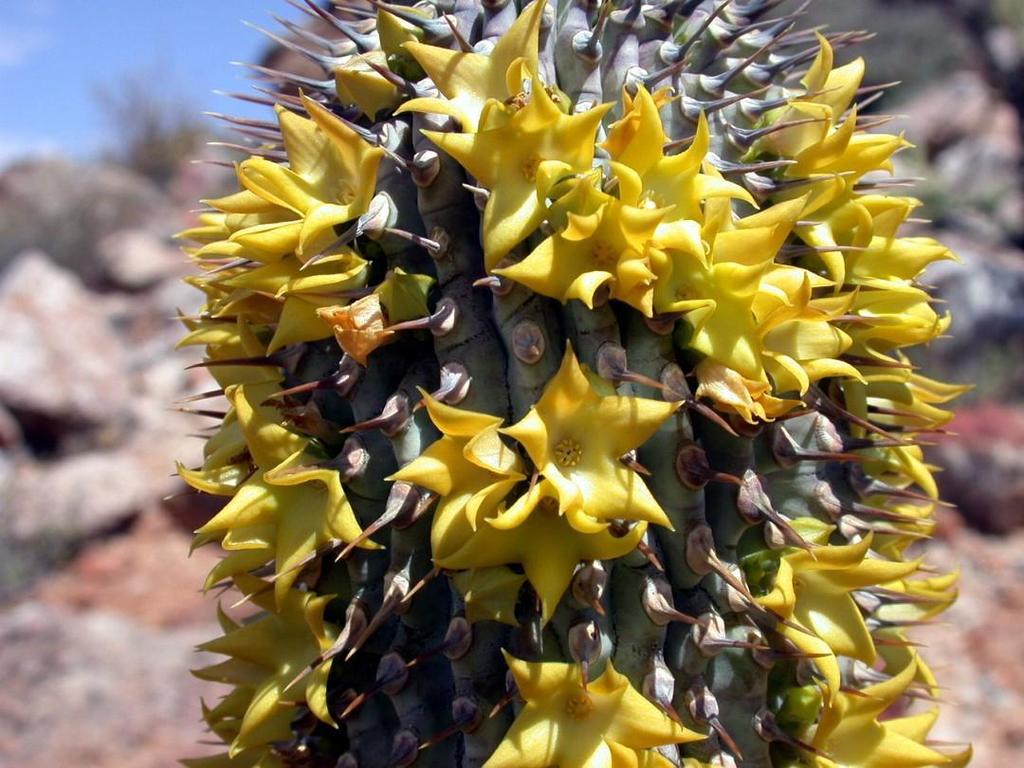
Hoodia alstonii
Hoodia alstonii is a succulent plant native to Namibia and the Cape Province of South Africa. H. alstonii is also known commonly as Ghaap, an Afrikaans name. It tends to grow in rocky, desert areas.
From the article Hoodia alstonii on Wikipedia (CC BY-SA), quoted section by section
Description
Hoodia alstonii can grow to about 1 metre (3.3 ft) in height. The stems are upright and pale gray in color. The plant has very sharp, hard spines. It produces small, yellow flowers mostly on the top parts of the stems which are approximately 1–1.8 centimetres (0.4–0.7 in) in diameter. The flowers have an odor similar to excrement and are pollinated by flies. It has a shallow root system.
At the table
Hoodia alstonii has been harvested in the wild as a food source.
== References ==
Wikipedia: “Uses”
How it is grown
Hoodia alstonii is considered easy to grow, but needs plenty of fresh air and should be watered mainly during its growing season. It is prone to root rot. It prefers warm temperatures, though it is occasionally hardy to 0 °C (32 °F).
Wikipedia: “Cultivation”
Where it lives
Recorded sightings
—
geo-referenced records in GBIF, from museums, herbaria and field observers.
Drag the globe to turn it. Dots are where records exist, not a range map; darker means more records.
In the stacks
Searching the stacks…
Every page naming Hoodia alstonii in the Biodiversity Heritage Library →
This page is assembled live from iNaturalist, GBIF, Wikipedia, the Source Library and the Internet Archive. It is not yet part of the hand-edited codex. iNaturalist taxon 186553.