- Plants
- ›Vascular Plants
- ›flowering plants
- ›Dicots
- ›Nances, Willows, and Allies
- ›ochna family
- ›Ochnoideae
- ›Ochneae
- ›Lophira
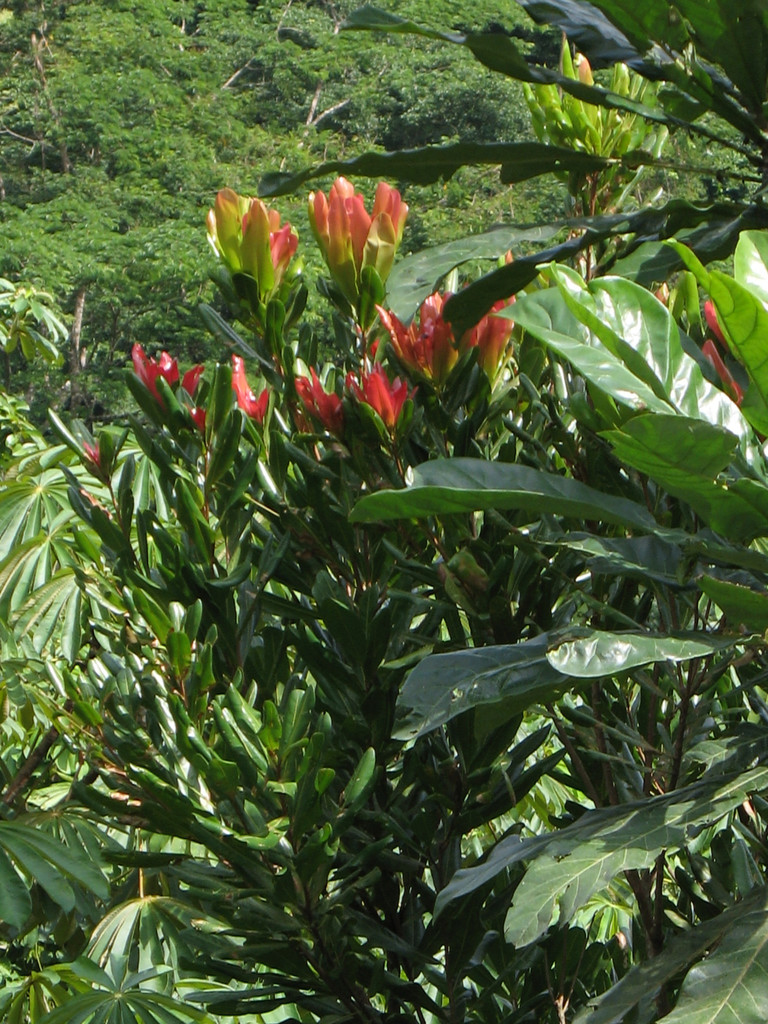
Lophira alata
Lophira alata, commonly known as azobé, ekki or the red ironwood tree, is a species of plant in the family Ochnaceae. It is found in Cameroon, the Republic of the Congo, the Democratic Republic of the Congo, Ivory Coast, Equatorial Guinea, Gabon, Ghana, Liberia, Nigeria, Sierra Leone, Sudan, and Uganda. Its natural habitat is subtropical or tropical moist lowland forests. It is threatened by habitat loss.
The timber is extremely hard and used for railroad ties, groynes and bridge planking, as it is rot-resistant.
From the article Lophira alata on Wikipedia (CC BY-SA), quoted section by section
Description
The trunk of Lophira alata is usually straight, without buttress roots, but sometimes with a swollen base, and is usually clear of branches up to about 30 metres (98 ft). The bark is typically red-brown in colour, up to two centimetres thick, and has a bright yellow layer underneath. Young trees under four metres in height have greenish-grey bark, which becomes pink or light brown as the tree matures. Inside, the living sapwood is pale pink or whitish in colour, while the inner heartwood is dark red-brown to chocolate brown, with conspicuous white deposits of silica. The leaves of L. alata are up to 25 centimetres (9.8 in) long and are tough, fairly narrow and elongated, with a rounded or slightly indented tip, and tend to occur in clusters at the ends of the twigs.
At the table
The timber, known as azobe, is strong and resistant making it useful for demanding constructions outdoors. The timber also has better electrical properties than other wood making it possible to use it in poles for electric fences without separate isolators. The colour is reddish brown and the wood is abrasive, dulling tools rapidly. Sniffing the bark is used as a traditional treatment for headache. The leaves of Lophira alata afforded two new biflavonoids, lophirone L (1) and lophirone M (2), and the known luteolin and lithospermoside. Both biflavonoids were obtained in small quantities, and their structures show some new and unusual biflavonoid diversity. Likewise, two chalcone tetramers were isolated as inhibitors of Epstein–Barr virus (EBV)-activation induced by a tumor promoter, teleocidin B-4, from Lophira alata. One of them was identified as lophirachalcone. The other, named alatachalcone, was new, and the structure was determined by spectral properties. Both compounds also showed potent inhibitory activities against teleocidin B-4-induced inflammation on mouse ear. In an initiation-promotion experiment on mouse skin, alatachalcone (16 nmol) significantly inhibited tumor promotion caused by 12-O-tetradecanoylphorbol-13-acetate (TPA, 1.6 nmol).
Wikipedia: “Uses”
Where it lives
Recorded sightings
—
geo-referenced records in GBIF, from museums, herbaria and field observers.
Drag the globe to turn it. Dots are where records exist, not a range map; darker means more records.
In the stacks
Searching the stacks…
Every page naming Lophira alata in the Biodiversity Heritage Library →
This page is assembled live from iNaturalist, GBIF, Wikipedia, the Source Library and the Internet Archive. It is not yet part of the hand-edited codex. iNaturalist taxon 186076.