- Plants
- ›Vascular Plants
- ›flowering plants
- ›monocots
- ›palms, bullanocks, and allies
- ›palms
- ›Coryphoideae
- ›Caryoteae
- ›Arenga
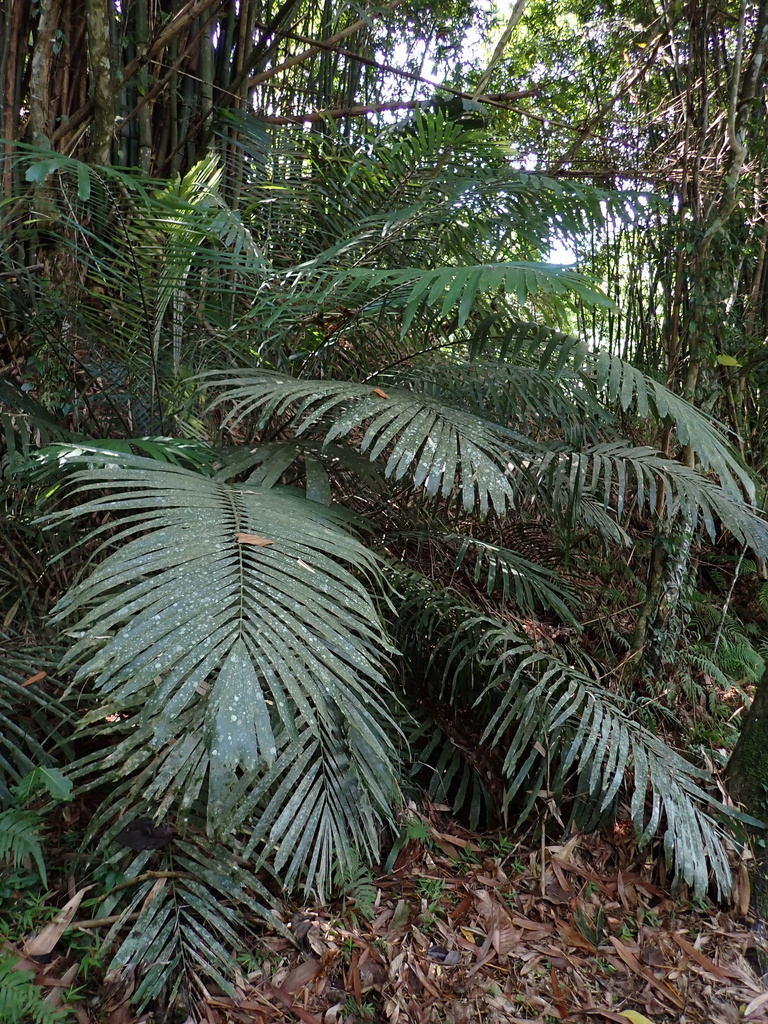
Arenga Palm
Arenga engleri
Arenga engleri, or the Formosa palm, Taiwan sugar palm, dwarf sugar palm, or Taiwan arenga palm, is a species of flowering plant in the Arecaceae family. The plant rarely grows more than 10 ft. tall, with a stem diameter of 6in. and a spread of 16 ft. The palm is native to Taiwan as well as Japan's Ryukyu Islands. The fruit of the palm is known to cause a severe allergic reaction.
From the article Arenga engleri on Wikipedia (CC BY-SA), quoted section by section
Description
Arenga engleri, is a striking tropical species admired for its ornamental appeal. This clustering palm features multiple stems enveloped in fine black fibers, adding to its distinctive appearance. Its lush, arching leaves have a characteristic fishtail shape. The deep green, pinnate leaflets often exhibit a gentle twist, creating a slightly spiraled effect. Each leaflet emerges from a thornless midrib, displaying a dark-green to olive hue on the upper surface and a silvery sheen underneath. Notably, the leaflets have a unique induplicate cross-section and are arranged in a single plane along the stem. Among the foliage, the palm produces spikelike inflorescences containing both male and female flowers, allowing for self-pollination. These blossoms, available in shades of red, orange, or green, emit a pleasant fragrance. The plant eventually bears small, spherical fruits that mature to a deep red or purple color, each containing one to three seeds.
Where it lives
Recorded sightings
—
geo-referenced records in GBIF, from museums, herbaria and field observers.
Drag the globe to turn it. Dots are where records exist, not a range map; darker means more records.
In the stacks
Searching the stacks…
Every page naming Arenga engleri in the Biodiversity Heritage Library →
This page is assembled live from iNaturalist, GBIF, Wikipedia, the Source Library and the Internet Archive. It is not yet part of the hand-edited codex. iNaturalist taxon 180178.