- Plants
- ›Vascular Plants
- ›flowering plants
- ›monocots
- ›lilies, supplejacks, and allies
- ›Herb-Paris, False Hellebores, Trilliums and allies
- ›Parideae
- ›Trillium
- ›Sessilia
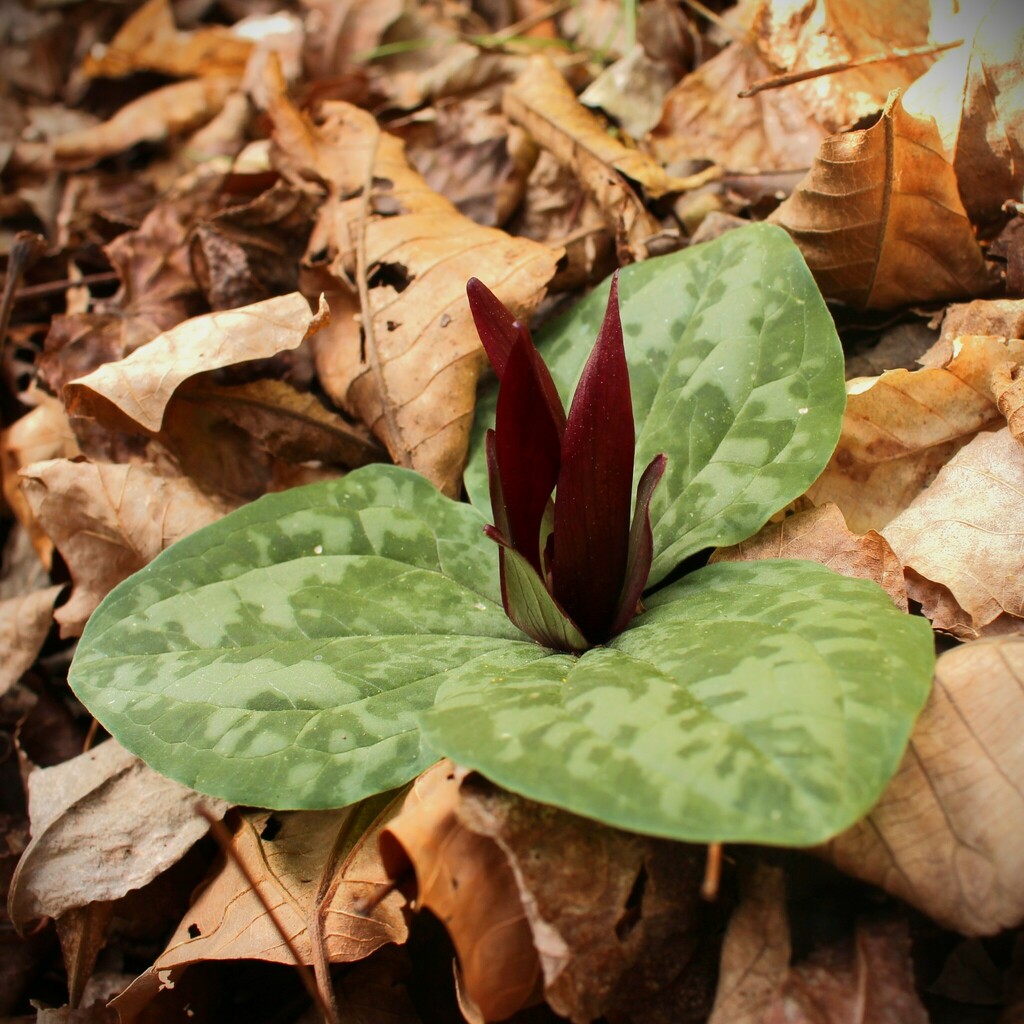
trailing wakerobin
Trillium decumbens
Trillium decumbens, also known as the decumbent trillium or trailing wakerobin, is a species of flowering plant in the bunchflower family (Melanthiaceae). It is native to the southeastern United States, specifically Tennessee, Georgia, and Alabama, where it grows in mature deciduous woodlands or on open rocky wooded slopes.
From the article Trillium decumbens on Wikipedia (CC BY-SA), quoted section by section
Description
Trillium decumbens is a perennial herbaceous plant that blooms from mid-March to April. The dark maroon flower petals are long and twisted, and held upright at full bloom. The flowers emit a strongly fetid odor. Unlike most other trilliums, its stems grow along the ground ("decumbent") rather than standing upright, so that the plant appears to rest on the surrounding leaf litter. This characteristic is what drew the attention of its discoverer, Charles Lawrence Boynton. Its leaves are mottled green and silver. They die back early in the season while the fruit, a dark purple berry, is still developing. By early autumn, the ripe fruit is presented on a stalk without surrounding leaves.
Where it lives
Recorded sightings
—
geo-referenced records in GBIF, from museums, herbaria and field observers.
Drag the globe to turn it. Dots are where records exist, not a range map; darker means more records.
In the stacks
Searching the stacks…
Every page naming Trillium decumbens in the Biodiversity Heritage Library →
This page is assembled live from iNaturalist, GBIF, Wikipedia, the Source Library and the Internet Archive. It is not yet part of the hand-edited codex. iNaturalist taxon 169986.