- Plants
- ›Vascular Plants
- ›flowering plants
- ›monocots
- ›Aroids, Water Plantains, Seagrass, and allies
- ›tofieldia family
- ›Tofieldia
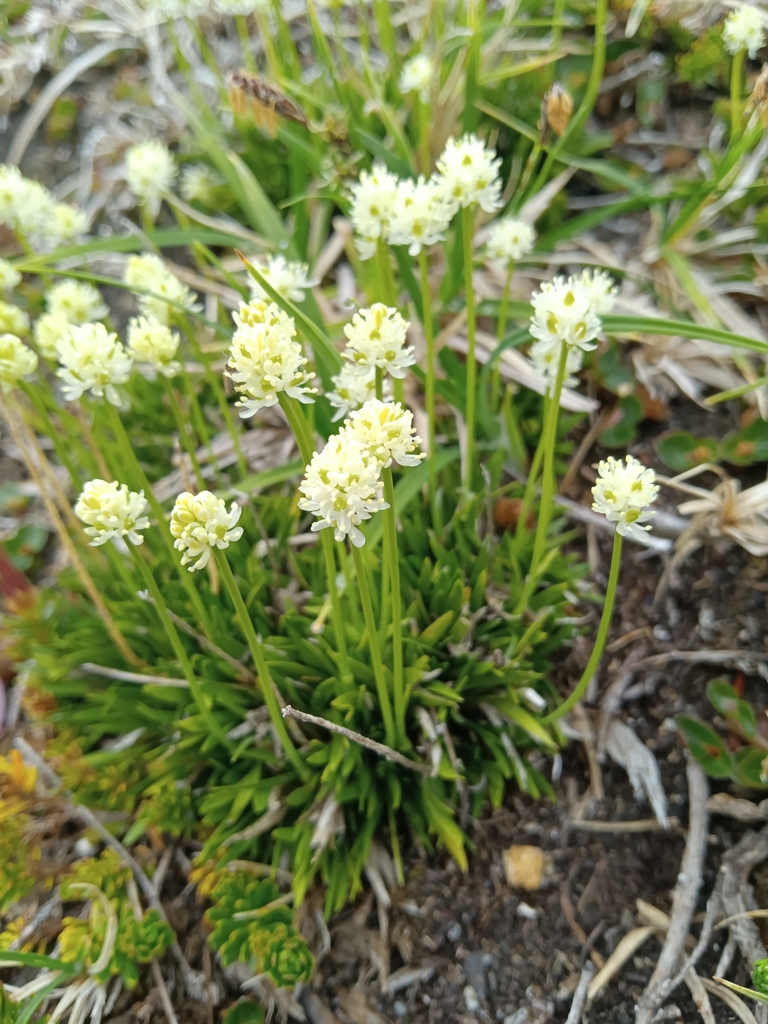
Scottish Asphodel
Tofieldia pusilla
Tofieldia pusilla is a flowering plant of the genus Tofieldia in the family Tofieldiaceae. It is also sometimes classified in the lily family, Liliaceae. Its common name is Scottish asphodel in Europe, and Scotch false asphodel in North America. The plant is native to northern North America and parts of Eurasia, its circumpolar distribution extending across Canada and the northern United States to Greenland, Iceland and northern Europe.
From the article Tofieldia pusilla on Wikipedia (CC BY-SA), quoted section by section
In medicine
T. pusilla has been used in the traditional medicine of Scotland to treat a variety of ailments, including skin conditions, respiratory problems, and digestive issues. In regard to the third use listed: the roots of the plant have been used to make a tea that is believed to have a soothing effect on the stomach and intestines. Such an apparently anti-inflammatory effect of a Tofieldia tisane is not incompatible with the irritant effect of fresh plant material, given that both heating and steeping can eliminate crystals of calcium oxalate, as demonstrated in the traditional preparation of Araceous vegetables such as taro, which - like Tofieldia - are poisonous when raw. Elimination of calcium oxalate druses would then allow the therapeutic effects of other compounds present in T. pusilla to manifest, unimpaired by the irritant effect of the toxic crystals.
Wikipedia: “In Scottish folk medicine”
In human culture
In Scotland, the plant had the alternative common name "King's Knot" and was believed in folk tradition to have apotropaic powers. For this reason, it was often deliberately planted near homes and farms to ward off evil spirits and bring good luck.
Wikipedia: “In Scottish folklore”
Where it lives
Recorded sightings
—
geo-referenced records in GBIF, from museums, herbaria and field observers.
Drag the globe to turn it. Dots are where records exist, not a range map; darker means more records.
In the stacks
Searching the stacks…
Every page naming Tofieldia pusilla in the Biodiversity Heritage Library →
This page is assembled live from iNaturalist, GBIF, Wikipedia, the Source Library and the Internet Archive. It is not yet part of the hand-edited codex. iNaturalist taxon 169783.