- Plants
- ›Vascular Plants
- ›flowering plants
- ›Dicots
- ›nightshades, bindweeds, gooseweeds, and allies
- ›nightshade family
- ›nightshades and allies
- ›nightshades and jaltomatas
- ›Solanum
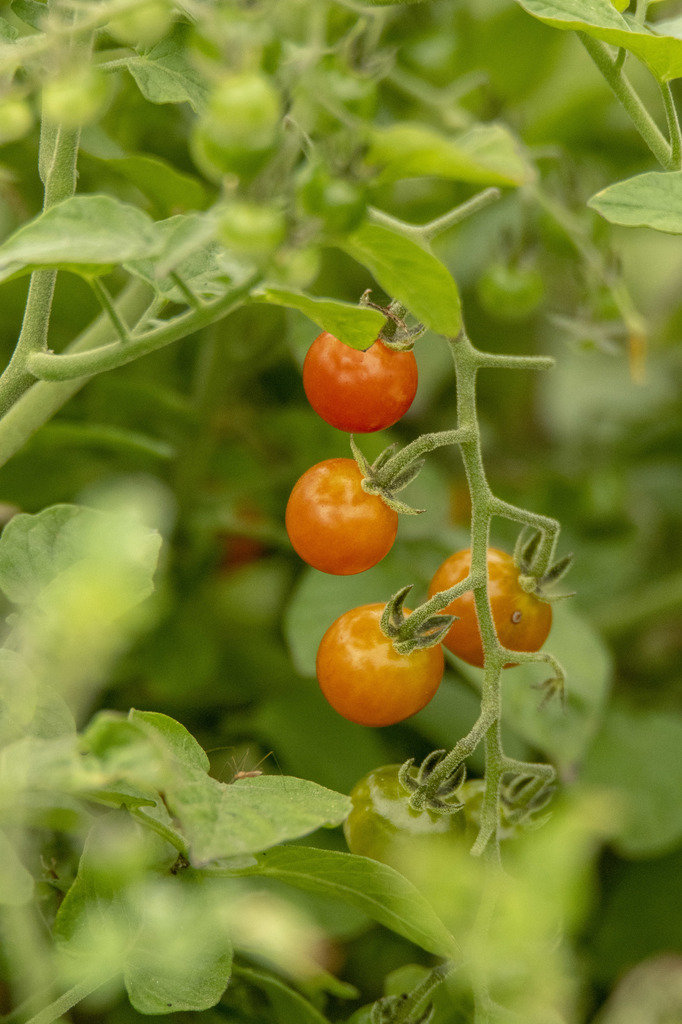
currant tomato
Solanum pimpinellifolium
Solanum pimpinellifolium, commonly known as the currant tomato or pimp, is a wild species of tomato native to Ecuador and Peru but naturalized elsewhere, such as the Galápagos Islands. Its small fruits are edible, and it is commonly grown in gardens as an heirloom tomato, although it is considered to be wild rather than domesticated as is the commonly cultivated tomato species Solanum lycopersicum. Its genome was sequenced in 2012.
From the article Solanum pimpinellifolium on Wikipedia (CC BY-SA), quoted section by section
Range & habitat
The interaction between the Moche and this wild species is supported by its ecological behavior and archaeobotanical findings in the La Libertad Region. Solanum pimpinellifolium behaves as a ruderal plant, proliferating naturally and constantly along the edges of irrigation canals, ditches, and humid depressions built by pre-Hispanic agricultural engineers. Contemporary botanical and archaeological inventories have recorded stable populations of this wild tomato growing directly over the cultural contexts of major Moche political-religious centers, such as the El Brujo Arqueological Complex (in the Chicama Valley) and near the Huaca del Rosario (in Magdalena de Cao). This resource holds high scientific and historical value because Peru is a key center of origin for the tomato, hosting 14 of the world's 17 tomato species. Research by Peru's Ministry of the Environment indicates that roughly 90% of the genes in modern commercially cultivated tomatoes worldwide originate from these wild Andean relatives, which contributed high natural sugar levels and lycopene content to ancient diets.
== References ==
Wikipedia: “Archaeobotanical record and ruderal habitat”
Where it lives
Recorded sightings
—
geo-referenced records in GBIF, from museums, herbaria and field observers.
Drag the globe to turn it. Dots are where records exist, not a range map; darker means more records.
In the stacks
Searching the stacks…
Every page naming Solanum pimpinellifolium in the Biodiversity Heritage Library →
This page is assembled live from iNaturalist, GBIF, Wikipedia, the Source Library and the Internet Archive. It is not yet part of the hand-edited codex. iNaturalist taxon 169077.