- Plants
- ›Vascular Plants
- ›flowering plants
- ›Dicots
- ›carrots, ivies, and allies
- ›carrot family
- ›Apioideae
- ›Pimpinelleae
- ›Pimpinella
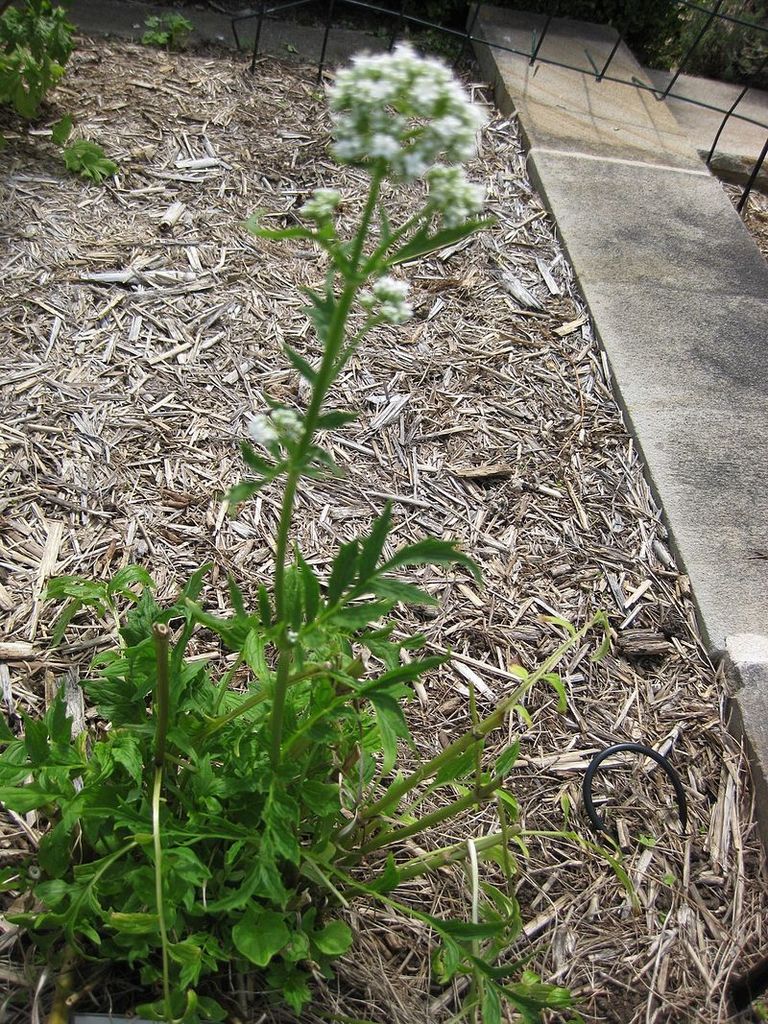
Anise
Pimpinella anisum
Anise (; Pimpinella anisum), also called aniseed or rarely anix, is a flowering plant in the family Apiaceae native to the Eastern Mediterranean and Southwest Asia.
The flavor and aroma of its seeds have similarities with some other spices and herbs, such as star anise, fennel, liquorice, and tarragon. It is widely cultivated and used to flavor food, candy, and alcoholic drinks, especially around the Mediterranean.
From the article Anise on Wikipedia (CC BY-SA), quoted section by section
What it does
Anise is a food plant for the larvae of some Lepidoptera species (butterflies and moths), including the lime-speck pug and wormwood pug.
Wikipedia: “Ecology”
At the table
Anise is sweet and aromatic, distinguished by its characteristic flavor. The seeds, whole or ground, are used for preparation of teas and tisanes (alone or in combination with other aromatic herbs), as well many regional and ethnic confectioneries, including black jelly beans (often marketed as licorice-flavored), British aniseed balls, aniseed twists and "troach" drops, Australian humbugs, New Zealand aniseed wheels, Italian pizzelle and biscotti, German Pfeffernüsse and Springerle, Austrian Anisbögen, Dutch muisjes, New Mexican bizcochitos and Peruvian picarones. The culinary uses of anise are not limited only to sweets and confections, as it is a key ingredient in Mexican atole de anís and champurrado, which is similar to hot chocolate. In India and Pakistan, it is taken as a digestive after meals, used in brines in the Italian region of Apulia and as a flavoring agent in Italian sausage, pepperoni and other Italian processed meat products. The freshly chopped leaves are added to cheese spreads, dips or salads, while roots and stems impart a mild licorice flavor to soups and stews.
Wikipedia: “Culinary”
In medicine
The main use of anise in traditional European herbal medicine was for its carminative effect (reducing flatulence), as noted by John Gerard in his Great Herball, an early encyclopedia of herbal medicine:
The seed wasteth and consumeth winde, and is good against belchings and upbraidings of the stomach, alaieth gripings of the belly, provoketh urine gently, maketh abundance of milke, and stirreth up bodily lust: it staieth the laske (diarrhea), and also the white flux (leukorrhea) in women. According to Pliny the Elder, anise was used as a cure for sleeplessness, chewed with alexanders and a little honey in the morning to freshen the breath, and, when mixed with wine, as a remedy for asp bites (N.H. 20.72). In 19th-century medicine, anise was prepared as aqua anisi ("Water of Anise") in doses of an ounce or more and as spiritus anisi ("Spirit of Anise") in doses of 5–20 minims. In Turkish folk medicine, its seeds have been used as an appetite stimulant, tranquilizer or diuretic.
Wikipedia: “Traditional medicine”
How it is grown
Anise was first cultivated in the Middle East, and was brought to Europe for its medicinal value. It has been cultivated in Egypt for approximately 4,000 years. Anise plants grow best in light, fertile, well-drained soil. The seeds should be planted as soon as the ground warms up in spring. Because the plants have a taproot, they do not transplant well after being established so they should either be started in their final location or be transplanted while the seedlings are still small.
Production. Western cuisines have long used anise to flavor dishes, drinks, and candies. The word is used for both the species of herb and its licorice-like flavor. The most powerful flavor component of the essential oil of anise, anethole, is found in both anise and an unrelated spice indigenous to South China called star anise (Illicium verum) widely used in South Asian, Southeast Asian and East Asian dishes. Star anise is considerably less expensive to produce and has gradually displaced P. anisum in Western markets. While formerly produced in larger quantities, by 1999 world production of the essential oil of anise was 8 tons, compared to 400 tons of star anise.
Wikipedia: “Cultivation”
In human culture
The name "anise" is derived via Old French from the Latin words anīsum or anēthum from Greek ἄνηθον ánēthon referring to dill. An obsolete English word for anise is anet, also coming from ănēthum.
Wikipedia: “Etymology”
Where it lives
Recorded sightings
—
geo-referenced records in GBIF, from museums, herbaria and field observers.
Drag the globe to turn it. Dots are where records exist, not a range map; darker means more records.
In the old herbals & bestiaries

History of Rare Plants
Carolus Clusius · 1601 · p.578

Experiments Concerning Various Natural Things
Francesco Redi · 1671 · p.166

A key to physic, and the occult sciences
Sibly, Ebenezer · 1810 · p.640

Introductio Generalis in Rem Herbariam
Augustus Quirinus Rivinus · 1690 · p.480

The Book of Health: The Art of Distillation
Brunschwig, Hieronymus · 1505 · p.129

The Great Herbary with all the figures of the herbs
1532 · p.28

Notable Commentaries on the History of Plants
Leonhart Fuchs · 1542 · p.96

Notable Commentaries on the History of Plants
Leonhart Fuchs · 1549 · p.94

On Medical Materials in Six Books
Dioscorides · 1550 · p.414

On the Names of Plants
Hieronymus Bock (Tragus) · 1552 · p.525

De medicinali materia libri sex
Dioscorides · 1552 · p.422

Commentaries on the Six Books of Dioscorides
Pietro Andrea Mattioli · 1560 · p.543
In the stacks
Searching the stacks…
Every page naming Pimpinella anisum in the Biodiversity Heritage Library →
This page is assembled live from iNaturalist, GBIF, Wikipedia, the Source Library and the Internet Archive. It is not yet part of the hand-edited codex. iNaturalist taxon 166878.