- Plants
- ›Vascular Plants
- ›flowering plants
- ›Dicots
- ›pinks, cactuses, and allies
- ›cacti
- ›globular cacti, moonlight cacti, torch cacti, and allies
- ›Cereeae
- ›Pilosocereus
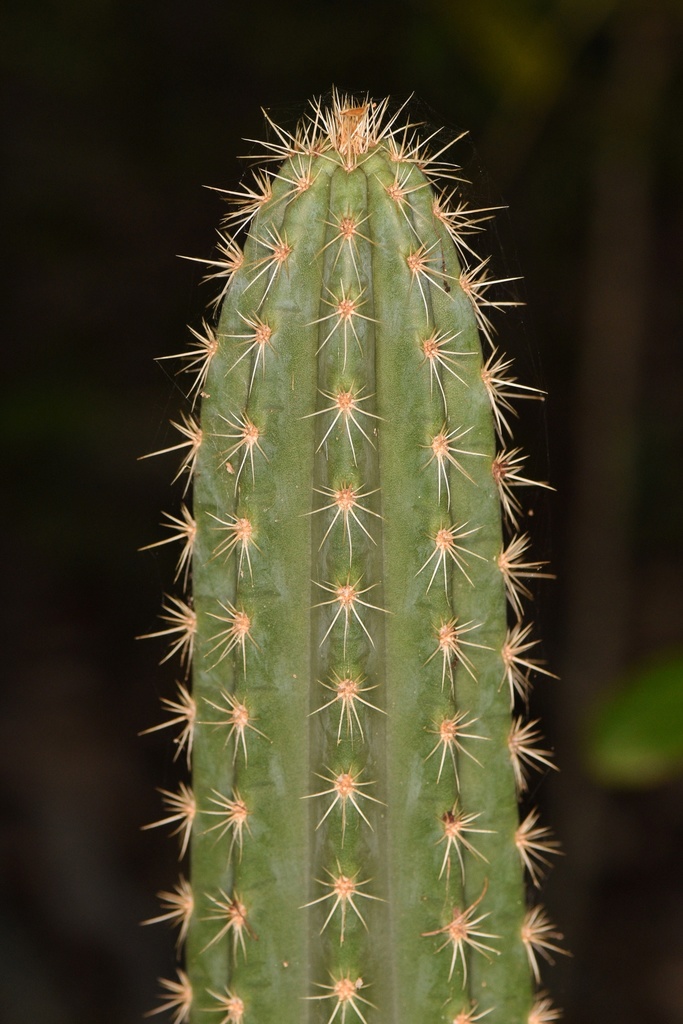
Key tree cactus
Pilosocereus robinii
Pilosocereus robinii is a species of cactus known by the common name Key tree-cactus. It is native to the Florida Keys in the United States. It may occur in Cuba, but any populations there are unconfirmed. It has been reported from Puerto Rico, the Virgin Islands, and Mexico. It is a rare species which is threatened by the loss of its habitat. It is a federally listed endangered species of the United States.
From the article Pilosocereus robinii on Wikipedia (CC BY-SA), quoted section by section
Description
Pilosocereus robinii is a large cactus growing erect, often with many parallel or spreading branches. It may become a tree up to 10 m (33 ft) tall. The stem is green in color with a blue tinge when young and has 9 to 13 ribs. The areoles are covered in long or short hairs and have up to 31 spines each. The spines are no more than a centimeter long. The bell-shaped flower is 5–6 cm (2.0–2.4 in) long. The outer tepals are greenish with brownish midstripes and the inner tepals are white. The flower has a scent similar to garlic. It opens at night and contains a sweet nectar.
Range & habitat
Pilosocereus robinii is native to the north of The Bahamas (Andros and Cat Island north to Abaco), northwestern Cuba (the provinces of La Habana, Matanzas, and Mayabeque), and the United States (the Florida Keys). It is the only Pilosocereus species native to the United States. In the Florida Keys, P. robinii grows in upland tropical hardwood hammocks on limestone or coral substrates. It sometimes grows on sparsely vegetated coral rock and just above the high tide mark. Few of these plants produce fruits. Their seeds are dispersed by frugivores. Windy conditions also spread the seeds and can also break off branches which can root themselves in the soil. Storm surges and sea level rise may inundate its shoreline habitat and increase the salinity beyond the tolerable range for the cactus.
Wikipedia: “Distribution and habitat”
Where it lives
Recorded sightings
—
geo-referenced records in GBIF, from museums, herbaria and field observers.
Drag the globe to turn it. Dots are where records exist, not a range map; darker means more records.
In the stacks
Searching the stacks…
Every page naming Pilosocereus robinii in the Biodiversity Heritage Library →
This page is assembled live from iNaturalist, GBIF, Wikipedia, the Source Library and the Internet Archive. It is not yet part of the hand-edited codex. iNaturalist taxon 166877.