- Plants
- ›Vascular Plants
- ›flowering plants
- ›Dicots
- ›pinks, cactuses, and allies
- ›cacti
- ›globular cacti, moonlight cacti, torch cacti, and allies
- ›Globular Cactuses
- ›Pediocactus
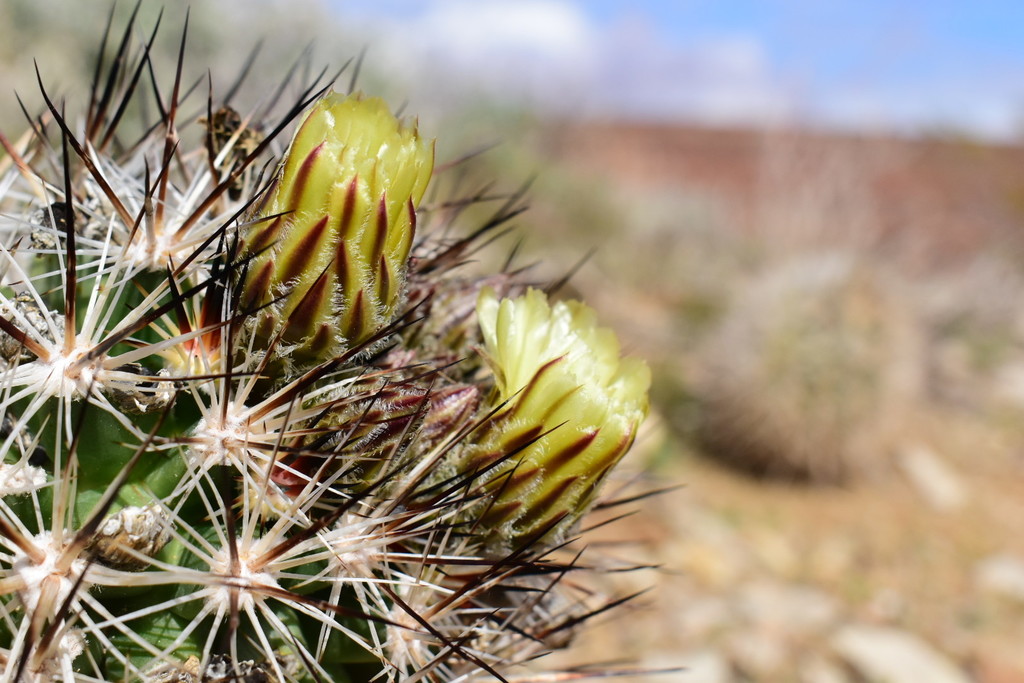
Siler's Pincushion Cactus
Pediocactus sileri
Pediocactus sileri is a rare species of cactus known by the common names Siler's pincushion cactus and gypsum cactus (or gypsum plains cactus). It is native to southwestern Utah and northwestern Arizona in the United States. It is limited to a specific type of soil, individuals are often spaced far apart, and the species is threatened by a number of human activities such as off-road vehicle use, poaching, and uranium mining. This is a federally listed threatened species of the United States.
From the article Pediocactus sileri on Wikipedia (CC BY-SA), quoted section by section
Description
This cactus is egg-shaped or sometimes cylindrical in shape, and may have short branches. It is up to 25 centimeters tall by about 11 cm wide. The surface is bumpy with areoles which are covered in hairs or woolly fibers. Each areole has 3 to 7 main spines which are black to gray or white in color, those occurring near the base of the cactus body reaching up to 3 centimeters long. Each areole also has many smaller white spines 1 or 2 centimeters long. Spines around the base of the cactus may help to anchor it to the soil. The cactus flowers in April and May. The flower is up to 2 centimeters long by 3 cm wide and has white-margined brown outer tepals and purple-veined yellow inner tepals. The fruit is yellow-green in color and just over a centimeter long.
Range & habitat
The cactus grows on sand and clay substrate that is part of the Moenkopi Formation, a geologic formation, especially the Schnabkaib Member of the formation. The soils are rich in gypsum and salts. Habitat in the area includes desert scrub, woodlands, and grasslands. Most of the land is under the stewardship of the Bureau of Land Management. The plant's distribution covers parts of Coconino and Mohave Counties in Arizona and Washington and Kane Counties in Utah. Though the current total population of the cactus is unknown and has not been estimated, there have been over 10,000 individuals documented over a territory measuring just over 34,000 acres (140 km2). Threats to this species include uranium exploration. As the price of uranium has increased recently, mining claims have also increased in number. All occurrences of the cactus occur on land that has potential for uranium discovery. Plans for uranium mining have often been modified to avoid damage to the cactus, but the threat still exists. Petroleum exploration and gypsum mining are considered future threats in the area, but not current ones. Off-road vehicles are popular in the local landscape, and there are designated roads for such activity and areas that are closed to vehicles for the protection of the plant. Grazing of livestock is considered a threat, but a minor one. …
Wikipedia: “Distribution and conservation”
Where it lives
Recorded sightings
—
geo-referenced records in GBIF, from museums, herbaria and field observers.
Drag the globe to turn it. Dots are where records exist, not a range map; darker means more records.
In the stacks
Searching the stacks…
Every page naming Pediocactus sileri in the Biodiversity Heritage Library →
This page is assembled live from iNaturalist, GBIF, Wikipedia, the Source Library and the Internet Archive. It is not yet part of the hand-edited codex. iNaturalist taxon 166261.