- Plants
- ›Vascular Plants
- ›flowering plants
- ›monocots
- ›grasses, sedges, cattails, and allies
- ›grasses
- ›Paniceae, andropogoneae, paspaleae, and allies
- ›Paspalums and allies
- ›Paspalums, carpetgrasses, vine mesquites, and allies
- ›Paspalum
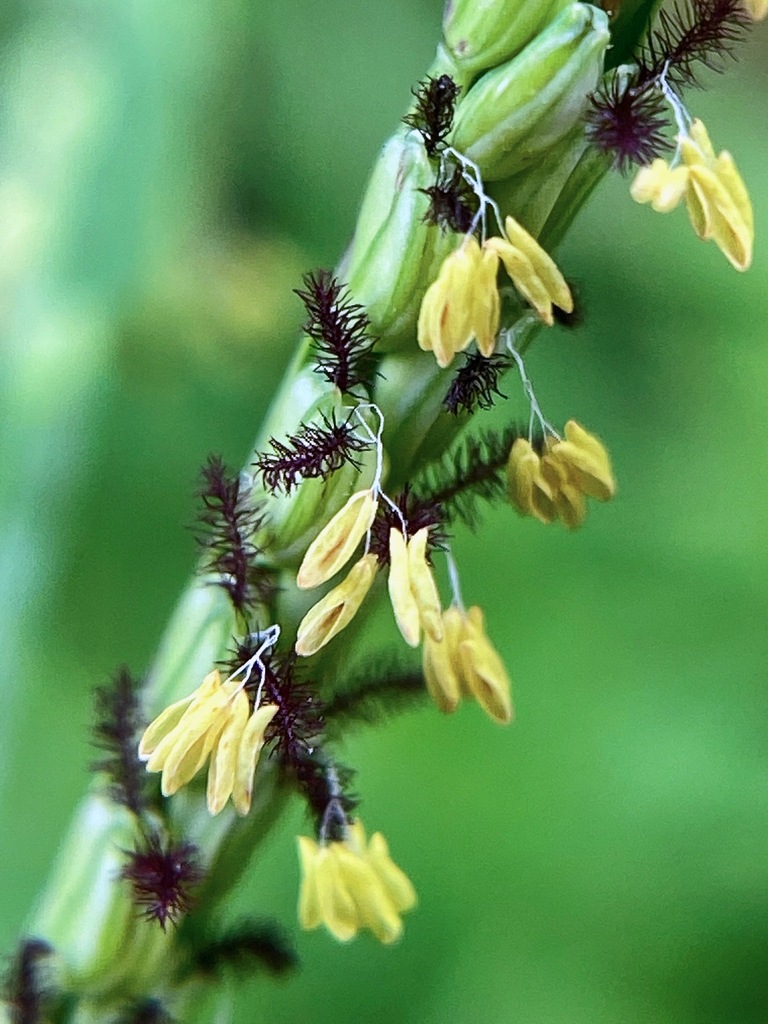
Field Paspalum
Paspalum laeve
Paspalum laeve common name field paspalum, is a plant found in North America. Its distribution ranges from the southeastern United States northward to New York and westward to Texas and Kansas.
It is listed as threatened in Connecticut. Paspalum laeve var. circulare, common names round field beadgrass and hairy field beadgrass, is endangered in New York (state).
From the article Paspalum laeve on Wikipedia (CC BY-SA), quoted section by section
Description
P. laeve's blades are 20 centimeters (approximately 8 inches) in length, with a width ranging between 1 and 10 millimeters (0.03 to 0.3 inches). It spikelets grow in two rows, and are 2.5 to 3 millimeters across.
Range & habitat
This species is found on forest edges and can grow in areas that have been disturbed. Specimens of P. laeve have been collected from habitats such as coastal hammocks, wiregrass palmetto flatwoods, pond edges, low field, and old pasture. P. laeve has intermediate levels of drought and shade tolerance.
== References ==
Wikipedia: “Habitat”
Where it lives
Recorded sightings
—
geo-referenced records in GBIF, from museums, herbaria and field observers.
Drag the globe to turn it. Dots are where records exist, not a range map; darker means more records.
In the stacks
Searching the stacks…
Every page naming Paspalum laeve in the Biodiversity Heritage Library →
This page is assembled live from iNaturalist, GBIF, Wikipedia, the Source Library and the Internet Archive. It is not yet part of the hand-edited codex. iNaturalist taxon 166180.