- Plants
- ›Vascular Plants
- ›flowering plants
- ›Dicots
- ›honeysuckles, moschatels, and allies
- ›honeysuckle family
- ›honeysuckle subfamily
- ›Lonicera
- ›Chamaecerasus
- ›Isika
- ›Bracteatae
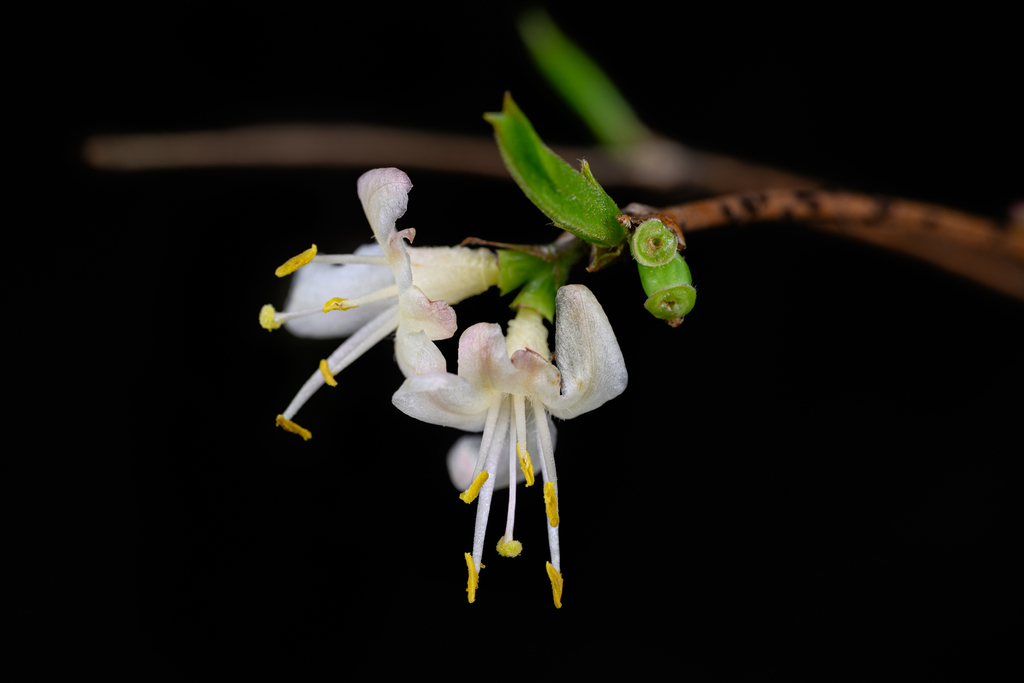
Winter honeysuckle
Lonicera fragrantissima
Lonicera fragrantissima is a species of flowering plant in the honeysuckle family Caprifoliaceae, known by the common names winter-flowering honeysuckle, fragrant honeysuckle, kiss-me-at-the-gate, and sweet breath of spring. It is native to China and has been an introduced species to other parts of the world. It was brought to the attention of western gardeners by Scottish plant hunter Robert Fortune, who was plant hunting in China for the Royal Horticultural Society. Fortune introduced Lonicera fragrantissima to England in 1845, and a few years later it was introduced to the United States. In 1853 the editor of American gardening magazine The Horticulturist wrote that the previous year he had been sent a specimen from a plant that had been flowering in the gardens of Hatfield House, the Marquess of Salisbury's stately home in Hertfordshire. The first mention of a specimen for commercial sale in an American plant catalogue is in 1860.
The honeysuckle is used as an ornamental plant for its fragrant flowers. In some parts of the world, where conditions are right, when it moves out of cultivation and takes hold in the wild, it can become an invasive weed.
Where it lives
Recorded sightings
—
geo-referenced records in GBIF, from museums, herbaria and field observers.
Drag the globe to turn it. Dots are where records exist, not a range map; darker means more records.
In the stacks
Searching the stacks…
Every page naming Lonicera fragrantissima in the Biodiversity Heritage Library →
This page is assembled live from iNaturalist, GBIF, Wikipedia, the Source Library and the Internet Archive. It is not yet part of the hand-edited codex. iNaturalist taxon 164763.