- Plants
- ›Vascular Plants
- ›flowering plants
- ›monocots
- ›grasses, sedges, cattails, and allies
- ›grasses
- ›Paniceae, andropogoneae, paspaleae, and allies
- ›bristle, rosette, and barnyard grasses, and allies
- ›Boivinellinae
- ›Echinochloa
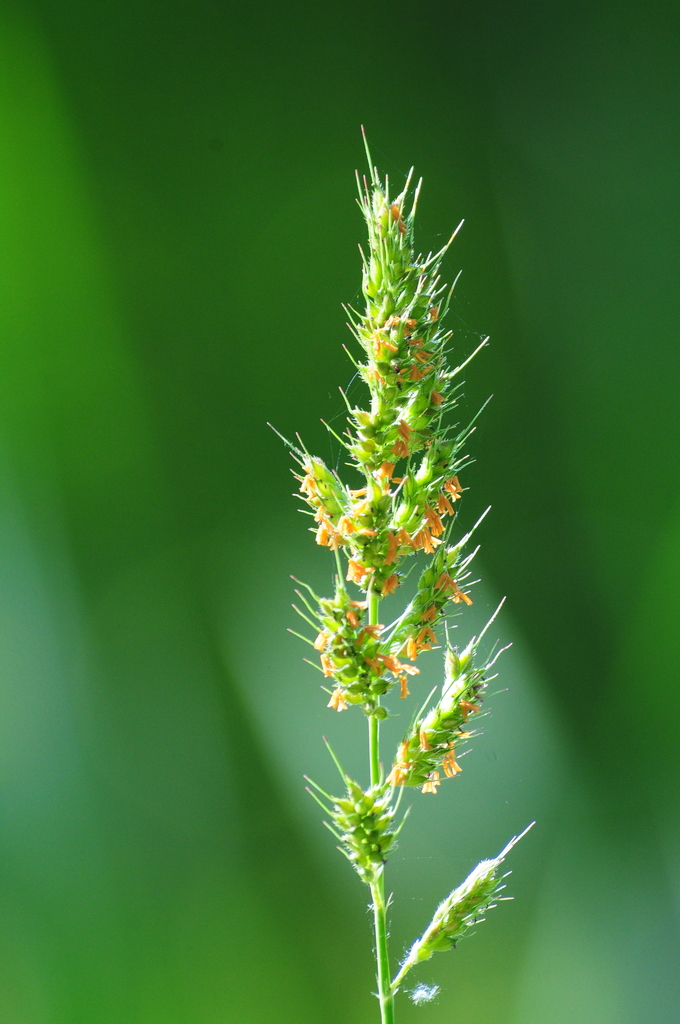
aleman grass
Echinochloa polystachya
Echinochloa polystachya, the German grass, is a species of grass (family Poaceae), native to the New World Tropics and Subtropics, from Texas and Florida down to Argentina. It is an aquatic or semi-aquatic perennial that can grow in water as deep as 2 m (7 ft). It is a useful fodder for water buffaloes, and to a lesser extent, cattle. In the Amazon floodplain it can reach productivity levels of 99.6 t/ha (39.7 long ton/acre; 44.4 short ton/acre) in dry mass, one of the highest levels ever measured in natural vegetation and belongs to the C4 plants . Given that it occupies about 200,000 km2 (77,000 mi2) of territory during the rainy season, it contributes on the order of 1% of the primary productivity of the planet.
== References ==
Where it lives
Recorded sightings
—
geo-referenced records in GBIF, from museums, herbaria and field observers.
Drag the globe to turn it. Dots are where records exist, not a range map; darker means more records.
In the stacks
Searching the stacks…
Every page naming Echinochloa polystachya in the Biodiversity Heritage Library →
This page is assembled live from iNaturalist, GBIF, Wikipedia, the Source Library and the Internet Archive. It is not yet part of the hand-edited codex. iNaturalist taxon 162193.