- Plants
- ›Vascular Plants
- ›flowering plants
- ›monocots
- ›grasses, sedges, cattails, and allies
- ›grasses
- ›Panicums, Bluestems, Paspalums, and Allies
- ›bristle, rosette, and barnyard grasses, and allies
- ›Anthephorinae
- ›Digitaria
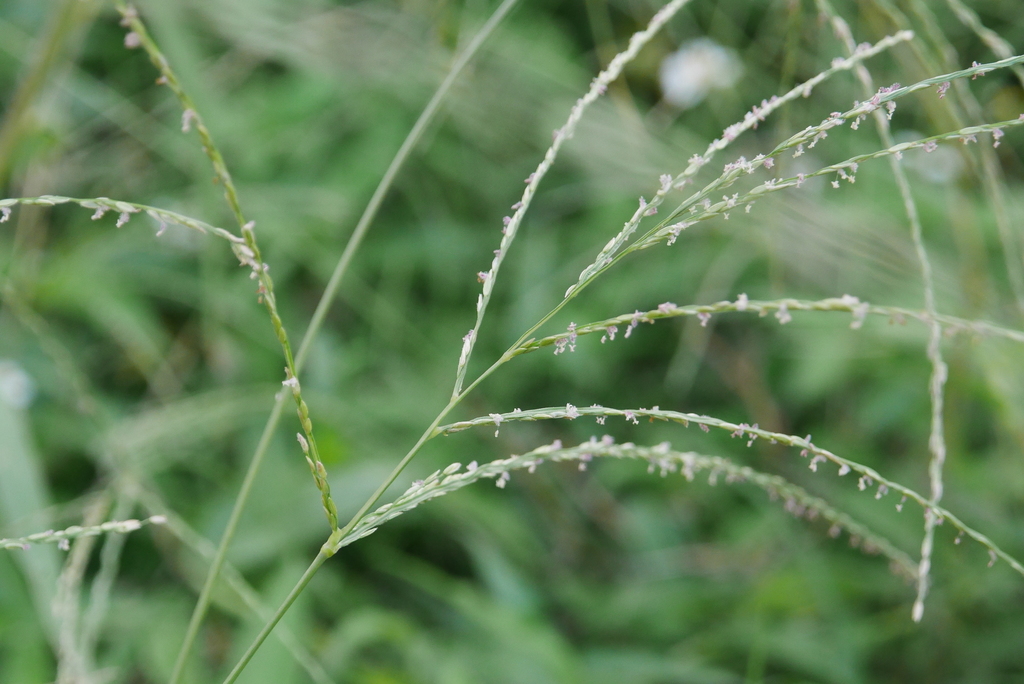
East Indian crabgrass
Digitaria setigera
Digitaria setigera, also more commonly called East Indian crabgrass, is a species of perennial grass in the family of Poaceae.
It was an introduced weed spread across Polynesia with native agriculture. In the Hawaiian Islands, the plant known as kūkaepuaʻa ("pig poop") became associated with the fertility deity Kamapuaʻa as its tangible form (kinolau).
From the article Digitaria setigera on Wikipedia (CC BY-SA), quoted section by section
Description
Digitaria setigera has cauline leaves that are a little over 30mm (1.1 inches) long and 3mm (0.1 inches) wide. It also has spikelets that consist of 3-16 spike-like branches.
Range & habitat
This species of grass is native to many subtropical regions such as Africa, Temperate Asia, Tropical Asia, Australasia, India, and Bangladesh. Additionally, it is native to Australia, where it is found in Northern Territory and Queensland.
== References ==
Wikipedia: “Distribution”
Where it lives
Recorded sightings
—
geo-referenced records in GBIF, from museums, herbaria and field observers.
Drag the globe to turn it. Dots are where records exist, not a range map; darker means more records.
In the stacks
Searching the stacks…
Every page naming Digitaria setigera in the Biodiversity Heritage Library →
This page is assembled live from iNaturalist, GBIF, Wikipedia, the Source Library and the Internet Archive. It is not yet part of the hand-edited codex. iNaturalist taxon 161916.