- Plants
- ›Vascular Plants
- ›flowering plants
- ›Dicots
- ›Sunflowers, Bellflowers, Fanflowers, and Allies
- ›triggerplant family
- ›Stylidium
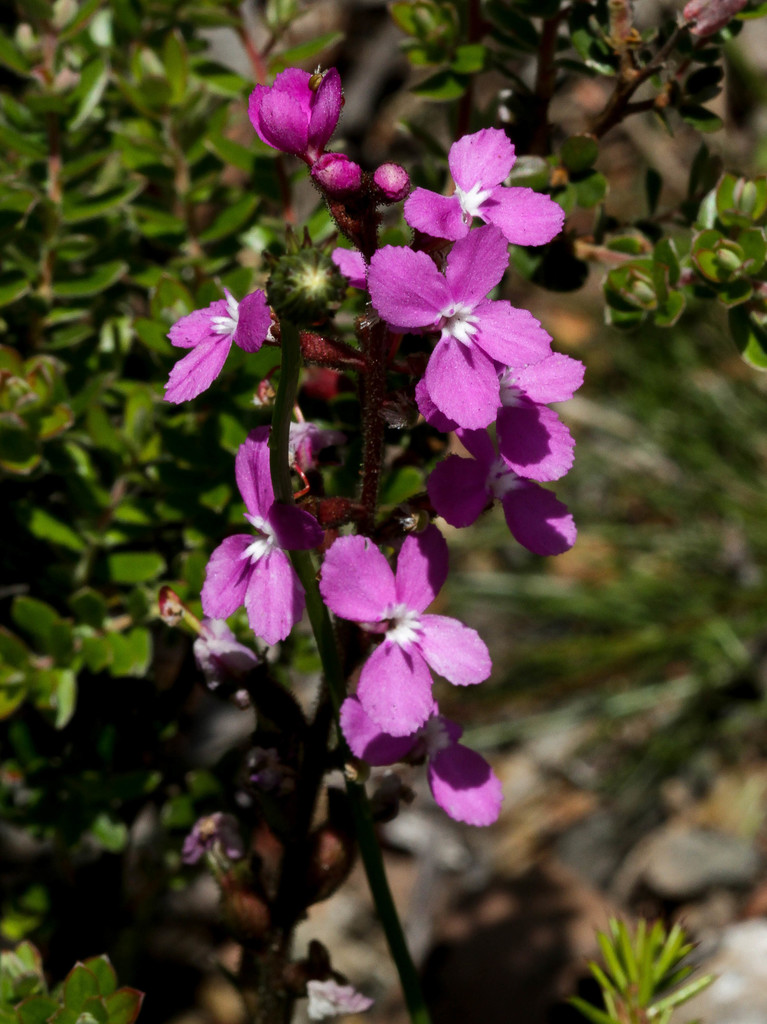
Grass Triggerplant
Stylidium graminifolium
Stylidium graminifolium, the grass triggerplant, is a dicotyledonous plant that belongs to the genus Stylidium (family Stylidiaceae). This species used to belong to the Stylidium graminifolium complex, but the name was conserved for this single species when two others were split from the complex and introduced as new species in 2001. S. graminifolium is endemic to Australia and is the Stylidium species with the widest distribution throughout Australia. It is a perennial plant with grass-like leaves and is easily cultivated. It has been considered to be a carnivorous or protocarnivorous plant because it possesses glandular trichomes underneath the flowers that can trap and digest prey.
From the article Stylidium graminifolium on Wikipedia (CC BY-SA), quoted section by section
Description
This species is an erect perennial herb with 5–40 cm (2–8 in) long narrow, grass-like leaves that appear from a basal rosette. A 15–90 cm (6–36 in) long scape bearing the racemous inflorescence appears in the spring and summer (October through February). The flowers are butterfly shaped and pale or bright pink with petals paired laterally. The calyx and corolla are both covered in glandular trichomes. The pollination mechanism involving a sensitive "trigger"—a floral column, in which the stamen and style are fused—is unique to the family Stylidiaceae. In S. graminifolium, the column is red and stamens are a greenish color. This species, like most Stylidium species, possesses glandular trichomes underneath the flower and on the scape, which are capable of digesting and absorbing nutrients from prey captured in the sticky mucilage. This information leads some researchers to believe that the plants are carnivorous or at the very least protocarnivorous.
Range & habitat
S. graminifolium has one of the widest ranges in the genus Stylidium, being native to Tasmania, Victoria, New South Wales, Queensland and South Australia. Its most common habitat is dry sclerophyll forests with nutrient-poor soil conditions.
Wikipedia: “Distribution and habitat”
How it is grown
Stylidium graminifolium is one of the few Stylidium species commercially available for sale as seed. This species, along with six other triggerplants, was tested for horticultural value and cold hardiness by Douglas Darnowski in the United States from 2000 to 2002. Dr. Darnowski's study concluded that S. graminifolium was able to survive cold temperatures down to -10°C, making it suitable for growing outside in as low as USDA hardiness zone 8. Darnowski also postulated that S. graminifolium's attractive floral spikes could be of use in floriculture and could be used to replace purple loosestrife in winter and spring arrangements. It has a relatively long flowering period and has somewhat specific conditions for germination, including smoke treatments and higher temperatures to simulate a bushfire, though germination can occur without these conditions. These germination requirements reduce the risk that it will become an invasive species. It is also able to grow on nutrient-poor soils and withstand significant drought. These attributes increase its potential for floricultural use. There are two cultivars of S. graminifolium, Tiny Trina and Little Saphire, that are tentatively recognized cultivar names by the Royal Horticultural Society. The epithet Little Saphire is derived from the bright blue foliage that distinguishes this cultivar from the type species. …
Wikipedia: “Cultivation”
Where it lives
Recorded sightings
—
geo-referenced records in GBIF, from museums, herbaria and field observers.
Drag the globe to turn it. Dots are where records exist, not a range map; darker means more records.
In the stacks
Searching the stacks…
Every page naming Stylidium graminifolium in the Biodiversity Heritage Library →
This page is assembled live from iNaturalist, GBIF, Wikipedia, the Source Library and the Internet Archive. It is not yet part of the hand-edited codex. iNaturalist taxon 145703.