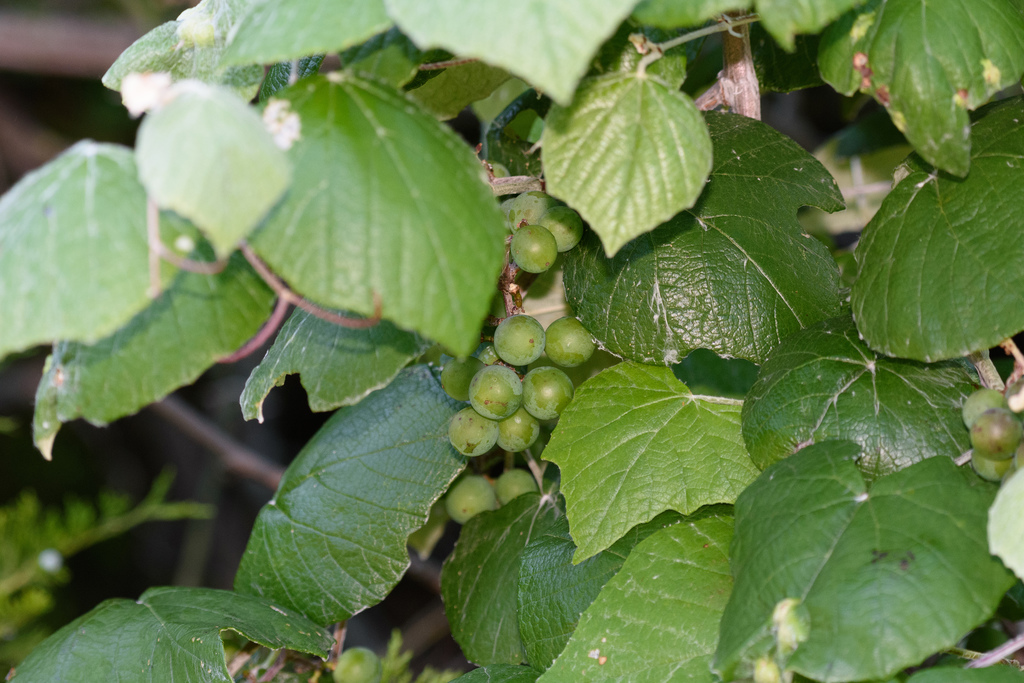
mustang grape
Vitis mustangensis
Vitis mustangensis, commonly known as the mustang grape, is a species of grape that is native to the southern United States. Its range includes parts of Mississippi, Alabama, Louisiana, Texas, and Oklahoma.
From the article Vitis mustangensis on Wikipedia (CC BY-SA), quoted section by section
Description
This woody species produces small clusters of hard green fruit that ripen into soft 3⁄4-inch (2 cm) dark purple berries between July –September. They have a thick outer layer of flesh and on average contain four heart-shaped seeds. This variety of grape is recognized by the leaves that have a white velvet-like underside and lobed, cordate shape. These vines often cover trees, shrubs, fences and other objects that it grows near. V. mustangensis is dioecious, with only female vines bearing fruit.
At the table
The fruit can be potentially irritating to the skin when handled, and are mildly unpleasant to eat raw because of bitterness and a high acidity content, however consuming the sweet inner flesh apart from the skins is common. This grape has a list of culinary use as jelly, pie-filling, wine and grape juice, all of which are typically processed with heat and sweetened with sugar. Mustang grapes have been used to make mustang wine since before the Civil War. The fruit and leaves of Mustang Grapes may also be used to dye wool.
Wikipedia: “Culinary use”
Where it lives
Recorded sightings
—
geo-referenced records in GBIF, from museums, herbaria and field observers.
Drag the globe to turn it. Dots are where records exist, not a range map; darker means more records.
In the stacks
Searching the stacks…
Every page naming Vitis mustangensis in the Biodiversity Heritage Library →
This page is assembled live from iNaturalist, GBIF, Wikipedia, the Source Library and the Internet Archive. It is not yet part of the hand-edited codex. iNaturalist taxon 142776.