- Plants
- ›Vascular Plants
- ›flowering plants
- ›Dicots
- ›Mints, Plantains, Olives, and Allies
- ›figwort family
- ›Buddlejeae
- ›Buddleja
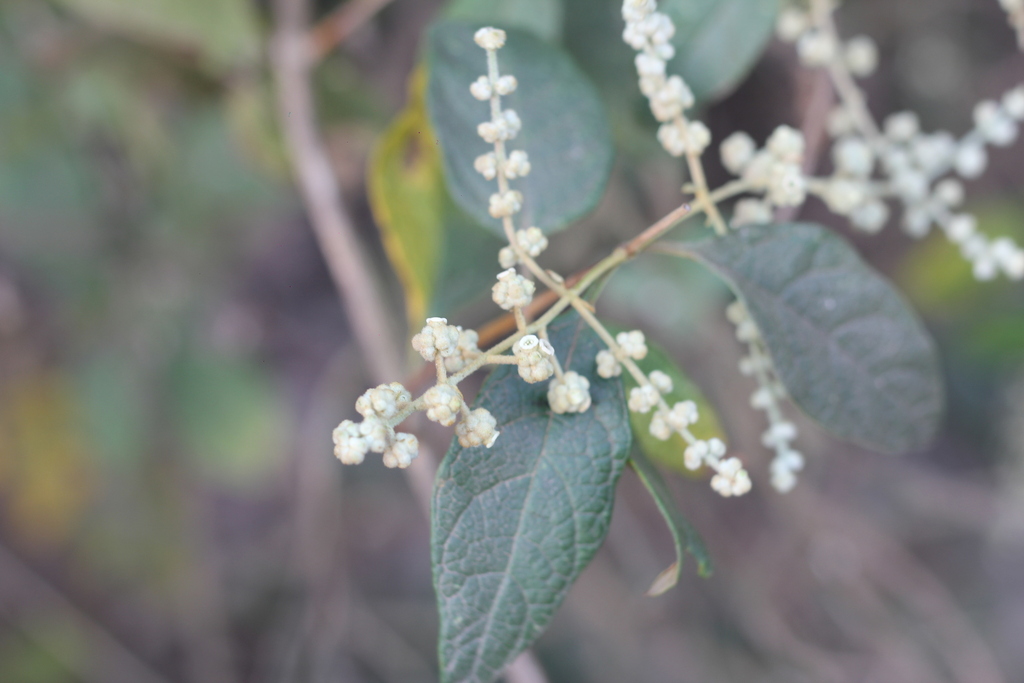
Buddleja iresinoides
Buddleja iresinoides is a species of flowering plant in the family Scrophulariaceae. It is endemic to the rocky hillsides and stream banks of Bolivia and northern Argentina at altitudes from 300 to 1500 m. The species was correctly identified as a Buddleja and named by Hosseus in 1924.
From the article Buddleja iresinoides on Wikipedia (CC BY-SA), quoted section by section
Description
Buddleja iresinoides is a dioecious shrub 1 – 3 m, occasionally < 5 m, high with light grey finely-striated bark. The pendulous branches are subquadrangular, tomentulose or tomentose, bearing lanceolate to ovate leaves 5 – 15 cm long by 2 – 5 cm wide on 0.5 – 1.5 cm petioles, glabrous above and tomentose, tomentulose, or even glabrescent below. The cream inflorescence is paniculate, 10 – 15 cm long with two orders of branches, the flowers borne in small globose heads 4 – 6 mm in diameter and comprising 3 – 12 flowers. The corolla is < 2 mm long and of differing shape depending on the sex of the plant, which led Fries to mistakenly identify two separate species (see Synonyms).
Where it lives
Recorded sightings
—
geo-referenced records in GBIF, from museums, herbaria and field observers.
Drag the globe to turn it. Dots are where records exist, not a range map; darker means more records.
In the stacks
Searching the stacks…
Every page naming Buddleja iresinoides in the Biodiversity Heritage Library →
This page is assembled live from iNaturalist, GBIF, Wikipedia, the Source Library and the Internet Archive. It is not yet part of the hand-edited codex. iNaturalist taxon 1405341.