- Plants
- ›Vascular Plants
- ›flowering plants
- ›Dicots
- ›myrtles, evening primroses, and allies
- ›myrtle family
- ›Myrtoideae
- ›Metrosidereae
- ›Metrosideros
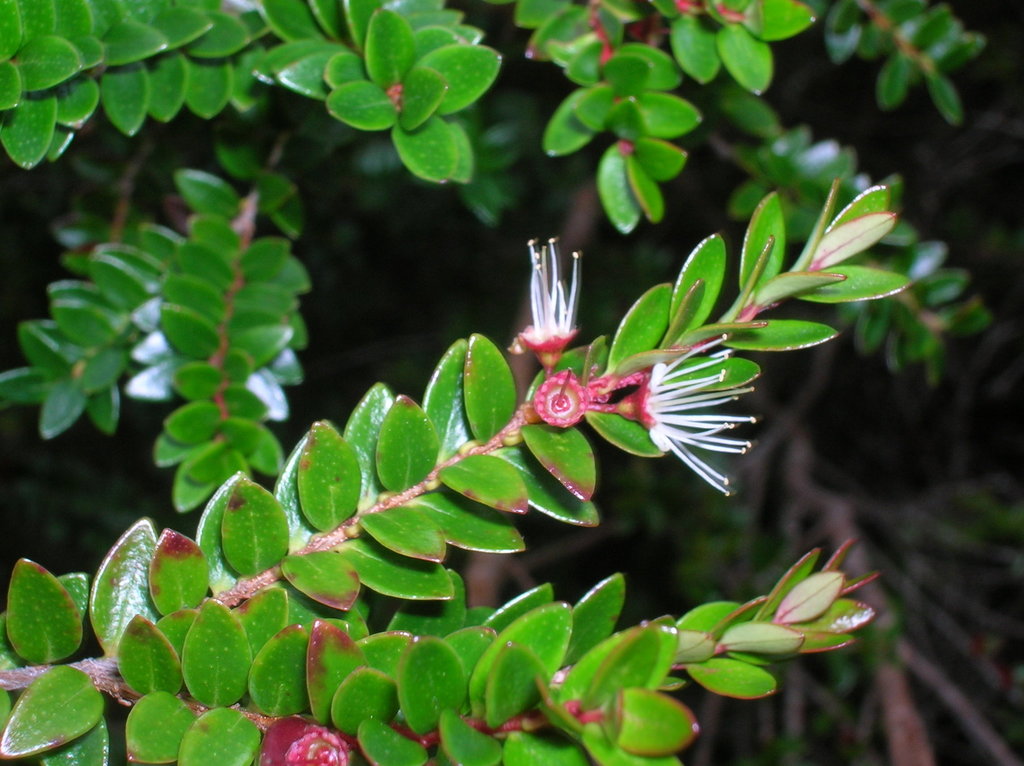
Tepu
Metrosideros stipularis
Metrosideros stipularis is a species of the myrtle family commonly known as tepú, trepú, or tepual. It is an evergreen tree or shrub that attains heights of about four to five metres. The plant is native to southern South America in the southern portions of Chile and Argentina and is a typical resident of very wet areas, especially in swamps and peat bogs and with gleyic soil horizons. Tepú has white flowers that emerge during the austral summer from December through April, but more commonly from Frebruary to March. The species is shade tolerant and grows merkedly slowly, less than 1 mm per year. Mature tepú forest or tepuales have high basal areas when compared with other types of humid forests. Tepú trees tend to grow horizontally and Tepú forest tend have high biomass contents.
In some localities it grows together with Fitzroya cupressoides or with Pilgerodendron uviferum. The tepu is most abundant in the Chilean provinces of Chiloé, Llanquihue and Palena.
Where it lives
Recorded sightings
—
geo-referenced records in GBIF, from museums, herbaria and field observers.
Drag the globe to turn it. Dots are where records exist, not a range map; darker means more records.
In the stacks
Searching the stacks…
Every page naming Metrosideros stipularis in the Biodiversity Heritage Library →
This page is assembled live from iNaturalist, GBIF, Wikipedia, the Source Library and the Internet Archive. It is not yet part of the hand-edited codex. iNaturalist taxon 1367415.