- Plants
- ›Vascular Plants
- ›flowering plants
- ›Dicots
- ›carrots, ivies, and allies
- ›carrot family
- ›Apioideae
- ›Chervils, Carrots, Hedgeparsleys and Allies
- ›Scandicinae
- ›Osmorhiza
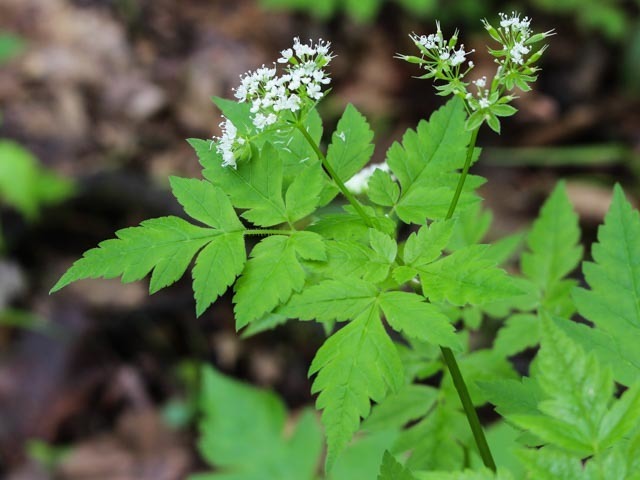
aniseroot
Osmorhiza longistylis
Osmorhiza longistylis, commonly called long-styled sweet-cicely or longstyle sweetroot, is an herbaceous plant in the family Apiaceae. It is native to North America, where it is found from the Rocky Mountains east to the Atlantic Coast, in Canada and the United States. Its natural habitat is in forests with fertile soil, often in areas of loam and dappled sunlight. It can be found in areas of high or average quality natural communities, and does not tolerate intense disturbance.
It is an herbaceous perennial that grows to two and a half feet tall. It produces umbels of small white flowers in late spring and early summer. The crushed plant has a distinct scent of anise.
From the article Osmorhiza longistylis on Wikipedia (CC BY-SA), quoted section by section
What it does
Small to medium-sized bees, wasps, flies, and beetles feed on the nectar and pollen of the flowers. The caterpillars of the butterfly Papilio polyxenes (Black Swallowtail) feed on the foliage.
Wikipedia: “Ecology”
At the table
The roots have occasionally been used as a culinary substitute for anise. This species was also used historically by Native Americans as a medicinal herb.
Wikipedia: “Uses”
Where it lives
Recorded sightings
—
geo-referenced records in GBIF, from museums, herbaria and field observers.
Drag the globe to turn it. Dots are where records exist, not a range map; darker means more records.
In the stacks
Searching the stacks…
Every page naming Osmorhiza longistylis in the Biodiversity Heritage Library →
This page is assembled live from iNaturalist, GBIF, Wikipedia, the Source Library and the Internet Archive. It is not yet part of the hand-edited codex. iNaturalist taxon 130368.