- Plants
- ›Vascular Plants
- ›flowering plants
- ›Dicots
- ›nightshades, bindweeds, gooseweeds, and allies
- ›nightshade family
- ›nightshades and allies
- ›groundcherries, lanterns, and allies
- ›Physalis
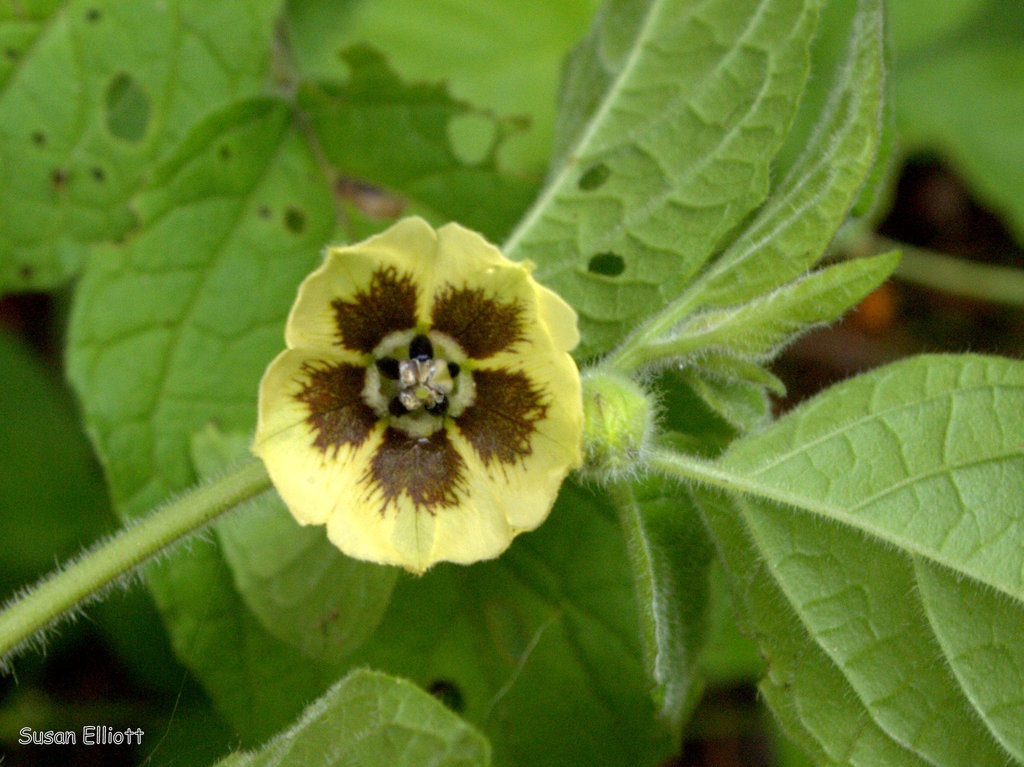
clammy groundcherry
Physalis heterophylla
Physalis heterophylla, colloquial name clammy groundcherry, is a herbaceous plant that is a member of the Solanaceae family. It is native to North America, occurring primarily in the eastern United States and Canada. It is known to occur in all contiguous states except for Nevada and California. It is found mainly in habitats such as dry or mesic prairies, gravel hills and rises, sandy or rocky soils, and waste places such as roadsides.
From the article Physalis heterophylla on Wikipedia (CC BY-SA), quoted section by section
Toxicity
Outside of the mature fruit, which is edible, all parts of P. heterophylla contain toxic amounts of solanine, which is poisonous to humans and animals. Symptoms of solanine poisoning include headache, stomach pain, lowered temperature, dilated pupils, vomiting, diarrhea, circulatory and respiratory depression, and loss of sensation.
Where it lives
Recorded sightings
—
geo-referenced records in GBIF, from museums, herbaria and field observers.
Drag the globe to turn it. Dots are where records exist, not a range map; darker means more records.
In the stacks
Searching the stacks…
Every page naming Physalis heterophylla in the Biodiversity Heritage Library →
This page is assembled live from iNaturalist, GBIF, Wikipedia, the Source Library and the Internet Archive. It is not yet part of the hand-edited codex. iNaturalist taxon 128768.