- Plants
- ›Vascular Plants
- ›flowering plants
- ›Dicots
- ›saxifrages, stonecrops, and allies
- ›saxifrage family
- ›alumroot tribe
- ›Heuchera
- ›Heuchera
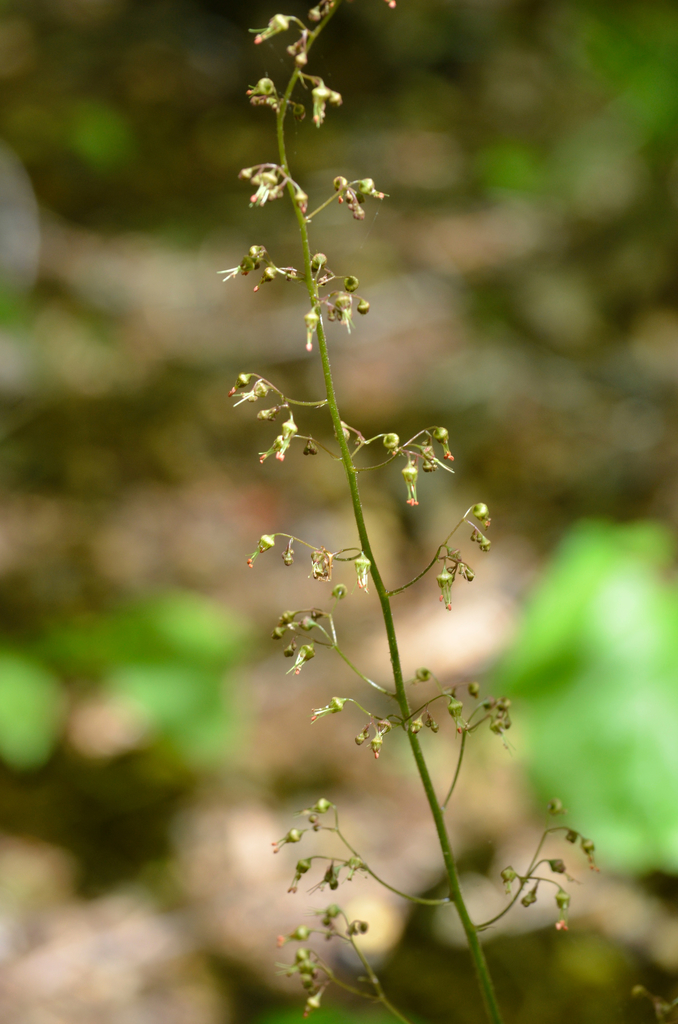
American alumroot
Heuchera americana
Heuchera americana, or American alumroot (also called Coral bells or Rock geranium), is a small evergreen perennial, under 2 ft (0.61 m) high and wide, native to eastern and central North America while also ranging into Ontario, Canada. It is a part of the Saxifrage family.
From the article Heuchera americana on Wikipedia (CC BY-SA), quoted section by section
Description
American alumroot has lobed semi-palmate green, purple, or brown leaves that may or may not be veined or marbled. Loose racemes of insignificant green to cream flowers up to 1 m (3 ft 3 in) tall bloom June to August. It is a monecious plant with 5 stamen and can either have 5 petals and sepals or 5 tepals. The leaf arrangement is alternate. It is a ground cover plant. Found naturally in rock crevices and ledges of bluffs; it has a preference for acidic soil. It is susceptible to leaf scorch making it best grown in areas with at least some shade. This species has become popular with horticulturists and home-gardeners. It is usually grown for its unique foliage. New varieties are introduced regularly.
Wikipedia: “Characteristics”
Where it lives
Recorded sightings
—
geo-referenced records in GBIF, from museums, herbaria and field observers.
Drag the globe to turn it. Dots are where records exist, not a range map; darker means more records.
In the stacks
Searching the stacks…
Every page naming Heuchera americana in the Biodiversity Heritage Library →
This page is assembled live from iNaturalist, GBIF, Wikipedia, the Source Library and the Internet Archive. It is not yet part of the hand-edited codex. iNaturalist taxon 127487.