- Plants
- ›Vascular Plants
- ›flowering plants
- ›Dicots
- ›Gentians, Dogbanes, Madders, and Allies
- ›Dogbane Family
- ›milkweeds
- ›Asclepiadeae
- ›Asclepiadinae
- ›Asclepias
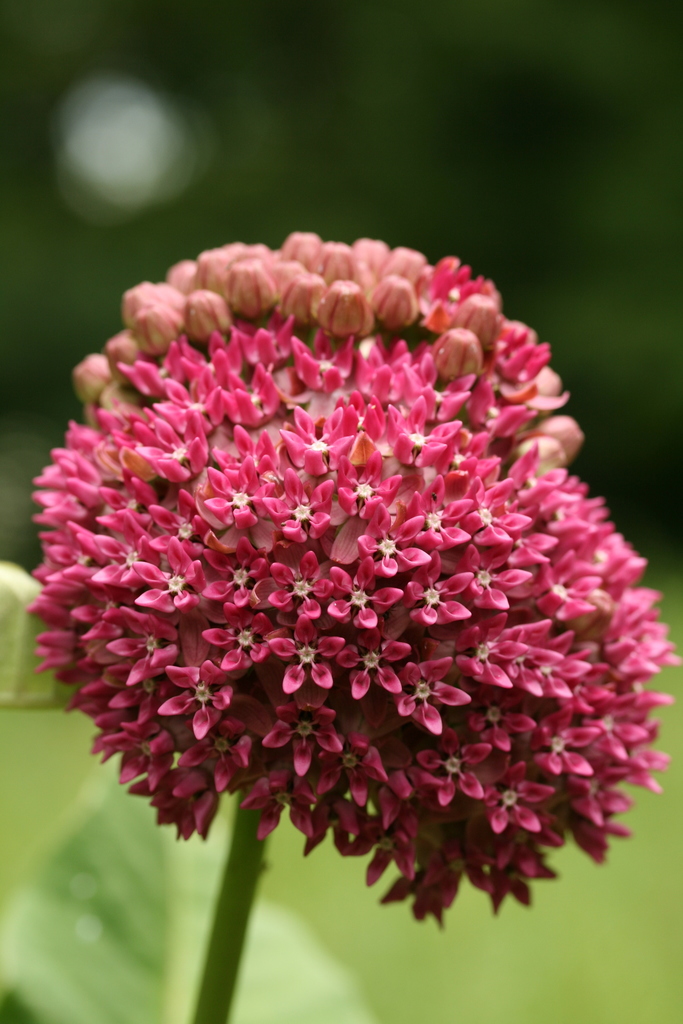
purple milkweed
Asclepias purpurascens
Asclepias purpurascens, or the purple milkweed, is a herbaceous plant species. It is in the genus Asclepias, making it a type of milkweed. It is native to the Eastern, Southern and Midwestern United States similar to the range of the common milkweed (Asclepias syriaca). The plant gets its name from the flowers that first develop a pink color but then turn darker purple as they mature. Unlike common milkweed, purple milkweed prefers some shade and is considered a plant of partial shade. It is also considered an indicator of oak savanna, especially in Wisconsin. The species rarely produces seed pods which are smooth, instead of the rough warty ones produced by common milkweed.
From the article Asclepias purpurascens on Wikipedia (CC BY-SA), quoted section by section
At the table
Like other members of the milkweeds, several insects live off the plant, including the monarch butterfly (Danaus plexippus), the milkweed beetle (Tetraopes tetraophtalmus), large milkweed bug (Oncopeltus fasciatus), small milkweed bug (Lygaeus kalmii) and milkweed leaf beetle (Labidomera clivicollis). Other insects and pollinators feed off the flower's nectar. This species is sometimes cultivated in gardens designed to attract butterflies, but is less common than the light purple swamp milkweed (Asclepias incarnata) or the orange butterfly weed (Asclepias tuberosa). The nectar of the plant attracts many other species of butterflies and insects.
Wikipedia: “Uses”
Where it lives
Recorded sightings
—
geo-referenced records in GBIF, from museums, herbaria and field observers.
Drag the globe to turn it. Dots are where records exist, not a range map; darker means more records.
In the stacks
Searching the stacks…
Every page naming Asclepias purpurascens in the Biodiversity Heritage Library →
This page is assembled live from iNaturalist, GBIF, Wikipedia, the Source Library and the Internet Archive. It is not yet part of the hand-edited codex. iNaturalist taxon 125380.