- Plants
- ›Vascular Plants
- ›flowering plants
- ›Dicots
- ›Woodsorrels, Quandongs, and Allies
- ›quandong family
- ›Tetratheca
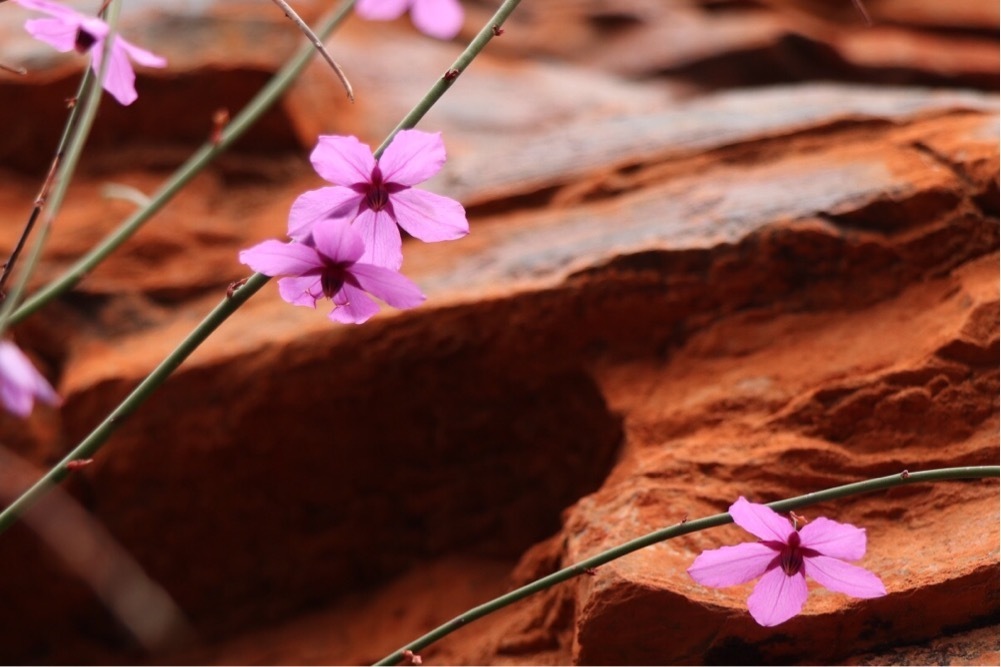
Tetratheca paynterae
Tetratheca paynterae, also known as Paynter's Tetratheca, is a species of plant in the quandong family that is endemic to Australia. There are two recognised subspecies.
From the article Tetratheca paynterae on Wikipedia (CC BY-SA), quoted section by section
Description
The species grows as an erect or spreading shrub to 0.15–1 m in height. The leaves are 0.8–2.5 mm long and less than a millimetre wide. The flowers occur in clusters, each flower having five petals 5–13 mm long and 3–8 mm wide, deep pink in colour with a yellow spot at the base. The fruits are 5–8 mm long and 4–6 mm wide. Peak flowering takes place from September to November.
Range & habitat
The known range of the species is limited to two sites 80–110 km north of Koolyanobbing in the Coolgardie IBRA bioregion of Western Australia. It grows in sparse, open scrub, in shallow pockets of red loam soil in rock crevices and on cliffs and ridges in exposed areas on banded ironstone hills.
Wikipedia: “Distribution and habitat”
Where it lives
Recorded sightings
—
geo-referenced records in GBIF, from museums, herbaria and field observers.
Drag the globe to turn it. Dots are where records exist, not a range map; darker means more records.
In the stacks
Searching the stacks…
Every page naming Tetratheca paynterae in the Biodiversity Heritage Library →
This page is assembled live from iNaturalist, GBIF, Wikipedia, the Source Library and the Internet Archive. It is not yet part of the hand-edited codex. iNaturalist taxon 1249996.