- Plants
- ›Vascular Plants
- ›flowering plants
- ›Dicots
- ›Mints, Plantains, Olives, and Allies
- ›Acanthus Family
- ›Acanthoideae
- ›Ruellieae
- ›Ruelliinae
- ›Ruellia
- ›Boreosilva
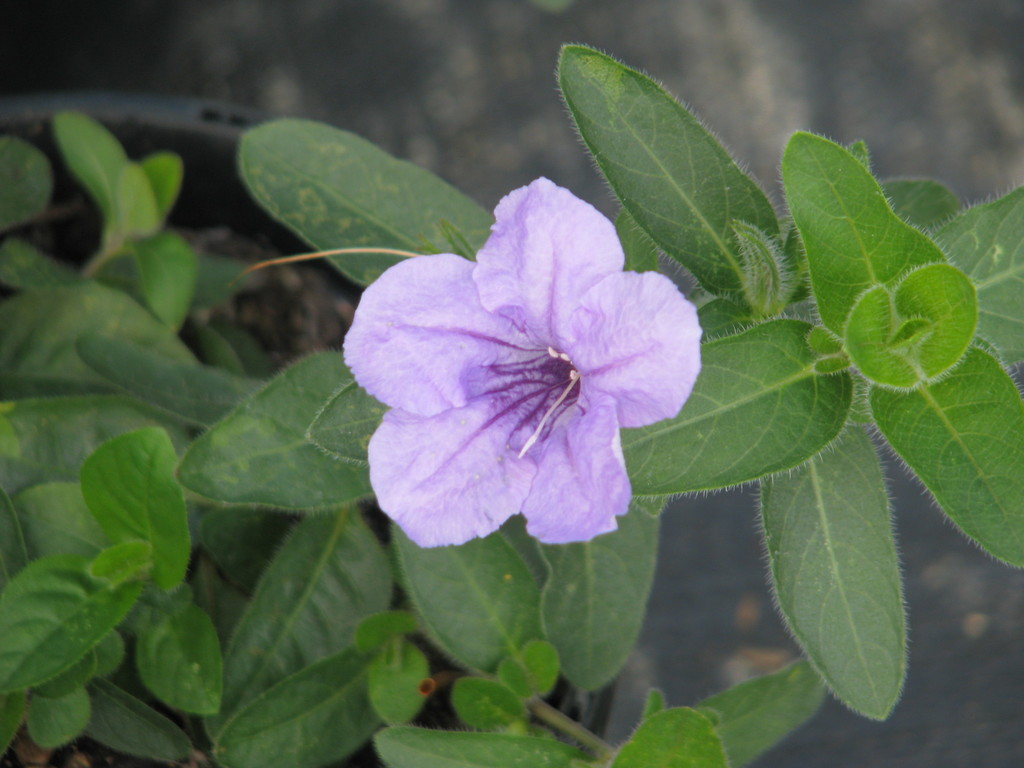
hairy ruellia
Ruellia humilis
Ruellia humilis (wild petunia, fringeleaf wild petunia, hairy petunia, low wild petunia) is a species of flowering plant in the family Acanthaceae. It is native to the eastern United States. It is grown as an ornamental plant.
Ruellia humilis is native to the U.S. from the northeastern/northern central to the southeastern/southern central regions. According to the Germplasm Resources Information Network of the United States Department of Agriculture, Ruellia humilis is native to the following states:
From the article Ruellia humilis on Wikipedia (CC BY-SA), quoted section by section
What it does
Ruellia humilis grows in dry to average soil in full sun to part shade conditions. Its habitats include prairies, glades, meadows, and open woodland environments. It grows well in dry, shallow, and rocky soils. It has been observed to have a high level of richness of arbuscular mycorrhizal fungi(AMF) diversity when located in calcareous plots as compared to acidic plots. With the general exclusive presence of Ruellia humilis in the United States set, there is more data that indicates, more specifically, the type of biome and regions that this plant shows up in more often. One case study sampling from Buettner Xeric Limestone Prairies, Illinois, Monroe County revealed that when comparing frequency of the plant, the plant had 70% presence in the eastern region of prairie and only 3% in the western region prairie. To place this data in perspective, the eastern region's vegetation covered about 38% of the surface while the western region's vegetation covered about 33.5% of its surface. Both regions' "rock was between 17% and 19%, and bare ground and litter was from 40% to 44%."
Wikipedia: “Ecology”
Where it lives
Recorded sightings
—
geo-referenced records in GBIF, from museums, herbaria and field observers.
Drag the globe to turn it. Dots are where records exist, not a range map; darker means more records.
In the stacks
Searching the stacks…
Every page naming Ruellia humilis in the Biodiversity Heritage Library →
This page is assembled live from iNaturalist, GBIF, Wikipedia, the Source Library and the Internet Archive. It is not yet part of the hand-edited codex. iNaturalist taxon 119651.