- Plants
- ›Vascular Plants
- ›flowering plants
- ›monocots
- ›Agaves, Orchids, Irises, and Allies
- ›agave and allies
- ›cabbage tree subfamily
- ›Arthropodium
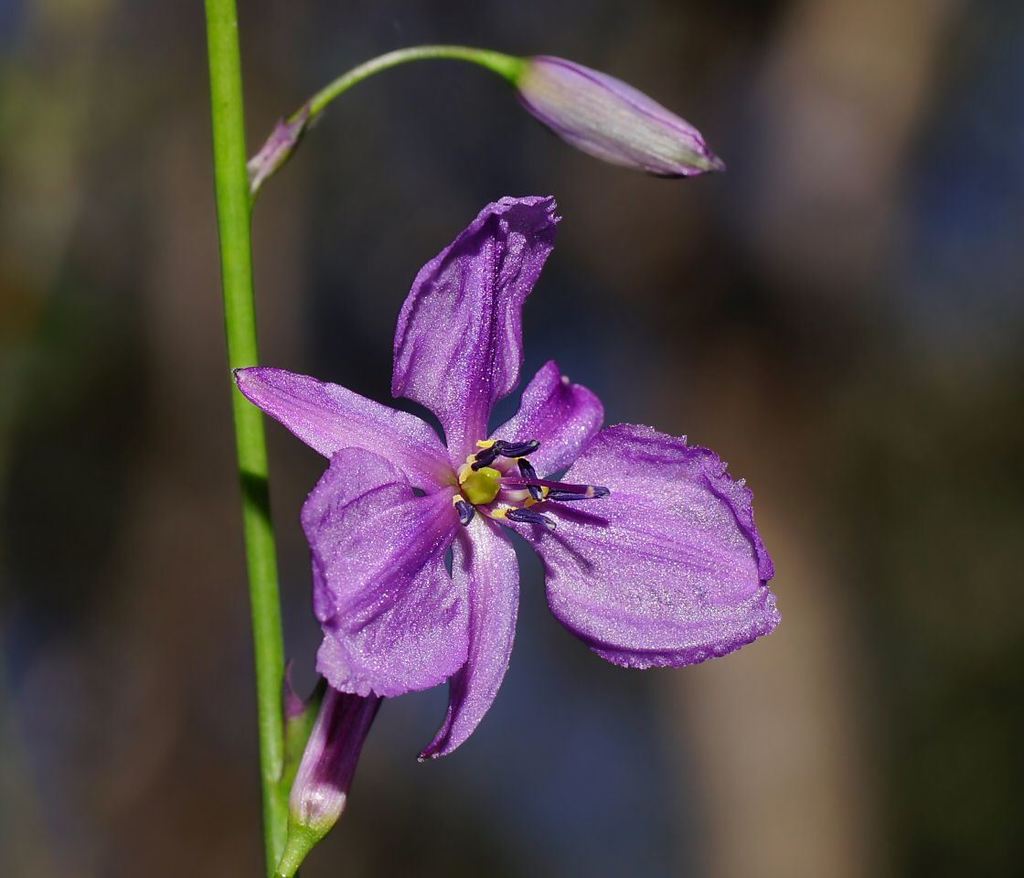
chocolate lily
Arthropodium strictum
Dichopogon strictus (syn. Arthropodium strictum), commonly known as chocolate lily, is a herbaceous perennial plant species native to Australia.
From the article Dichopogon strictus on Wikipedia (CC BY-SA), quoted section by section
Description
The species has up to 12 leaves that are linear or lanceolate in shape and are up to 65 cm long and 1–12 mm wide. The racemose inflorescence is up to 1 metre high. This appears between August and January in the species' native range. The individual, drooping flowers range in colour from pale mauve to dark purple. The common name chocolate lily alludes to the scent of the flowers which resembles chocolate, caramel or vanilla. The tubers, which are juicy and slightly bitter in taste, are eaten by Indigenous Australians.
How it is grown
Plants prefer a well-drained situation with partial to full sun exposure. In drought conditions, plants may shrivel back to the tuber then resprout with autumn rains, whereas in situations where steady moisture levels are maintained in the soil, the summer flowering period will be extended. The species is suited to group plantings under trees or may be grown in containers.
Wikipedia: “Cultivation”
Where it lives
Recorded sightings
—
geo-referenced records in GBIF, from museums, herbaria and field observers.
Drag the globe to turn it. Dots are where records exist, not a range map; darker means more records.
In the stacks
Searching the stacks…
Every page naming Arthropodium strictum in the Biodiversity Heritage Library →
This page is assembled live from iNaturalist, GBIF, Wikipedia, the Source Library and the Internet Archive. It is not yet part of the hand-edited codex. iNaturalist taxon 1138706.