- Animals
- ›Chordates
- ›Vertebrates
- ›Cartilaginous Fishes
- ›Sharks and Rays
- ›Rays
- ›Stingrays
- ›Eagle Rays
- ›Myliobatis
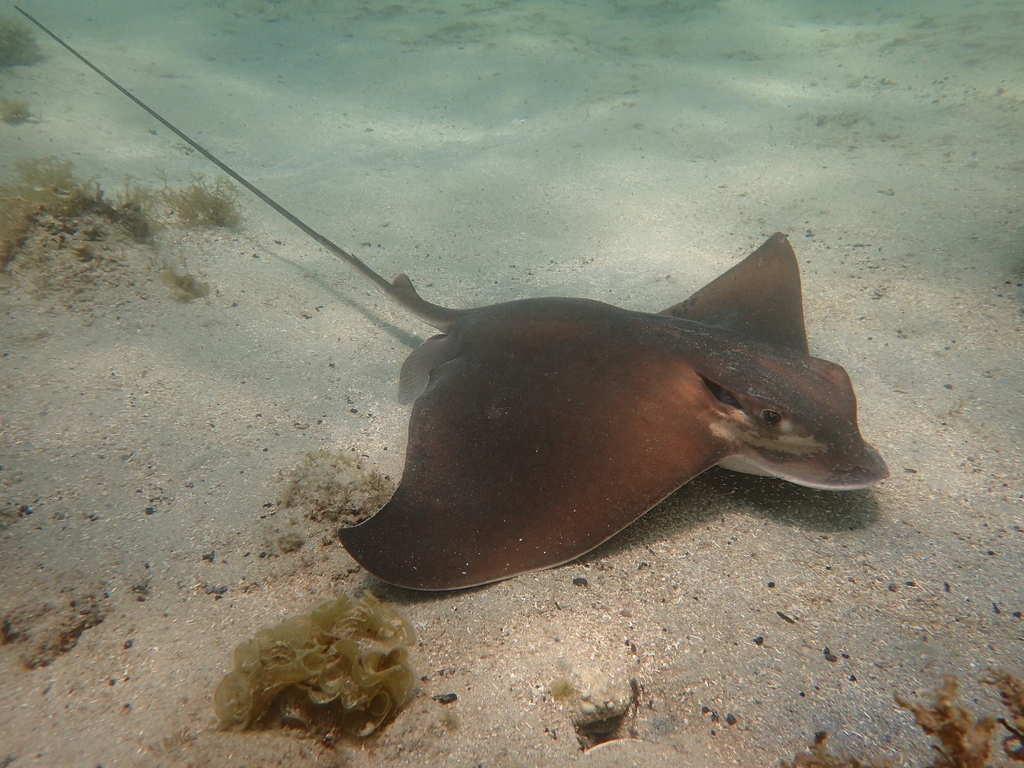
Longnose Eagle Ray
Myliobatis longirostris
The longnose eagle ray or snouted eagle ray (Myliobatis longirostris) is a species of fish in the family Myliobatidae. It is found in the East Pacific Ocean from Baja California and the Gulf of California to Sechura, Peru, ranging from shallow water to a depth of 64 m (210 ft). This species was first described in 1964 by American ichthyologist Shelton Pleasants Applegate, who was an expert on fossil and living sharks, and American marine biologist John Edgar Fitch.
From the article Longnose eagle ray on Wikipedia (CC BY-SA), quoted section by section
Range & habitat
The longnose eagle ray is native to tropical and warm, temperate waters in the east-central Pacific Ocean, ranging from Mexico to Peru. It occurs on the continental shelf from the surface down to about 64 m (210 ft).
Wikipedia: “Distribution and habitat”
Where it lives
Recorded sightings
—
geo-referenced records in GBIF, from museums, herbaria and field observers.
Drag the globe to turn it. Dots are where records exist, not a range map; darker means more records.
In the stacks
Searching the stacks…
Every page naming Myliobatis longirostris in the Biodiversity Heritage Library →
This page is assembled live from iNaturalist, GBIF, Wikipedia, the Source Library and the Internet Archive. It is not yet part of the hand-edited codex. iNaturalist taxon 106325.