 NL·0328
Herbarium of the Nature Library
- Name
- Hydrochoerus hydrochaeris
- Family
- Caviidae
- Native to
- South America east of the Andes, from Colombia and Venezuela to northeastern Argentina and Uruguay; also Panama
- Habitat
- Wetland, Seasonally flooded savanna, Riverbank, Gallery forest
Capybara
Hydrochoerus hydrochaeris
Also calledKapiÿva / Ka'apiûara (Tupi–Guaraní, 'grass-eater') · Capivara (Portuguese) · Carpincho (Argentine/Uruguayan Spanish) · Chigüire (Venezuelan Spanish) · Ronsoco (Peruvian Spanish)
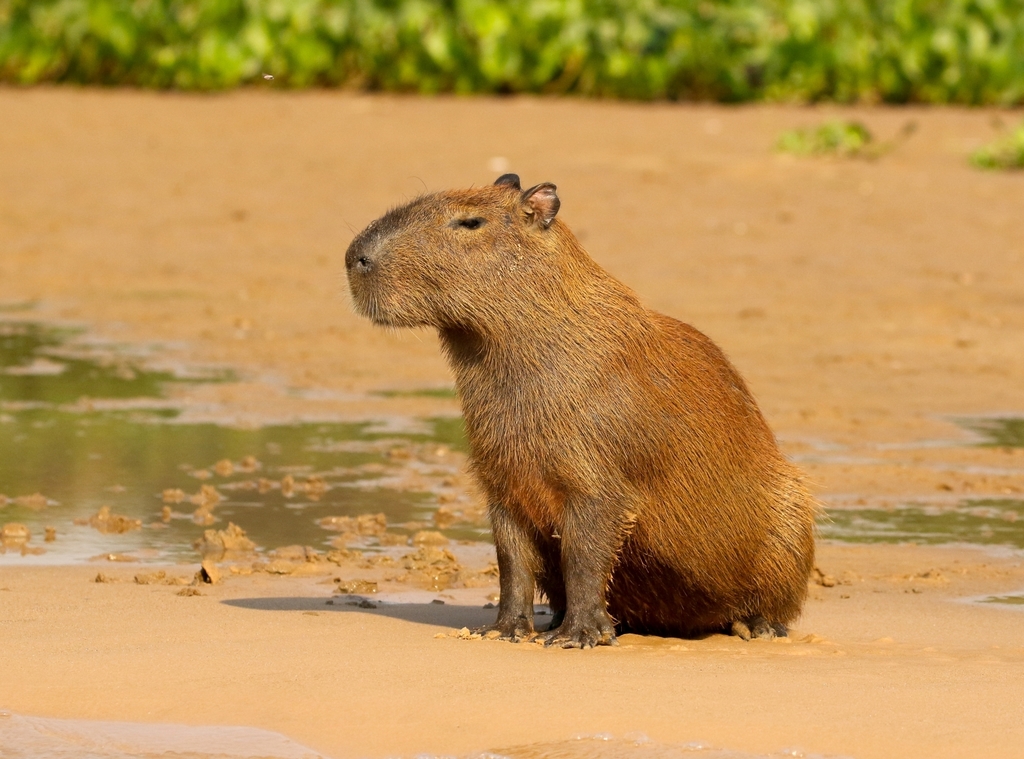
The world's largest rodent, a semi-aquatic grazer of South American wetlands that lives in social groups and seldom strays far from water. With partly webbed feet and eyes, ears and nostrils set high on its head, it can lie almost submerged. Birds, monkeys and other animals often perch on or lounge beside it.
The capybara or greater capybara is the largest living rodent, native to all countries in South America except Chile. It is a semiaquatic herbivore that inhabits savannas and dense forests, living near and in bodies of freshwater and feeding mainly on grasses and aquatic plants. Wikipedia
What it can do
- iCan stay submerged for about five minutes and sleep in the water with only its nose exposed
- iiRe-ingests its own soft droppings to extract more nutrients from grass
- iiiTeeth grow continuously to cope with abrasive grasses
In the field
Field marks
- aSilhouette: barrel-shaped, tailless, blunt-headed rodent the size of a large dog
- bCoarse, sparse reddish-brown to grey hair
- cDominant males have a large, bare scent gland ('morrillo') on the top of the snout
- dTracks: four toes on front feet, three on hind, partly webbed; signs include grazing lawns and droppings near water
- Voice
- Barks sharply in alarm; also whistles, clicks, purrs and grunts within the group.
- Not to be confused with
- Lowland paca is smaller with white spotted rows on its flanks. Coypu (nutria) is much smaller with a long rat-like tail and orange incisors.
- Where to see it
- Esteros del Iberá (Argentina); Pantanal (Brazil); Los Llanos, e.g. Hato El Cedral (Venezuela); Lago Paranoá and city parks in Brasília and Curitiba (Brazil)
- When
- Resident year-round; dry-season gatherings around shrinking water bodies (roughly July–October in the Pantanal)
Listen
Looking for field recordings…
Life & habits
- Diet
- Grasses, aquatic plants, bark and fruit; selective grazer
- Habitat
- Marshes, rivers, lakes and flooded grasslands with nearby dry ground
- Size
- 1–1.3 m; 35–66 kg
- Lifespan
- About 8–10 years
Lives in groups of 10–20 led by a dominant male; groups merge into hundreds in the dry season around remaining water.
Where it lives
Recorded sightings
—
geo-referenced records in GBIF, from museums, herbaria and field observers.
Native range
South America east of the Andes, from Colombia and Venezuela to northeastern Argentina and Uruguay; also Panama
Drag the globe to turn it. Dots are where records exist, not a range map; darker means more records.
In the old herbals & bestiaries
Woodcuts and engravings matched from the Source Library’s scanned books by name. Plates marked “relative” show a close kin rather than this exact species. Click a plate to read the page it came from, with translation.


In the stacks
Searching the stacks…
Every page naming Hydrochoerus hydrochaeris in the Biodiversity Heritage Library →
Marginalia
Venezuelan Catholics traditionally eat salted capybara (chigüire) during Lent, a custom said to rest on a colonial-era church ruling that the semi-aquatic animal counted as fish. Its name comes from Tupi ka'apiûara, usually translated 'grass-eater'.
Curiosity
The Brazilian city of Curitiba and the wealthy Nordelta suburb of Buenos Aires both have well-known urban capybara populations.
Kinship



Photographs: iNaturalist contributors under the licences shown. Records: GBIF.org. Historical plates: Source Library (CC BY-SA 4.0; originals public domain). Summary text: Nature Library editors and Wikipedia (CC BY-SA). Medicinal and edibility notes are historical and educational, not advice. iNaturalist taxon 74442.