 NL·0125
Herbarium of the Nature Library
- Name
- Digitalis purpurea
- Family
- Plantaginaceae
- Native to
- Western and south-western Europe and north-western Africa; naturalised in North America, New Zealand and elsewhere
- Habitat
- Temperate woodland, Heathland, Disturbed ground
Foxglove
Digitalis purpurea
Also calledRoter Fingerhut (German) · Dedalera (Spanish) · Digitale pourpre (French) · Bysedd y cŵn (Welsh, 'dog's fingers') · Máo dìhuáng 毛地黄 (Chinese) · Folk's glove (Old English)
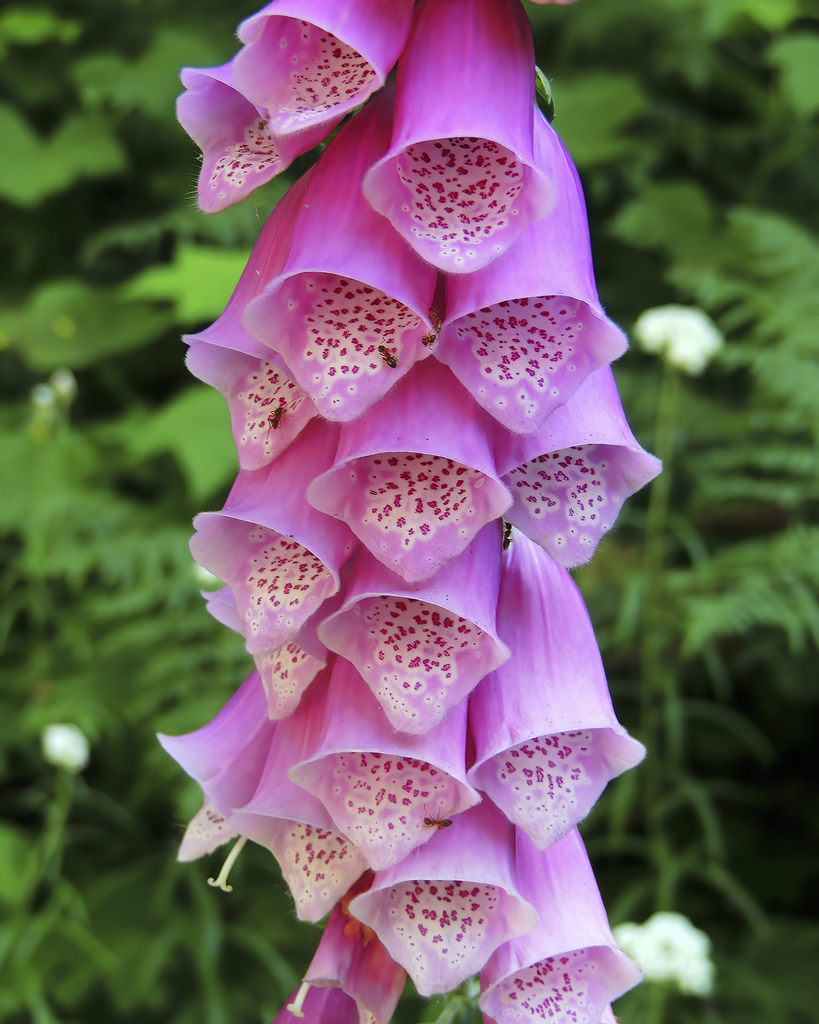
A towering biennial of woodland clearings whose spotted purple bells are built for bumblebees, and whose leaves gave medicine one of its most important heart drugs. Every part is poisonous; the gap between a healing dose and a deadly one is very small.
Digitalis purpurea, the foxglove or common foxglove, is a toxic species of flowering plant in the plantain family Plantaginaceae, native to and widespread throughout most of temperate Europe. It has also naturalized in parts of North America, as well as some other temperate regions. The plant is a popular garden subject, with many cultivars available. It is the original source of the heart medicine digoxin. This biennial plant grows as a rosette of leaves in the first year after sowing, before flowering and then dying in the second year. It generally produces enough seeds so that new plants will continue to grow in a garden setting. Wikipedia
What it can do
- iMakes cardiac glycosides such as digitoxin that strengthen and slow the heartbeat
- iiSpotted flower tubes act as landing guides for bumblebees, its main pollinators
- iiiA single plant sheds vast numbers of dust-like seeds that persist for years in the soil
- ivSprings up quickly after woodland is felled or burned
At the table
All parts are poisonous. Before flowering its leaf rosettes have been mistaken for comfrey or borage, with fatal results. Children and pets are at risk.
In the medicine cabinet
| Tradition | Use |
|---|---|
| European folk medicine | Leaf preparations for dropsy (oedema), recorded by William Withering from a Shropshire family remedy |
| Modern medicine | Source of digitoxin, used for heart failure and atrial fibrillation; the related D. lanata yields digoxin |
Weight of evidence
Strong. An approved drug, or consistent results in well-run clinical trials.
Active compounds
digitoxin, gitoxin, gitaloxin, purpurea glycosides A & B, digitonin
Fruit & seed
Fruit
Capsule
Ripens: Late summer
Egg-shaped dry capsule splitting in two to release seed; poisonous.
Seed
~0.5 mm
Minute reddish-brown seeds
- Dispersal
- Shaken from capsules by wind; persistent soil seed bank
- Germination
- Needs light; surface-sow, 2–3 weeks at 15–20 °C
How to grow it
Hardiness (USDA zones)
USDA 4–9. Survives winters down to about -34 °C.
- Light
- Part shade
- Water
- Moderate
- Soil
- Humus-rich, acidic, moist but drained
- Propagation
- Seed
- To harvest
- Flowers in its second year (ornamental only)
- Climates
- Temperate, Oceanic
- 1Surface-sow in late spring or summer
- 2Plant rosettes out in autumn, away from children's play areas and edible beds
- 3Let it flower the next summer and self-seed
- 4Wear gloves when handling
Can it grow where you are?
Where it lives
Recorded sightings
—
geo-referenced records in GBIF, from museums, herbaria and field observers.
Native range
Western and south-western Europe and north-western Africa; naturalised in North America, New Zealand and elsewhere
Drag the globe to turn it. Dots are where records exist, not a range map; darker means more records.
In the old herbals & bestiaries
Woodcuts and engravings matched from the Source Library’s scanned books by name. Plates marked “relative” show a close kin rather than this exact species. Click a plate to read the page it came from, with translation.

Notable Commentaries on the History of Plants
Leonhart Fuchs · 1542 · p.927

Notable Commentaries on the History of Plants
Leonhart Fuchs · 1549 · p.925

Florum et coronariarum historia
Rembert Dodoens · 1568 · p.45

Six Groups of the History of Plants
Rembert Dodoens · 1583 · p.189

Introductio Generalis in Rem Herbariam
Augustus Quirinus Rivinus · 1690 · p.190

Introductio Generalis in Rem Herbariam
Augustus Quirinus Rivinus · 1690 · p.189

Notable Commentaries on the History of Plants
Leonhart Fuchs · 1542 · p.928

Book of Herbs
Hieronymus Bock (Tragus) · 1546 · p.704

Notable Commentaries on the History of Plants
Leonhart Fuchs · 1549 · p.926

On the Names of Plants
Hieronymus Bock (Tragus) · 1552 · p.961
In the stacks
Searching the stacks…
Every page naming Digitalis purpurea in the Biodiversity Heritage Library →
Marginalia
In 1785 William Withering, a Birmingham physician, published An Account of the Foxglove, describing ten years of careful dose trials for dropsy. It is a founding text of clinical pharmacology.
Curiosity
The name Digitalis comes from Leonhart Fuchs, who in 1542 Latinised the German Fingerhut, 'thimble', as digitalis.
Kinship



Photographs: iNaturalist contributors under the licences shown. Records: GBIF.org. Historical plates: Source Library (CC BY-SA 4.0; originals public domain). Summary text: Nature Library editors and Wikipedia (CC BY-SA). Medicinal and edibility notes are historical and educational, not advice. iNaturalist taxon 53983.