- Animals
- ›Chordates
- ›Vertebrates
- ›Mammals
- ›Therians
- ›Placental Mammals
- ›Primates, Rodents, and Allies
- ›Rodents
- ›Mice, Rats, and Hamsters
- ›Muroids
- ›Old World Mice and Rats
- ›Murines
- ›Typical Old World Rats
- ›Diplothrix
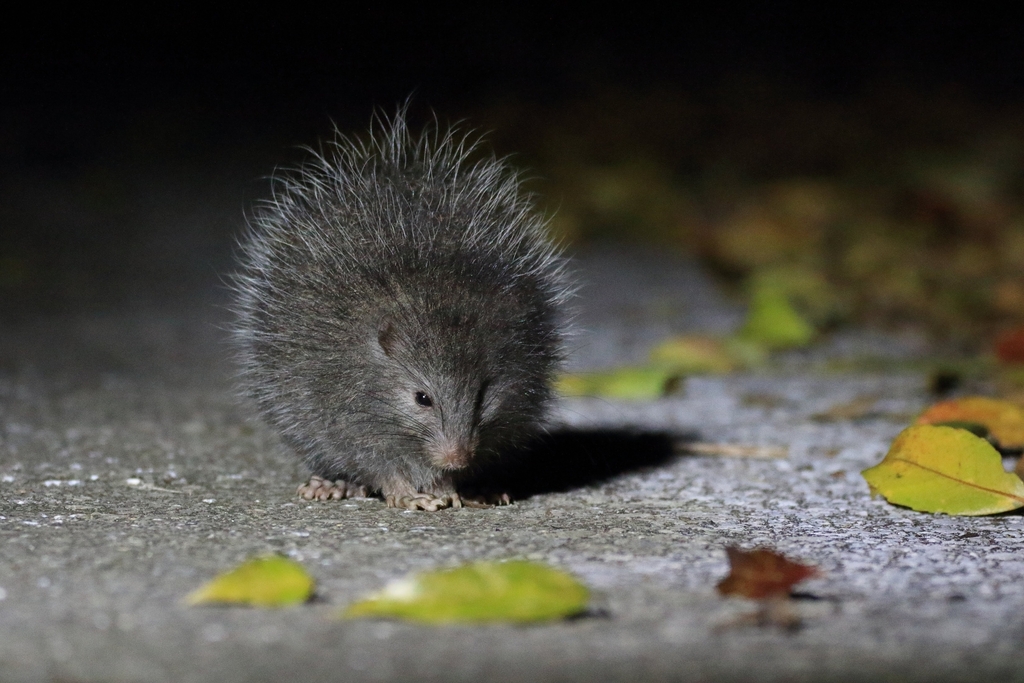
Ryukyu Islands Tree Rat
Diplothrix legata
The Ryukyu long-tailed giant rat or Ryukyu rat (Diplothrix legata), also known as the rodent in the family Muridae. It is the only extant species in the genus Diplothrix and is endemic to the central Ryukyu Islands of Japan (Amami-oshima, Tokuno-shima, and Okinawa-jima). Its natural habitat consists of temperate forests.
From the article Ryukyu long-tailed giant rat on Wikipedia (CC BY-SA), quoted section by section
Description
The Ryukyu long-tailed giant rat is the largest rodent endemic to the central Ryukyu Islands and the largest arboreal murid native to Japan. The body length of both sexes is estimated to be over 56 centimetres at sexual maturity. D. legata has experienced a population bottleneck in the past and, as a result, may have evolved pleomorphic sperm head morphology (a wide variety of sperm-head shapes), although more studies are needed to explore this variation. The size of its sperm is also relatively larger than that of other rodents.
What it does
This species is nocturnal and arboreal. Its diet includes both plants, such as fruits, and animals, including invertebrates like butterflies, beetles, and slugs (of the genus Meghimatium sp.). Plant items were found in similar amounts in the stomach contents of males and females, whereas more animal items were found in the stomachs of females. D. legata may serve as an important seed disperser across the central Ryukyu Islands, which lack the typical dispersers like primates, squirrels, and large birds. Dental microwear texture analysis suggests a seasonal dietary shift from soft-bodied invertebrates in summer to tougher foods such as acorns in winter. This species is believed to have its breeding season between September and February. Videos of nesting individuals reveal that nesting material, including branches and leaves, were carried into the nest box between October and February. From February to March, the calls of newborns could be heard, with multiple overlapping calls suggesting a litter of several pups. However, nest predation on young rats by habu pit vipers appears to be high, with no newborns being observed leaving the nest.
Wikipedia: “Behaviour”
Listen
Looking for field recordings…
Where it lives
Recorded sightings
—
geo-referenced records in GBIF, from museums, herbaria and field observers.
Drag the globe to turn it. Dots are where records exist, not a range map; darker means more records.
In the stacks
Searching the stacks…
Every page naming Diplothrix legata in the Biodiversity Heritage Library →
This page is assembled live from iNaturalist, GBIF, Wikipedia, the Source Library and the Internet Archive. It is not yet part of the hand-edited codex. iNaturalist taxon 74278.