- Animals
- ›Chordates
- ›Vertebrates
- ›Mammals
- ›Therians
- ›Placental Mammals
- ›Primates, Rodents, and Allies
- ›Rodents
- ›Mice, Rats, and Hamsters
- ›Muroids
- ›Old World Mice and Rats
- ›Murines
- ›Australasian Mice and Rats
- ›Hydromys
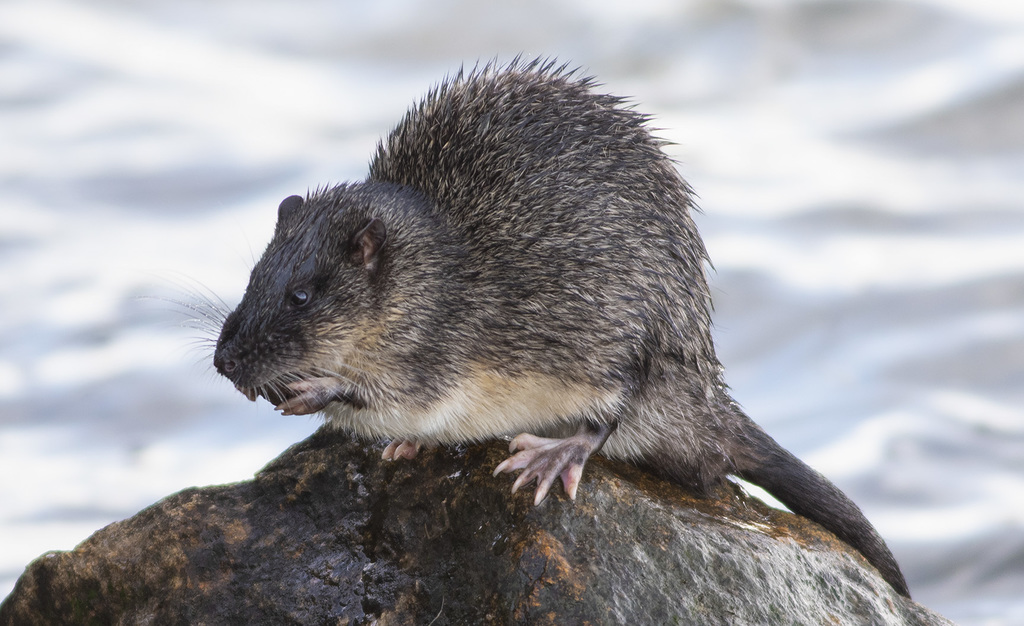
Rakali
Hydromys chrysogaster
The rakali (Hydromys chrysogaster), also known as the rabe, the "Australian otter" or water-rat, is an Australian native rodent first scientifically described in 1804. Adoption of the Ngarrindjeri name rakali is intended to foster a positive public attitude by Environment Australia.
One of four described species in the genus Hydromys, it is the only one with a range extending beyond New Guinea. Having adapted to and colonised a unique niche of a semiaquatic and nocturnal lifestyle, this species lives in burrows on the banks of rivers, lakes and estuaries and feeds on aquatic insects, fish, crustaceans, mussels, snails, frogs, cane toads, bird's eggs and small water birds.
From the article Rakali on Wikipedia (CC BY-SA), quoted section by section
Range & habitat
This widespread species can be found in permanent water systems in Australia, New Guinea and offshore islands. Rakali live near permanent water in a diverse range of habitat that varies from fresh slow-moving streams, brackish inland lakes and creeks to wetlands, rivers, estuaries and beaches on coastlines. Found in all states and territories, this adaptable species has resumed resettlement populations in both Australia and New Guinea. The map above shows their distribution throughout Australia and New Guinea. Widely distributed throughout most of eastern Australia (including Tasmania), along the coast of northern Australia (except for the Pilbara), and South West WA, their habitat varies from freshwater streams to brackish wetlands, including shallow lakes (up to 2 m (6 ft 7 in) in depth) and farm dams, deep water storages, slow-moving rivers, creeks and streams, estuaries, coastal lakes and sheltered marine bays. Their home range typically comprises 1–4 km (0.6–2.5 mi) of waterways and they can travel a distance of between 200 m (660 ft) to 1 km (0.6 mi) in a night when foraging. They prefer low banks with flat, densely vegetated water edges for protection and ease of stalking prey, spending time when not foraging resting in hollow logs and burrows.
Wikipedia: “Distribution, range and habitat”
What it does
The rakali is a predominantly carnivorous species, feeding on a variety of aquatic animals including fish, crustaceans, molluscs (such as mussels), other shellfish, insects, small birds (such as the young of waterfowl and poultry), eggs, mammals (such as house mice and even bats), frogs, and reptiles (such as young turtles). In winter, when resources are limited, they will also feed on plants. A mostly nocturnal species, they search for their food at dusk; guided by sight while in the water, and hunting at the water's edge with the apparent memory of previous catches' locations. They can also exhibit crepuscular habits, being found swimming and feeding in the early morning and evening. The animal does not tolerate low temperatures well, so they prefer terrestrial prey in winter over the aquatic species. They also spend longer winter periods in the warmth of their burrows. A relatively new addition to the rakali's diet is, specifically, the heart and liver of the toxic cane toad, in regions where the toads have moved into their territory. The rakali have figured out how to avoid the toad's poisonous shoulder glands by flipping them onto their backs for ease of dispatch. They are, seemingly, unaffected by any poisonous secretions on the toads' skin which they may inadvertently ingest. …
Wikipedia: “Diet and foraging”
Listen
Looking for field recordings…
Where it lives
Recorded sightings
—
geo-referenced records in GBIF, from museums, herbaria and field observers.
Drag the globe to turn it. Dots are where records exist, not a range map; darker means more records.
In the stacks
Searching the stacks…
Every page naming Hydromys chrysogaster in the Biodiversity Heritage Library →
This page is assembled live from iNaturalist, GBIF, Wikipedia, the Source Library and the Internet Archive. It is not yet part of the hand-edited codex. iNaturalist taxon 45292.