- Animals
- ›Chordates
- ›Vertebrates
- ›Mammals
- ›Therians
- ›Placental Mammals
- ›Primates, Rodents, and Allies
- ›Lagomorphs
- ›Hares and Rabbits
- ›Oryctolagus
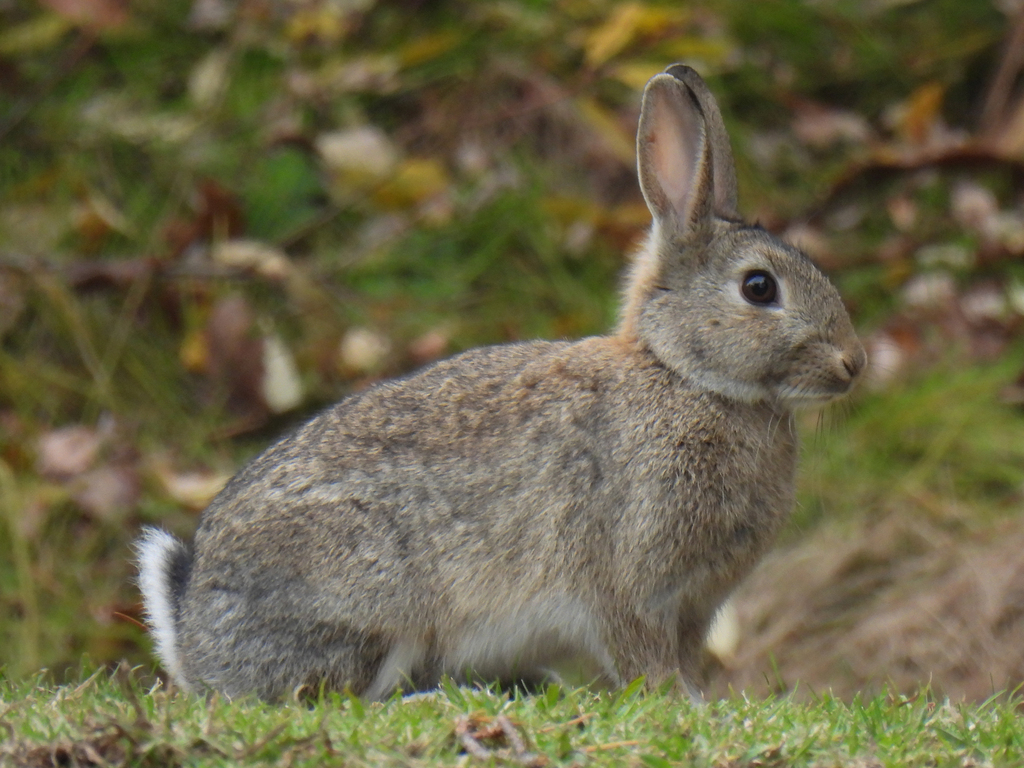
European Rabbit
Oryctolagus cuniculus
The European rabbit (Oryctolagus cuniculus) or coney is a species of rabbit native to the Iberian Peninsula and southwestern France. It has been introduced to hundreds of locations around the world. Wild and domesticated European rabbits around the world can vary widely in size, shape, and colour. The average adult European rabbit is smaller than the European hare, though size and weight vary with habitat and diet.
European rabbits prefer grassland habitats and are herbivorous, mainly feeding on grasses and leaves, though they may supplement their diet with berries, tree bark, and field crops such as maize. They are prey to a variety of predators, including birds of prey, weasels, cats, and canids. The European rabbit's main defence against predators is to run and hide, using vegetation and its own burrows for cover. It is well known for digging networks of burrows, called warrens, where it spends most of its time when not feeding. The European rabbit lives in social groups centred around territorial females. European rabbits in an established social group will rarely stray far from their warren, with female rabbits leaving the warren mainly to establish nests where they will raise their young. Unlike hares, rabbits are born blind and helpless, requiring maternal care until they leave the nest.
From the article European rabbit on Wikipedia (CC BY-SA), quoted section by section
Description
Adult European rabbits typically range from 36 to 38 centimetres (14 to 15 inches) in length and weigh 1.5 to 3 kilograms (3.3 to 6.6 pounds). The tail is 6.5 to 7 cm (2.6 to 2.8 in) long, and the hind foot measures 8 to 8.9 cm (3.1 to 3.5 in) in length. The ears are 7 to 8 cm (2.8 to 3.1 in) long. The European rabbit is smaller than the European hare and mountain hare, has proportionately shorter legs and lacks black ear tips. Size and weight vary according to food and habitat quality. Rabbits living on light soil with nothing but grass to feed on are noticeably smaller than specimens living on highly cultivated farmlands with plenty of roots and clover. Pure European rabbits weighing 2.3 kg (5 lb) and upwards are uncommon, but are occasionally reported. One large specimen, caught in February 1890 in Lichfield, England, was weighed at 2.8 kg (6 lb 2 oz). Within its native range of the Iberian peninsula, the European rabbit is generally smaller than in regions it has been introduced to, weighing from 0.9 to 1.4 kg (2.0 to 3.1 lb). Unlike the brown hare, the male European rabbit is more heavily built than the female. The penis is located posterior to the scrotum and lacks a baculum (the penis bone, present in many mammals, but not in rabbits) and true glans. …
Range & habitat
The European rabbit's ideal habitat consists of short grasslands with secure refuge (such as burrows, boulders, hedgerows, scrub, and woodland) near feeding areas. The size and distribution of its burrow systems depend on the type of soil present. In areas with loose soil, it selects sites with supporting structures, such as tree roots or shrubs, to prevent burrow collapse. Warrens tend to be larger and to have more interconnected tunnels in areas with chalk than those in sand. In large coniferous plantations, the species only occurs on peripheral areas and along fire breaks and rides. In the rabbit's native range, it is strongly associated with Mediterranean shrubland. The European rabbit's grazing habits tend to promote its ideal open habitat via the dispersion of seeds and trimming of vegetation. In regions where the European rabbit is not native, the species is highly adaptive, preferring areas that have high amounts of vegetation and cover for escaping from predators. Rabbits can be found inhabiting steppes, forests, savannahs, and rocky outcrops in Argentina and south and central Chile, despite these not being preferred habitats.
Wikipedia: “Habitat”
What it does
The European rabbit lives in burrows known as warrens that contain social groups consisting of one to five adult males, known as bucks, and one to eight adult females, known as does. These warrens often form around a dominant male and several subordinate females and males, and they benefit the population by providing a location safe from predators to raise young. Breeding groups of rabbits may extend to include two or more nearby warrens if beneficial to the population. European rabbits are territorial, and even within a warren will defend their territory against neighbouring social groups. Females tend to be more territorial than males. Rabbit territories are marked with dung hills, known as latrines. The size of the species' home range varies according to habitat, food, shelter, cover from predators, and breeding sites, though it is generally small, encompassing about 4 ha (9.9 acres). Male ranges tend to be larger than those of females, though this can vary depending on environmental factors. Female home ranges have been observed to be larger than those of males when rabbit density is low and high-quality food is abundant. The European rabbit rarely strays far from its burrow; when feeding on cultivated fields, it typically only moves 25 m (80 ft) away from its burrow, and rarely 50 m (160 ft). …
Wikipedia: “Social and territorial behaviour”
In human culture
Because of its origin outside of the British Isles, the species does not have a native name in English, with the usual terms coney and rabbit being foreign loanwords. The root word is the Walloon rabett, which was once commonly used in Liège. Rabett itself is derived from the Middle Dutch robbe, referring to a rabbit, with the addition of the suffix -ett. In the early 20th century, recorded pronunciations of rabbit included "rabbidge", "rabbert" (North Devon) and "rappit" (Cheshire and Lancashire). More archaic spellings include rabbette (15th–16th centuries), rabet (15th–17th centuries), rabbet (16th–18th centuries), rabatte (16th century), rabytt (17th century) and rabit (18th century). The term coney or cony predates rabbit, and first occurred during the 12th century to refer to the animal's pelt. Later, coney referred to the adult animal, while rabbit referred to the young. The root of coney is the Old French connil or counil, of which the Norman was conin, plural coniz or conis. Connil comes from the Latin cuniculus. Its forerunner is the Greek κόνικλος (kóniklos), which first appeared around 204 BCE, as written in the Histories by Greek historian Polybius, though its origin is unclear: Aelian, who lived during the third century, linked the word to Celtiberian and later authors relate it to its Basque name unchi. …
Wikipedia: “Etymology”
Listen
Looking for field recordings…
Where it lives
Recorded sightings
—
geo-referenced records in GBIF, from museums, herbaria and field observers.
Drag the globe to turn it. Dots are where records exist, not a range map; darker means more records.
In the stacks
Searching the stacks…
Every page naming Oryctolagus cuniculus in the Biodiversity Heritage Library →
This page is assembled live from iNaturalist, GBIF, Wikipedia, the Source Library and the Internet Archive. It is not yet part of the hand-edited codex. iNaturalist taxon 43151.