- Animals
- ›Arthropods
- ›Crustaceans
- ›Typical Crustaceans
- ›Malacostracans
- ›Decapods, Isopods, and allies
- ›Decapods and Krill
- ›Decapods
- ›Crabs, Lobsters, Shrimps, and Allies
- ›Crayfishes and Lobsters
- ›Northern Hemisphere Crayfishes
- ›Cambarid Crayfishes
- ›Cambarus
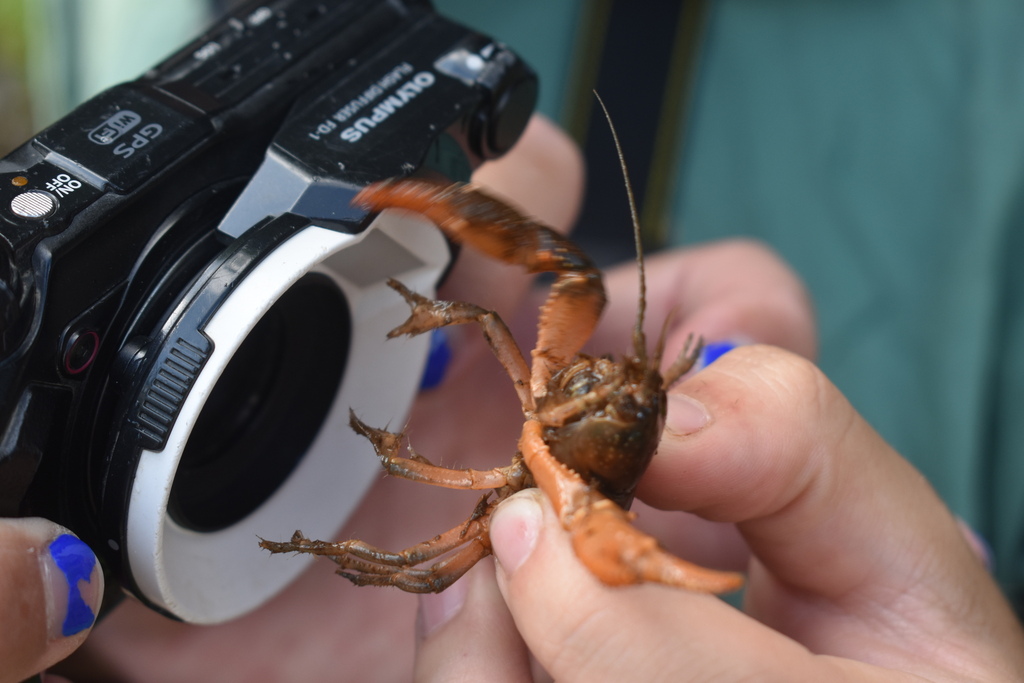
Knotty Burrowing Crayfish
Cambarus nodosus
Cambarus is a large and diverse genus of crayfish from the United States and Canada. The adults range in size from about 5 cm (2.0 in) up to approximately 15 cm (5.9 in).
From the article Cambarus on Wikipedia (CC BY-SA), quoted section by section
Description
The genus Cambarus is the second largest freshwater crayfish genus inhabiting the Northern Hemisphere, with only sixty fewer species than the genus Procambarus. Though Cambarus are varied across species, the two terminal elements that make up the male form I gonopod form ninety degree angles with the central appendage, allowing for their identification. Unlike the genus Procambarus whose first pleopod tends to have three processes at the tip, Cambarus has only one or two. Cambarus reach 17–26 mm (0.67–1.02 in) carapace lengths in their first year, while average adult carapace length ranges from 55–62 mm (2.2–2.4 in). The name Cambarus comes from an alteration of Latin cammarus, meaning "lobster". As a genus containing nearly 100 species, Cambarus's coloration is variable. Cambarus bartonii is dark brown, while species like Cambarus pauleyi range from subtle to vibrant blues and reds. Other species are light green or grayish in color.
Range & habitat
Cambarus occupy a range of freshwater environments including streams, rivers, lakes, and burrows. Burrowing species of the genus include Cambarus dubius. Cambarus also include many cave-dwelling species, both stygobites and stygophiles. While salinity and temperature changes minimally affect Cambarus, the genus has shown an intolerance to pollution.
Wikipedia: “Habitat”
What it does
Like other crayfish, Cambarus are foragers. Diets are largely plant-based, though Cambarus also consume small marine organisms like molluscs, larvae, tadpoles and amphibian eggs. Cambarus consume small rodents or birds when available. In their first year, Cambarus typically consume 1-4% of their overall body-weight each day. The genus is central to many freshwater food webs as they help maintain water quality through consumption of algae.
Wikipedia: “Diet”
Where it lives
Recorded sightings
—
geo-referenced records in GBIF, from museums, herbaria and field observers.
Drag the globe to turn it. Dots are where records exist, not a range map; darker means more records.
In the stacks
Searching the stacks…
Every page naming Cambarus nodosus in the Biodiversity Heritage Library →
This page is assembled live from iNaturalist, GBIF, Wikipedia, the Source Library and the Internet Archive. It is not yet part of the hand-edited codex. iNaturalist taxon 96592.