
Southeast Asian Tarantulas
Ornithoctoninae
Ornithoctoninae is a subfamily of tarantulas found in Southeast Asia. It was first erected in 1895 by Reginald Innes Pocock based on the type specimen Ornithoctonus andersoni.
The Ornithoctoninae comprise a theraphosid subfamily, which is widely distributed in Asia from Myanmar to South China in the north and as far as to Halmahera in the Indonesian archipelago in the south, and in all the ranges in between. Most species in the subfamily live fossorially in burrows, though several species live arboreally. They are known as defensive spiders; when disturbed, they quickly retreat into their burrows or dig themselves into the soil. When neither is a possibility, they assume a defensive posture. When provoked, they strike the aggressor repeatedly with the anterior legs; if the aggressor does not retreat, these spiders have been known to bite. Though not deadly, the effects of the venom can be very unpleasant, including pain, swelling, and arthritis-like stiffness in the joints of the extremity affected.
11 branches of this subfamily, most-observed first
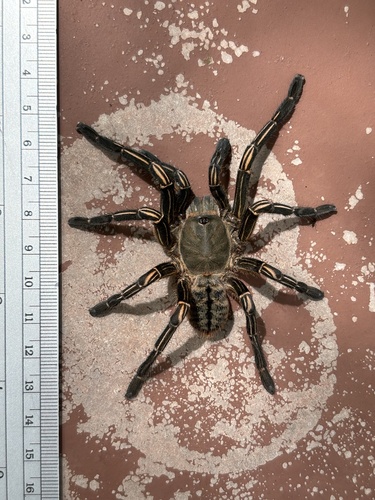
Melopoeus
genusMelopoeus
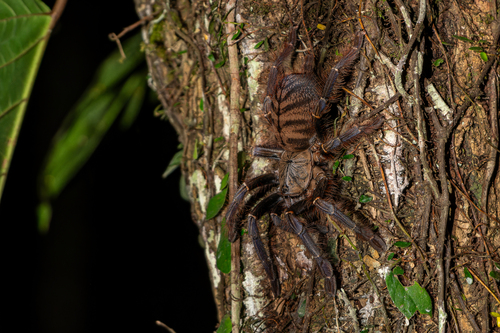
Phormingochilus
genusPhormingochilus
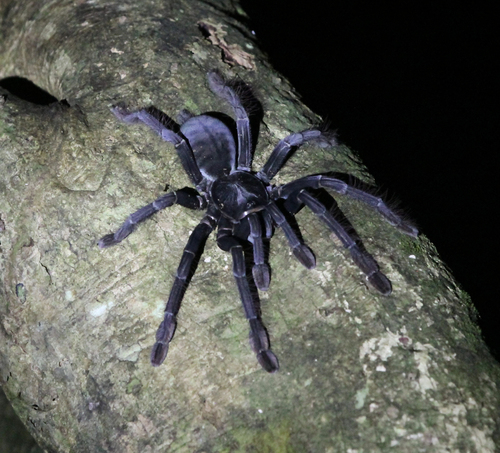
Lampropelma
genusLampropelma

Haplopelma
genusHaplopelma
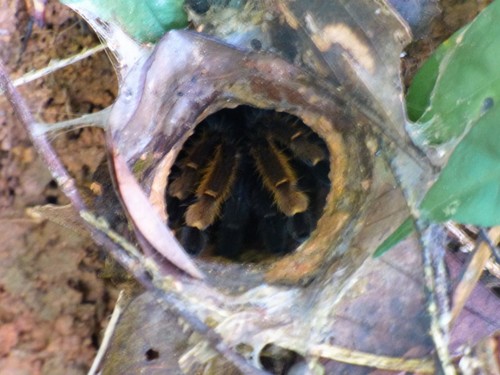
Ornithoctonus
genusOrnithoctonus

Omothymus
genusOmothymus
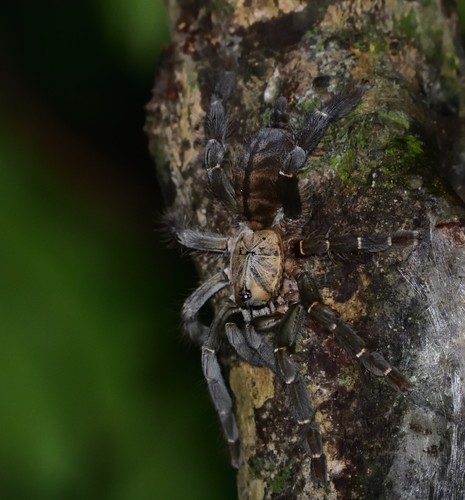
Citharognathus
genusCitharognathus
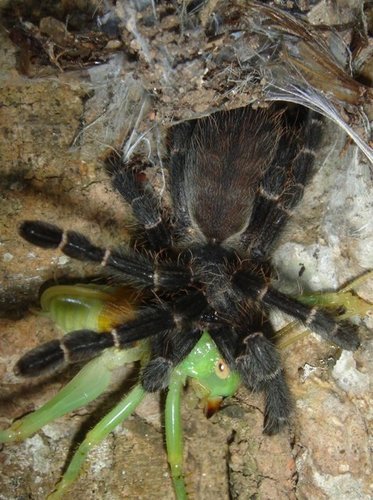
Taksinus
genusTaksinus
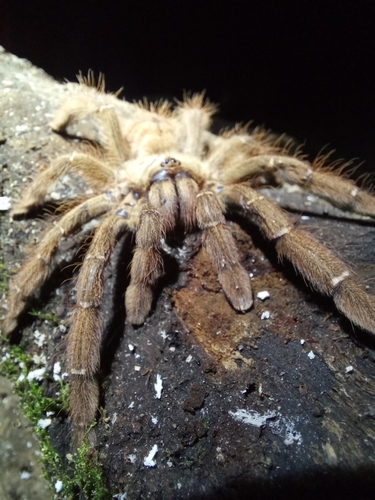
Aspinochilus
genusAspinochilus
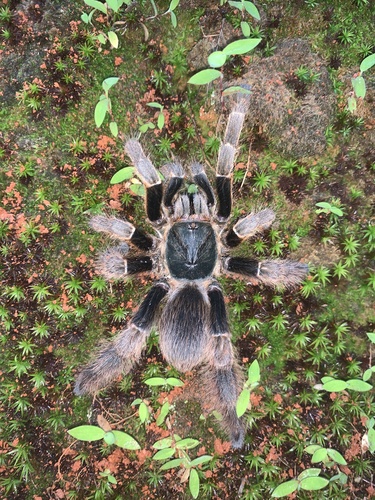
Magnacrus
genusMagnacrus
Melognathus
genusMelognathus
Where it lives
Recorded sightings
—
geo-referenced records in GBIF, from museums, herbaria and field observers.
Drag the globe to turn it. Dots are where records exist, not a range map; darker means more records.
In the stacks
Searching the stacks…
Every page naming Ornithoctoninae in the Biodiversity Heritage Library →
This page is assembled live from iNaturalist, GBIF, Wikipedia, the Source Library and the Internet Archive. It is not yet part of the hand-edited codex. iNaturalist taxon 808274.