- Animals
- ›Molluscs
- ›Cephalopods
- ›Octopuses, Squids, and Cuttlefishes
- ›Octopuses and Vampire Squids
- ›Octopuses
- ›Incirrate Octopuses
- ›Typical Octopuses, Giant Octopuses, and Allies
- ›Giant, Muse, and Rough Octopuses
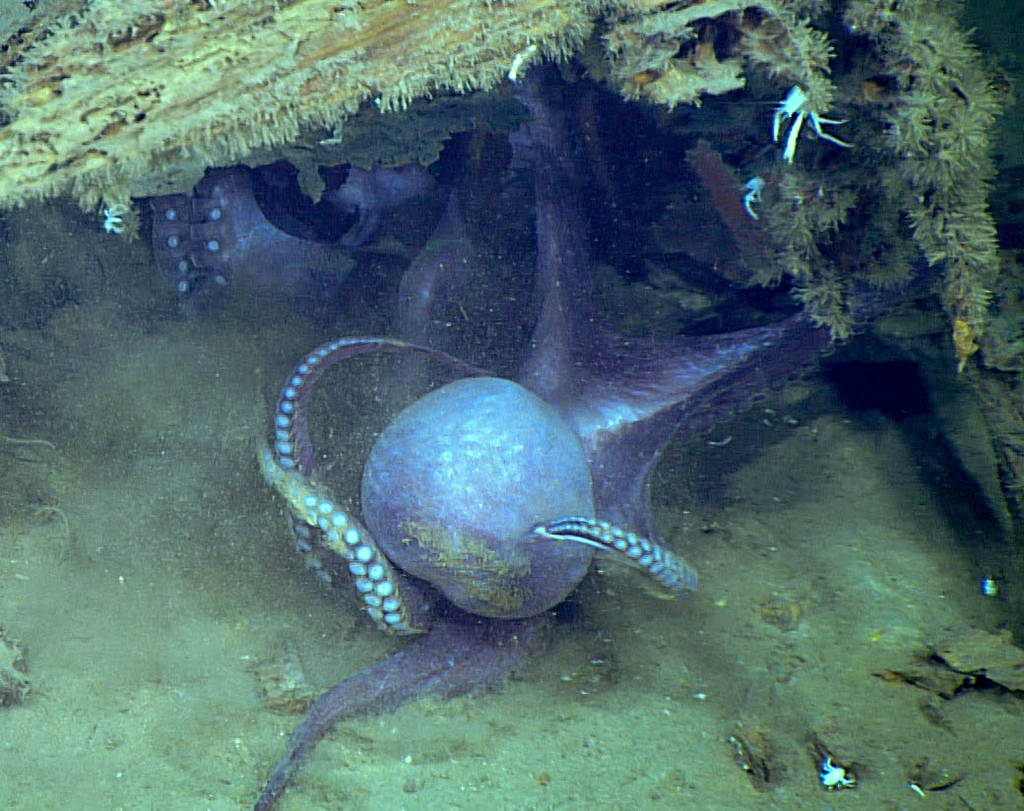
Vulcanoctopus
Vulcanoctopus hydrothermalis, also known as the vent octopus, is a small benthic octopus endemic to hydrothermal vents. It is the only photographed species of the genus Vulcanoctopus. Other species such as Vulcanoctopus tangaroa and Vulcanoctopus tegginmathae have been accepted but are near undocumented. This vent octopus is endemic to the hydrothermal vent habitat that is located in the East Pacific Rise.
V. hydrothermalis has evolved unique adaptations to accommodate for the distinct circumstances of this very dynamic habitat. In particular, they are characterized as having double rows of suckers on each arm. V. hydrothermalis has been shown to exhibit feeding that relies on the coordination of their arms to entrap their prey. In terms of external appearance, both the female and male vent octopuses exhibit similar physical traits. Internally, the anatomy of the reproductive and digestive tract is different between female and male vent octopuses.

Where it lives
Recorded sightings
—
geo-referenced records in GBIF, from museums, herbaria and field observers.
Drag the globe to turn it. Dots are where records exist, not a range map; darker means more records.
In the stacks
Searching the stacks…
Every page naming Vulcanoctopus in the Biodiversity Heritage Library →
This page is assembled live from iNaturalist, GBIF, Wikipedia, the Source Library and the Internet Archive. It is not yet part of the hand-edited codex. iNaturalist taxon 798067.