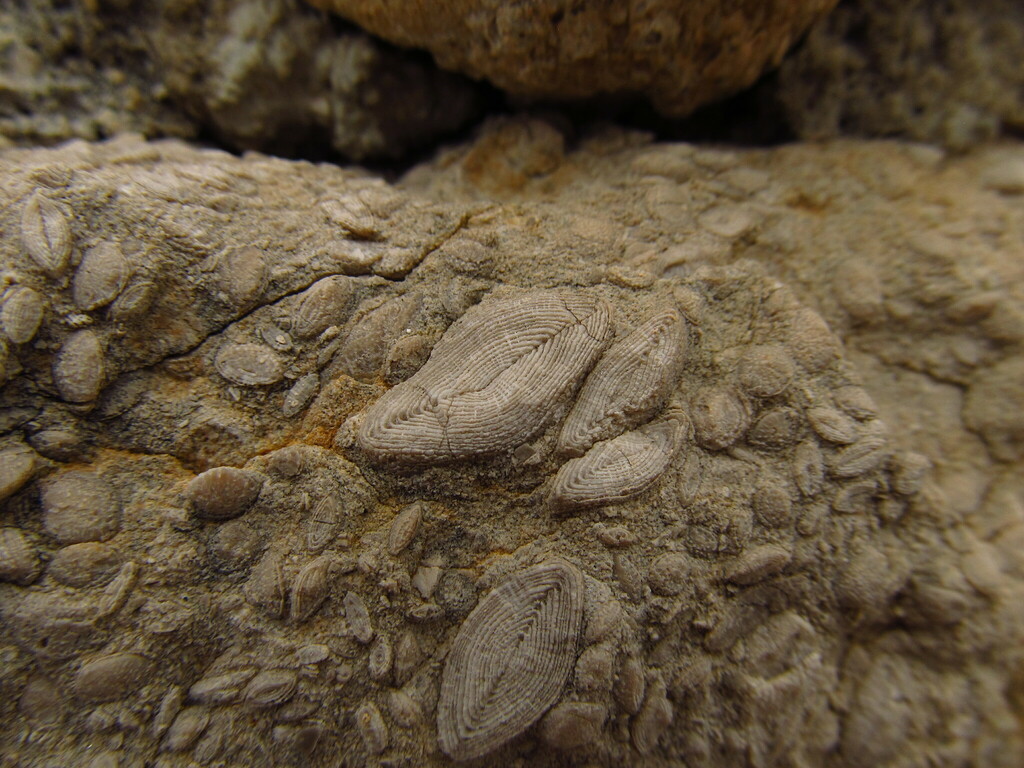
Nummulite
Nummulites
A nummulite is a large lenticular fossil, characterised by its numerous coils, subdivided by septa into chambers. They are the shells of the fossil and present-day marine protozoan Nummulites, a type of foraminiferan. Nummulites commonly vary in diameter from 13 to 50 mm (0.51 to 1.97 in) and are common in Eocene to Miocene marine rocks, particularly around southwest Asia and the Mediterranean in the area that once constituted the Tethys Ocean, such as Eocene limestones from Egypt or from Pakistan. Fossils up to six inches wide are found in the Middle Eocene rocks of Turkey. They are valuable as index fossils.
The ancient Egyptians used nummulite shells as coins and the pyramids were constructed using limestone that contained nummulites. The name Nummulites is a diminutive form of the Latin nummulus 'little coin', a reference to their shape.
8 branches of this genus, most-observed first
Nummulites complanatus
speciesNummulites complanatus
Nummulites variolarius
speciesNummulites variolarius
Nummulites partschi
speciesNummulites partschi
Nummulites carmenensis
speciesNummulites carmenensis
Nummulites vascus
speciesNummulites vascus
Nummulites rotularius
speciesNummulites rotularius
Nummulites burdigalensis
speciesNummulites burdigalensis
Nummulites pernotus
speciesNummulites pernotus
Where it lives
Recorded sightings
—
geo-referenced records in GBIF, from museums, herbaria and field observers.
Drag the globe to turn it. Dots are where records exist, not a range map; darker means more records.
In the stacks
Searching the stacks…
Every page naming Nummulites in the Biodiversity Heritage Library →
This page is assembled live from iNaturalist, GBIF, Wikipedia, the Source Library and the Internet Archive. It is not yet part of the hand-edited codex. iNaturalist taxon 782875.