- Animals
- ›Arthropods
- ›Crustaceans
- ›Typical Crustaceans
- ›Malacostracans
- ›Decapods, Isopods, and allies
- ›Decapods and Krill
- ›Decapods
- ›Crabs, Lobsters, Shrimps, and Allies
- ›True Crabs
- ›Eubrachyuran Crabs
- ›Thoracotrematan Crabs
- ›Ghost, Fiddler, Sand Bubbler Crabs and Allies
- ›Ghost and Fiddler Crabs
- ›Broad-fronted and Indo-west Pacific Fiddler Crabs
- ›American Broad-front Fiddler Crabs
- ›Leptuca
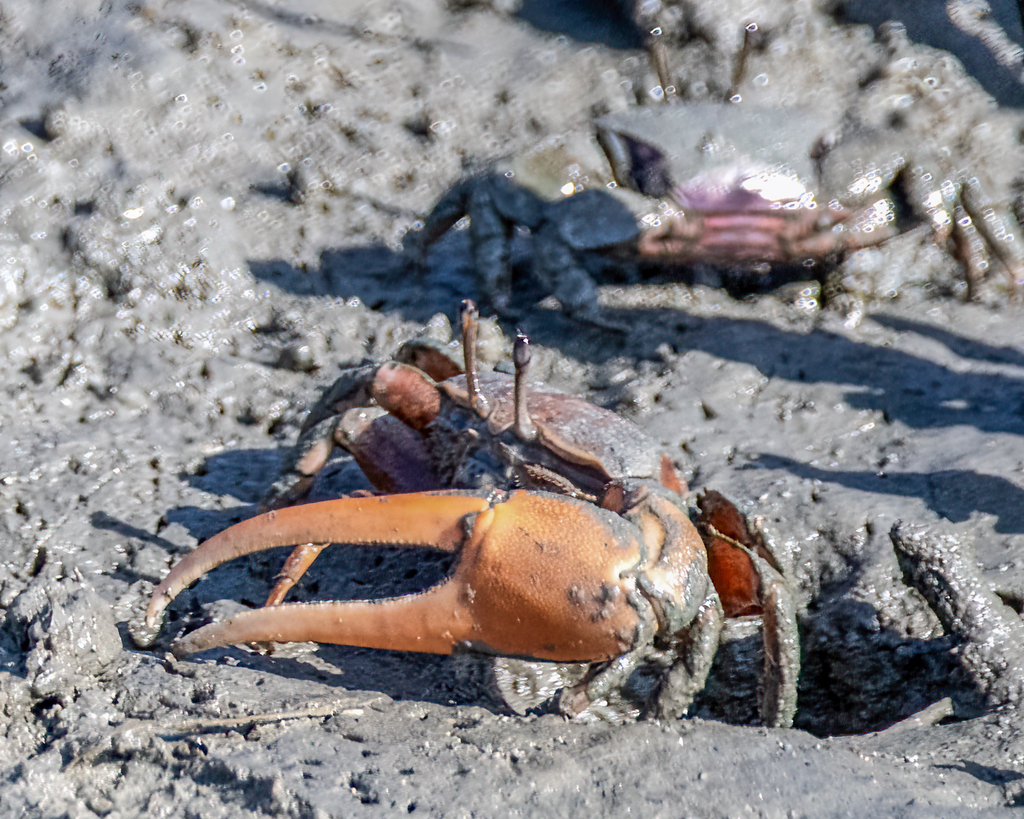
Atlantic Mangrove Fiddler Crab
Leptuca thayeri
Leptuca thayeri, known generally as the Atlantic mangrove fiddler crab or mangrove fiddler, is a species of true crab in the family Ocypodidae. It is distributed all across the Western Atlantic.
Leptuca thayeri was formerly a member of the genus Uca, but in 2016 it was placed in the genus Leptuca, a former subgenus of Uca.
From the article Leptuca thayeri on Wikipedia (CC BY-SA), quoted section by section
Range & habitat
Globally, Leptuca thayeri, is distributed in the Western Atlantic around the subtropical mangroves in Ubatuba, State of São Paulo, and Brazil. Within the mangrove trees themselves, Leptuca thayeri is euryhaline and is able to survive in a salinity from 4 to 32. This mangrove fiddler crab is also reliant on the substrate quality, such as: pebble/sand/silt/clay balance, organic matter availability, and the abundance of seagrass. Another factor that the mangrove fiddlers are dependent on in their distribution is temperature. During the warmer months of the year, the population is more pronounced and more widely distributed compared to the colder months of fall and winter.
Wikipedia: “Distribution”
What it does
Living on and within the sediments of mangrove trees, this fiddler crab has an ecological importance. The fiddler crab influences the structure and biology of the sediment through foraging and by constructing burrows for defense. The fiddler crab, Leptuca thayeri, influence bacterial assemblages in the sediment surrounding the mangrove trees they inhabit by decreasing bacterial diversity through foraging. While foraging, these fiddler crabs divide out the individual sediment grains with their spoon-tipped setae. This division of sediment grain allows for the bioturbation of sediments which allows oxygen penetration at depth and remineralization of organic matter.
Wikipedia: “Ecology”
Where it lives
Recorded sightings
—
geo-referenced records in GBIF, from museums, herbaria and field observers.
Drag the globe to turn it. Dots are where records exist, not a range map; darker means more records.
In the stacks
Searching the stacks…
Every page naming Leptuca thayeri in the Biodiversity Heritage Library →
This page is assembled live from iNaturalist, GBIF, Wikipedia, the Source Library and the Internet Archive. It is not yet part of the hand-edited codex. iNaturalist taxon 739188.