- Animals
- ›Arthropods
- ›Chelicerates
- ›Arachnids
- ›Spiders
- ›Typical Spiders
- ›Haplogyne Spiders
- ›Synspermiatid Spiders
- ›Goblin Spiders and Allies
Woodlouse Hunter Spiders
Dysderidae
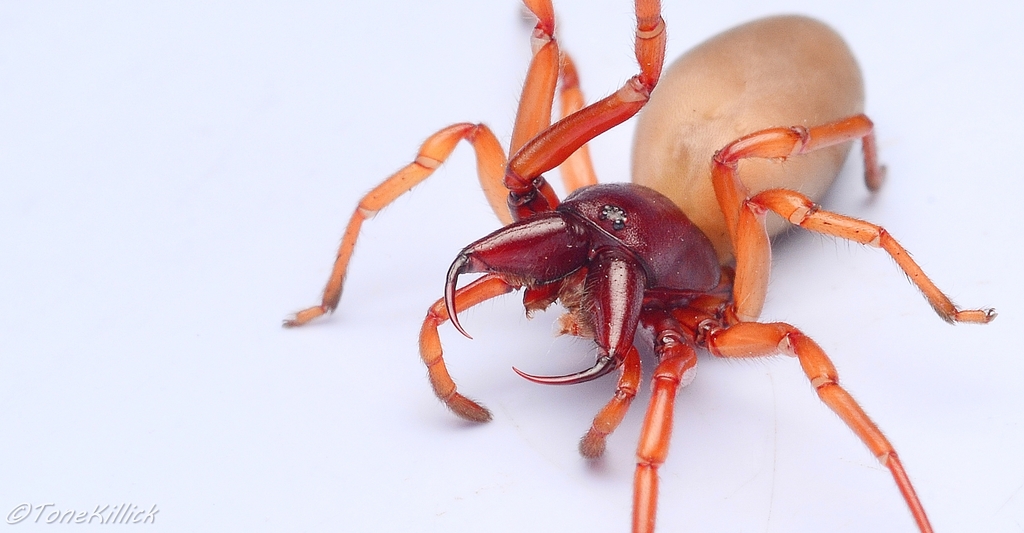
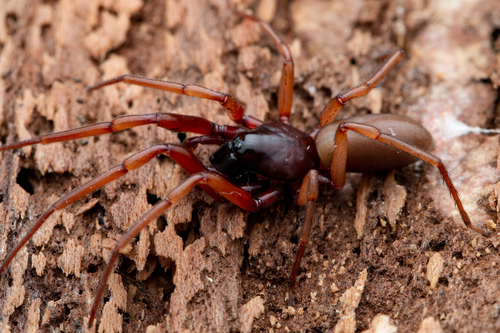
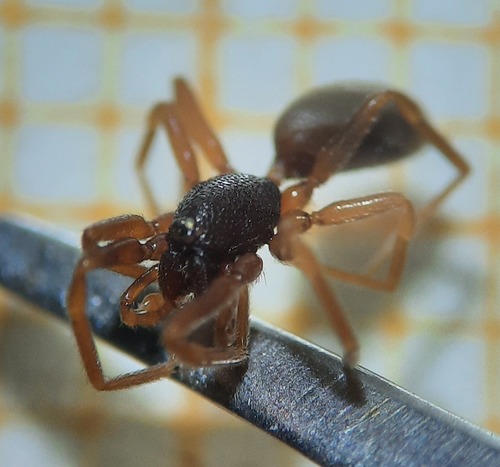
The Dysderidae, also known as woodlouse hunters, sowbug-eating spiders, and cell spiders, are a family of araneomorph spiders first described by Carl Ludwig Koch in 1837. They are found primarily in Eurasia, extending into North Africa with very few species occurring in South America. Dysdera crocata is introduced into many regions of the world.
Dysderids generally have six eyes, and are haplogyne, i.e. the females lack a sclerotized epigyne. There is a substantial number of genera, but two of them, Dysdera and Harpactea, account for a very large number of the species and are widespread across the family's range. One species, Dysdera crocata (the woodlouse hunter), has been transported over much of the planet together with its preferred foods—woodlice. Dysdera also feeds on beetles. These spiders have very large chelicerae. Their long fangs are specialized to reach under or slip between the armored plates of woodlice to deliver venom to their softer tissue. There are also some reports that they have a mildly toxic venom that can cause local reactions in humans.
3 branches of this family, most-observed first
See this branch on the Wheel of Life →
Where it lives
Recorded sightings
—
geo-referenced records in GBIF, from museums, herbaria and field observers.
Drag the globe to turn it. Dots are where records exist, not a range map; darker means more records.
In the stacks
Searching the stacks…
Every page naming Dysderidae in the Biodiversity Heritage Library →
This page is assembled live from iNaturalist, GBIF, Wikipedia, the Source Library and the Internet Archive. It is not yet part of the hand-edited codex. iNaturalist taxon 69200.