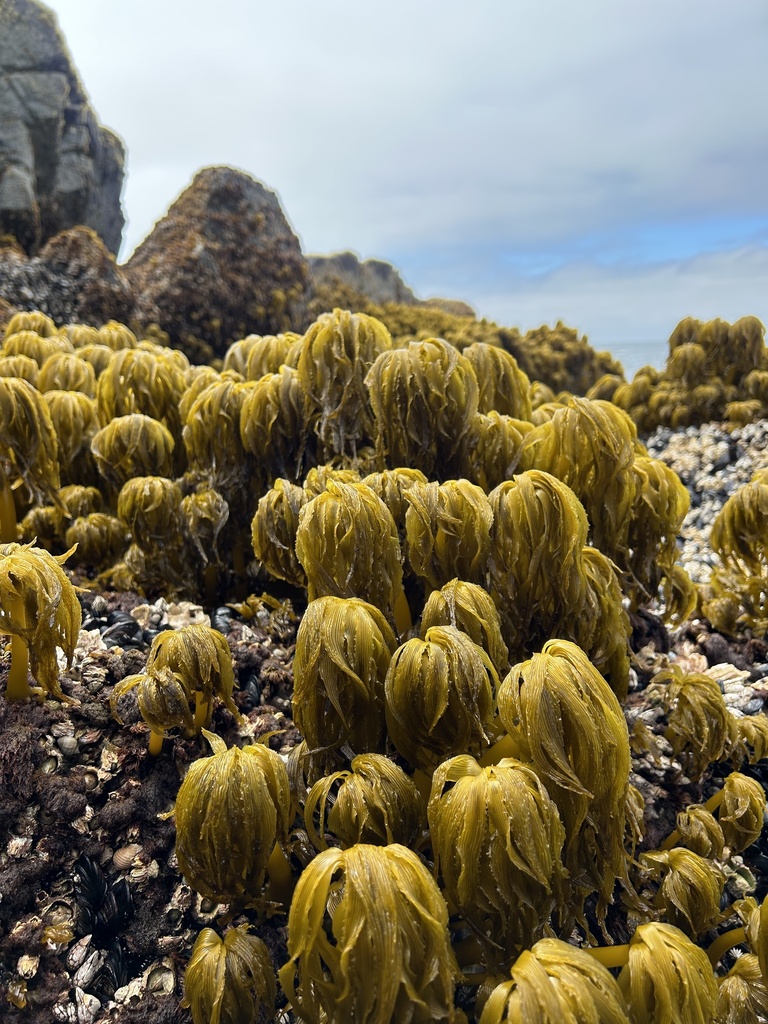
Kelps
Laminariales
Kelps are large brown algae or seaweeds that make up the order Laminariales. There are about 30 genera. Despite its appearance and use of photosynthesis in chloroplasts, kelp is not a plant but a stramenopile.
Kelp grows from stalks close together in very dense, forest-like areas under shallow temperate and Arctic oceans. They were previously thought to have appeared in the Miocene, 5 to 23 million years ago based on fossils from California. Kelps were present in the northeastern Pacific Ocean by at least 32 million years ago. These organisms require nutrient-rich water with temperatures between 6 and 14 °C (43 and 57 °F). They are known for their fast growth —the genera Macrocystis and Nereocystis can grow as fast as half a metre a day (that is, about 20 inches a day), ultimately reaching 30 to 80 metres (100 to 260 ft).
8 branches of this order, most-observed first

Laminariaceae
familyLaminariaceae

Lessoniaceae
familyLessoniaceae

Alariaceae
familyAlariaceae
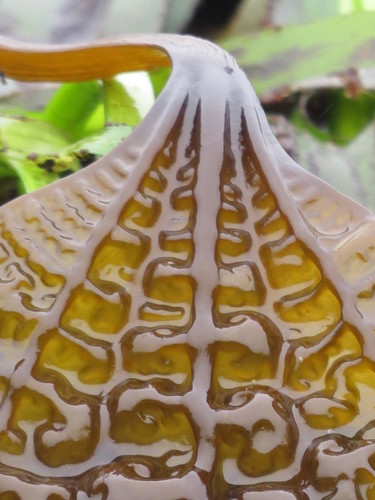
Agaraceae
familyAgaraceae
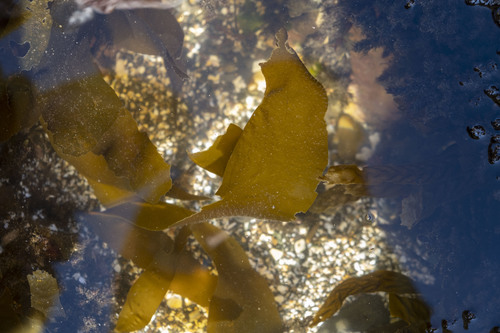
Phyllariella
genusPhyllariella
Pseudochordaceae
familyPseudochordaceae
Aureophycaceae
familyAureophycaceae
Macrocystis pyrifera × Lessonia spicata
hybridMacrocystis pyrifera × Lessonia spicata
Where it lives
Recorded sightings
—
geo-referenced records in GBIF, from museums, herbaria and field observers.
Drag the globe to turn it. Dots are where records exist, not a range map; darker means more records.
In the stacks
Searching the stacks…
Every page naming Laminariales in the Biodiversity Heritage Library →
This page is assembled live from iNaturalist, GBIF, Wikipedia, the Source Library and the Internet Archive. It is not yet part of the hand-edited codex. iNaturalist taxon 68789.