- Fungi Including Lichens
- ›Basidiomycete Fungi
- ›Higher Basidiomycetes
- ›Mushrooms, Bracket Fungi, Puffballs, and Allies
- ›Agaricomycetidae
- ›Common Gilled Mushrooms and Allies
- ›Pluteineae
- ›amanita mushrooms and allies
- ›Amaniteae
- ›Amanita
- ›Amanita
- ›Vaginatae
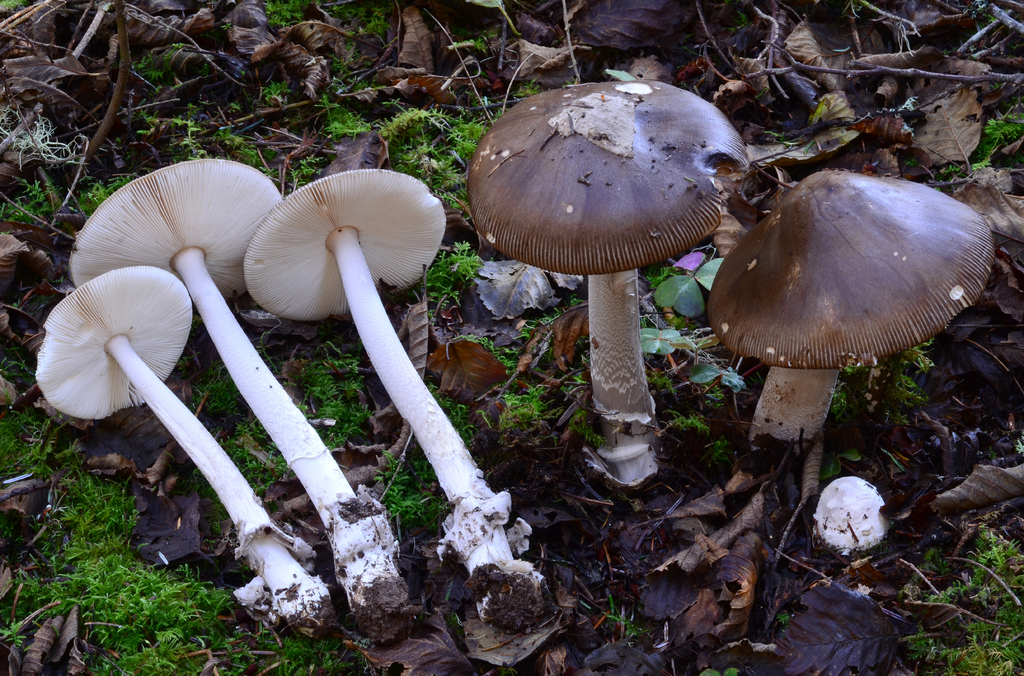
Constricted Grisette
Amanita constricta
Amanita constricta, commonly known as the constricted grisette or great grey-sack ringless amanita is a species of mushroom-forming fungus in the family Amanitaceae. It is edible, but it is not recommended for consumption due to confusion with poisonous species.
From the article Amanita constricta on Wikipedia (CC BY-SA), quoted section by section
Description
Amanita constricta has a brown cap that is about 5–15 centimetres (2–6 in) wide. The stipe is about 8–15 cm (3+1⁄4–6 in) tall and about 1–2.5 cm (1⁄2–1 in) wide. The mushroom has a volva that tightly attaches to the stipe. Amanita inaurata is closely related.
Range & habitat
Amanita constricta is mycorrhizal, and grows under oak and Douglas-fir. It was originally described from California, but its range may extend up into Canada.
Wikipedia: “Habitat and ecology”
At the table
It is edible, but it is not recommended for consumption due to confusion with poisonous species.
== References ==
Wikipedia: “Edibility”
Where it lives
Recorded sightings
—
geo-referenced records in GBIF, from museums, herbaria and field observers.
Drag the globe to turn it. Dots are where records exist, not a range map; darker means more records.
In the stacks
Searching the stacks…
Every page naming Amanita constricta in the Biodiversity Heritage Library →
This page is assembled live from iNaturalist, GBIF, Wikipedia, the Source Library and the Internet Archive. It is not yet part of the hand-edited codex. iNaturalist taxon 67355.