- Fungi Including Lichens
- ›Basidiomycete Fungi
- ›Higher Basidiomycetes
- ›Mushrooms, Bracket Fungi, Puffballs, and Allies
- ›Agaricomycetidae
- ›Common Gilled Mushrooms and Allies
- ›Pluteineae
- ›amanita mushrooms and allies
- ›Amaniteae
- ›Amanita
- ›Amanitina
- ›Validae
- ›Mappae
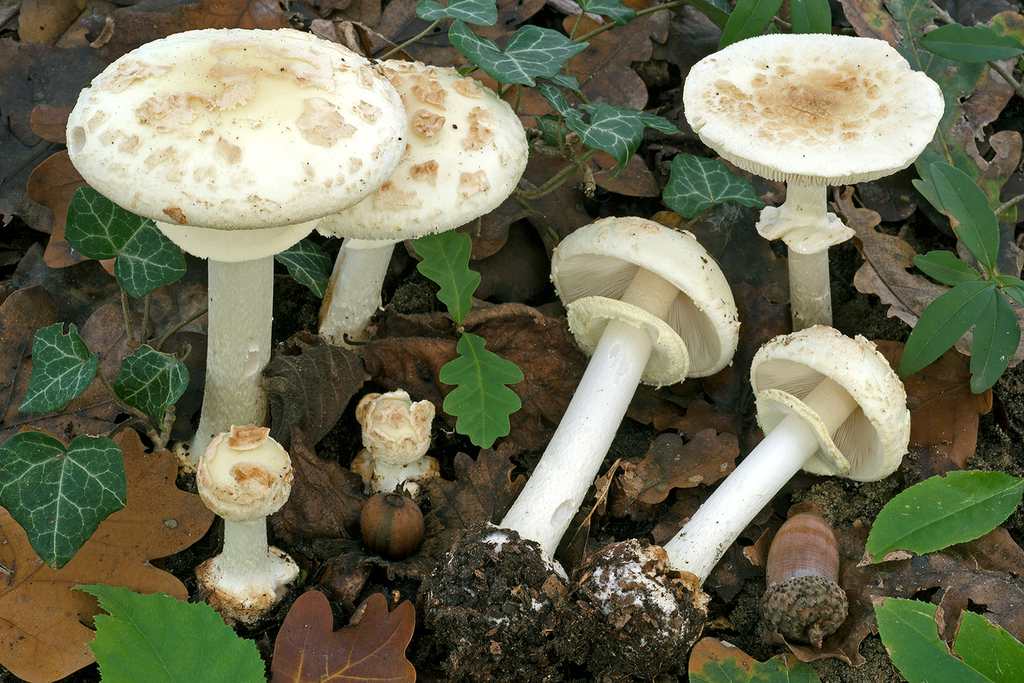
False Death-cap
Amanita citrina
Known as the false death cap, or Citron Amanita, Amanita citrina (previously also known as Amanita mappa), is a basidiomycotic mushroom, one of many in the genus Amanita. It grows in silicate soil in the summer and autumn months. It bears a pale yellow or sometimes white cap, with white stem, ring and volva. Though it is not poisonous, its similarity to the lethal death cap (Amanita phalloides) precludes its use in cooking.
From the article Amanita citrina on Wikipedia (CC BY-SA), quoted section by section
Description
This mushroom has a fleshy pale yellow, or sometimes white, cap from 4–10 centimetres (1+1⁄2–4 inches) across, covered in irregular patches. The gills and flesh are white. There is a large volva at the base of the 6–8 cm (2+1⁄2–3 in) tall stem, which has a clear ring. The mushroom has a smell of rapeseed or potato.
Similar species. It is often confused with the related Amanita phalloides, the death cap, hence the common name.
Range & habitat
The false death cap is found in deciduous and coniferous woodlands in autumn in Europe. It also occurs in North America, South Africa, Australia, Russia, Costa Rica, the UK, and in parts of Asia. This mushroom has been recorded as a secondary food source for adults of the pleasing fungus beetle Tritoma biguttata biguttata.
Wikipedia: “Distribution and ecology”
Toxicity
Research done at the University of Cambridge indicated that this mushroom contains the alpha-amanitin toxin, but possibly in small enough amounts that would not cause adverse effects unless ingested at high quantity. It also contains the toxin bufotenin. Although it is considered inedible, the biggest danger with this species is its marked similarity to the death cap. For further more information about DMT found in Amanita citrina see external link about the study made.
Where it lives
Recorded sightings
—
geo-referenced records in GBIF, from museums, herbaria and field observers.
Drag the globe to turn it. Dots are where records exist, not a range map; darker means more records.
In the stacks
Searching the stacks…
Every page naming Amanita citrina in the Biodiversity Heritage Library →
This page is assembled live from iNaturalist, GBIF, Wikipedia, the Source Library and the Internet Archive. It is not yet part of the hand-edited codex. iNaturalist taxon 63271.