- Animals
- ›Molluscs
- ›Cephalopods
- ›Octopuses, Squids, and Cuttlefishes
- ›Octopuses and Vampire Squids
- ›Octopuses
- ›Incirrate Octopuses
- ›Typical Octopuses, Giant Octopuses, and Allies
- ›Bathyal Octopuses
- ›Bathypolypus
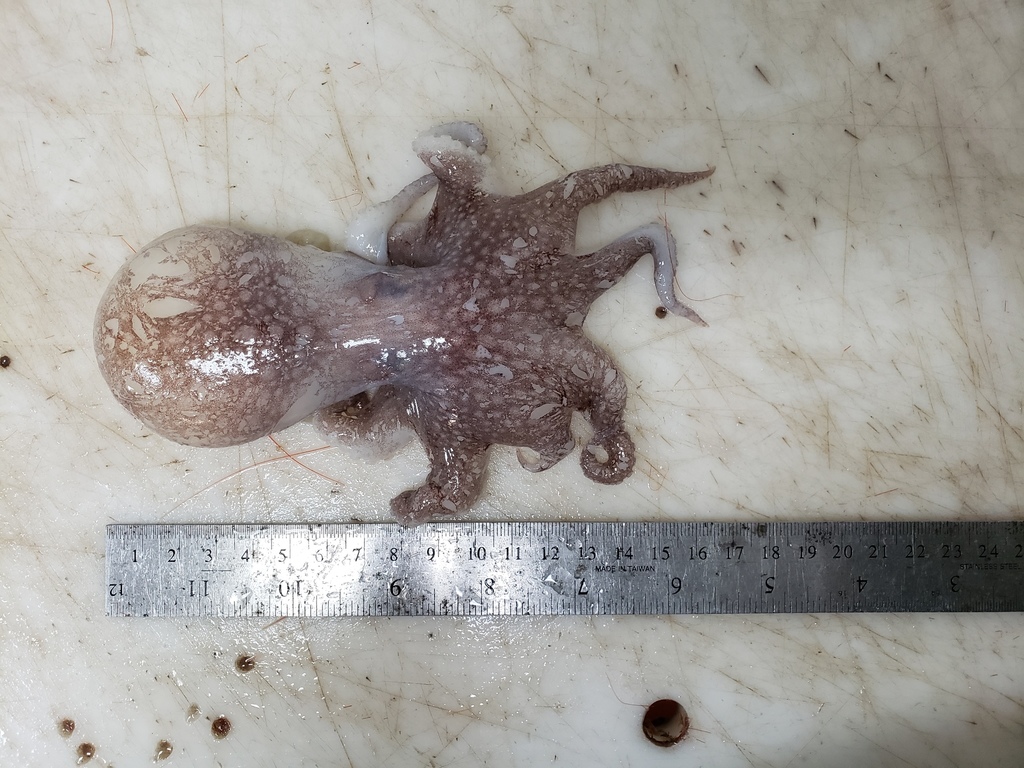
Spoonarm Octopus
Bathypolypus arcticus
Bathypolypus arcticus, the North Atlantic octopus, deep sea octopus or spoonarm octopus is a small species of demersal octopus of the North Atlantic. It is usually found at depths of 200 to 600 m (660–1,970 ft) where the temperature is between 2 and 6 °C (36–43 °F).
From the article Bathypolypus arcticus on Wikipedia (CC BY-SA), quoted section by section
Description
Bathypolypus arcticus is a small, short-armed octopus which is between 6 and 10 cm (2.4–3.9 in) in length, with an average adult weight of around 45 g (1.6 oz) and a maximum of 300 g (11 oz). Like other deep-sea octopuses, Bathypolypus arcticus do not have ink sacs. The mantle is globular, being nearly as wide as it is long. The surface of mantle, head, arms and web is covered in warts, especially around the eyes. The arms are short and in an irregular order with two rows of small suckers.
Range & habitat
The North Atlantic from the Florida Straits, north along the eastern seaboard to Greenland, Iceland, Spitsbergen then south along the European coast into the North Sea, including Great Britain and Ireland. Although mainly found between 200 and 600 m (660–1,970 ft), it has been recorded in shallower waters and as deep as 1,543 m (5,062 ft).
== References ==
Wikipedia: “Distribution”
What it does
Bathypolypus arcticus has low fecundity meaning that they lay fewer, relatively larger eggs than many other octopuses from which benthic young hatch. The female broods her eggs for over 400 days during which time it ceases to eat and slowly wastes away as it metabolises its own body to provide energy to guard the eggs and young. This was considered the longest brooding period for an octopus until surpassed by Graneledone boreopacifica. Unusually for octopuses, Bathypolypus arcticus mainly feeds on brittle stars, but this may depend on availability, as captives prefer crustaceans. A wide range of other food items have been recorded in smaller quantities, including polychaetes, sipunculid worms, foraminiferas and bivalves. In captivity, adults have been housed together without showing the aggressive, cannibalistic tendencies known from several other octopuses. Bathypolypus arcticus have longer life spans than other octopuses where it is known and may live for six years or more. In comparison, many shallow water octopuses only live for a year. Higher water temperatures result in increased growth rates, but shorter life spans in Bathypolypus arcticus. …
Wikipedia: “Ecology”
Where it lives
Recorded sightings
—
geo-referenced records in GBIF, from museums, herbaria and field observers.
Drag the globe to turn it. Dots are where records exist, not a range map; darker means more records.
In the stacks
Searching the stacks…
Every page naming Bathypolypus arcticus in the Biodiversity Heritage Library →
This page is assembled live from iNaturalist, GBIF, Wikipedia, the Source Library and the Internet Archive. It is not yet part of the hand-edited codex. iNaturalist taxon 604017.