- Animals
- ›Arthropods
- ›Chelicerates
- ›Arachnids
- ›Mites and Ticks
- ›Acariformes
- ›Trombidiform Mites
- ›Prostigs
- ›Parasitengona
- ›Velvet Mites, Chiggers, and Relatives
- ›Velvet Mites
- ›True Velvet Mites
- ›Trombidiinae
- ›Trombidium
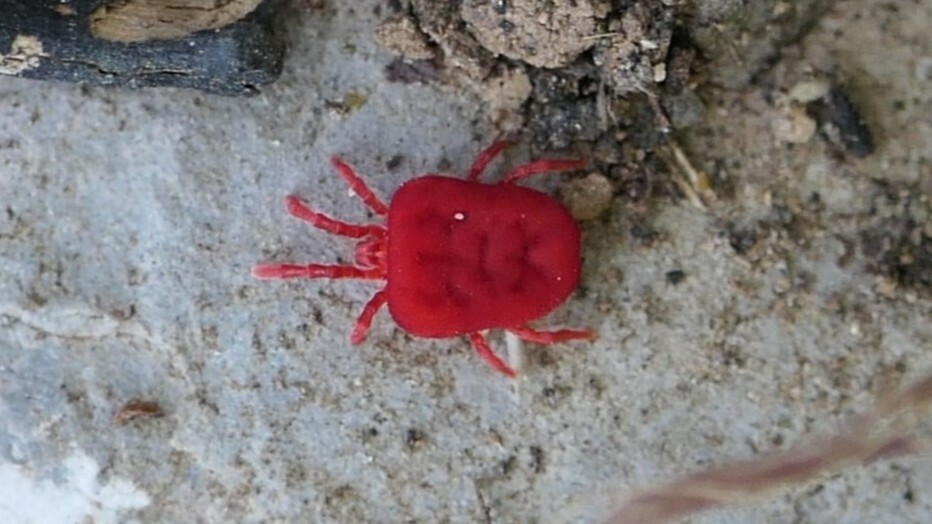
Trombidium holosericeum
Trombidium holosericeum is a species of mite in the genus Trombidium. It occurs in Europe, Asia, and Africa and is commonly confused with other red mite species.
From the article Trombidium holosericeum on Wikipedia (CC BY-SA), quoted section by section
Description
This species is one of the largest mites in northern temperate zones, with a body length of about 4 mm (just over 1⁄8 inch). The soft, brightly red body is covered with fine hairs, giving it a velvety appearance. The small eyes are located on stalks. They have scissor-like chelicerae and their pedipalps are used as touch organs. Its bright red color results from carotenoids, warning predators about the toxicity of the mite (aposematism). Almost nothing is known about the toxic substances used, but they are probably contained within the integument. The specific epithet is derived from Ancient Greek ὅλος, holos, "whole" and σηρικ-, sērik-, "silken".
Where it lives
Recorded sightings
—
geo-referenced records in GBIF, from museums, herbaria and field observers.
Drag the globe to turn it. Dots are where records exist, not a range map; darker means more records.
In the stacks
Searching the stacks…
Every page naming Trombidium holosericeum in the Biodiversity Heritage Library →
This page is assembled live from iNaturalist, GBIF, Wikipedia, the Source Library and the Internet Archive. It is not yet part of the hand-edited codex. iNaturalist taxon 58397.