
red algae
Rhodophyta
Red algae, or Rhodophyta (, ; from Ancient Greek ῥόδον (rhódon) 'rose' and φυτόν (phutón) 'plant'), make up one of the oldest and largest phyla of eukaryotic algae, containing over 7,000 recognized species within over 900 genera amidst ongoing taxonomic revisions. The majority of species (6,793) are in the class Florideophyceae, and mostly consist of multicellular marine algae, including many notable seaweeds. Red algae are abundant in marine habitats. Approximately 5% of red algae species occur in freshwater environments, with greater concentrations in warmer areas. This may be due to an evolutionary bottleneck in which the last common ancestor lost about 25% of its core genes and much of its evolutionary plasticity.
Red algae form a distinct group characterized by eukaryotic cells without flagella and centrioles, chloroplasts without external endoplasmic reticulum or unstacked (stroma) thylakoids, and use phycobiliproteins as accessory pigments, which give them their red color. Despite their name, red algae can vary in color from bright green, soft pink, resembling brown algae, to shades of red and purple, and may be almost black at greater depths and are only called red algae due to the phycobiliproteins and the reddish members. Unlike green algae, red algae store sugars as food reserves outside the chloroplasts as floridean starch, a type of starch that consists of highly branched amylopectin without amylose. Most red algae reproduce sexually. The life history of red algae is typically an alternation of generations that may have three generations rather than two.
3 branches of this phylum, most-observed first

true red algae
subphylumEurhodophytina
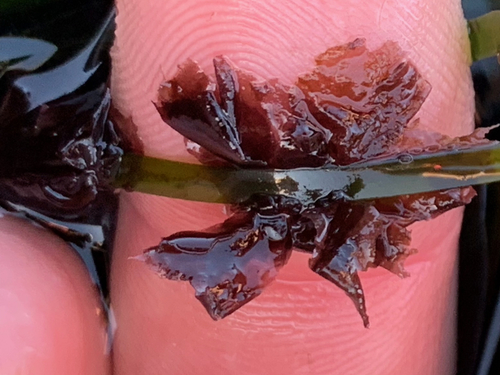
Proteorhodophytina
subphylumProteorhodophytina
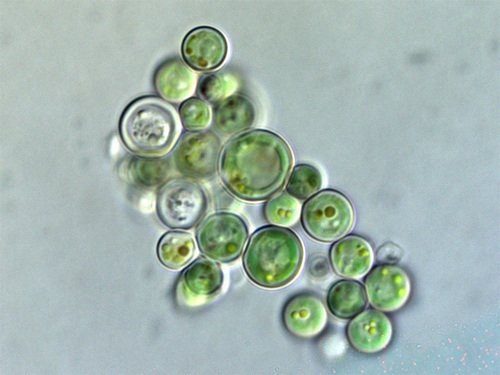
Cyanidiophytina
subphylumCyanidiophytina
Where it lives
Recorded sightings
—
geo-referenced records in GBIF, from museums, herbaria and field observers.
Drag the globe to turn it. Dots are where records exist, not a range map; darker means more records.
In the old herbals & bestiaries

In the stacks
Searching the stacks…
Every page naming Rhodophyta in the Biodiversity Heritage Library →
This page is assembled live from iNaturalist, GBIF, Wikipedia, the Source Library and the Internet Archive. It is not yet part of the hand-edited codex. iNaturalist taxon 57774.