Craniiform Brachiopods
Craniiformea
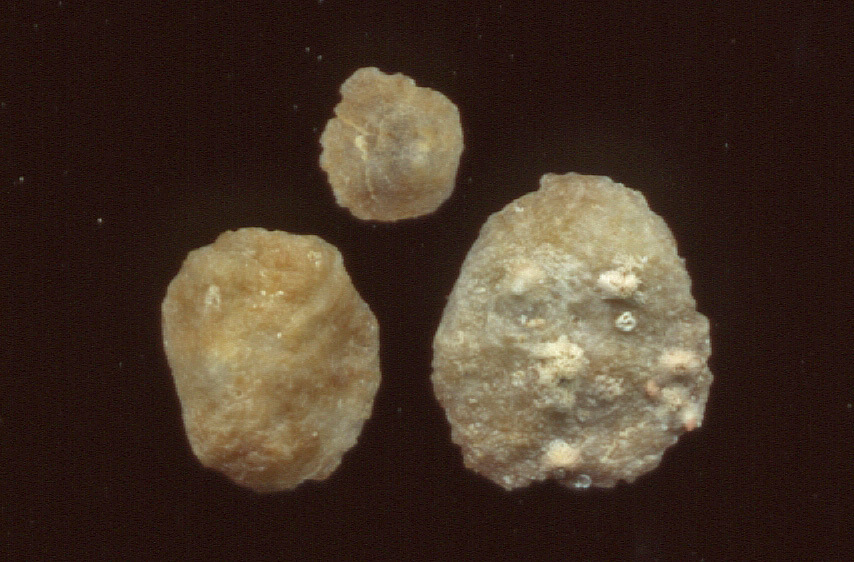
Craniata is a class of brachiopods originating in the Cambrian period and still extant today. It is the only class within the subphylum Craniiformea, one of three major subphyla of brachiopods alongside linguliforms and rhynchonelliforms. Craniata is divided into three orders: the extinct Craniopsida and Trimerellida, and the living Craniida, which provides most information on their biology. Living members of the class have shells which are composed of calcite, though some extinct forms my have aragonite shells. The shells are inarticulate (lack a hinge with distinct tooth-and-socket connections) and are usually rounded in outline. There is no pedicle; the rear edge of the body cavity is a smooth and flat wall perforated by the anus.
This class of brachiopods has an unsupported lophophore with only a single row of tentacles. In the absence of a pedicle, the shell is usually attached directly to a hard substrate. Many craniiforms are encrusting animals which attach directly to the shell of another animal, usually another brachiopod. The plicae from the host brachiopod will then appear within the shell of the craniiform.
1 branches of this subphylum, most-observed first
See this branch on the Wheel of Life →
Where it lives
Recorded sightings
—
geo-referenced records in GBIF, from museums, herbaria and field observers.
Drag the globe to turn it. Dots are where records exist, not a range map; darker means more records.
In the stacks
Searching the stacks…
Every page naming Craniiformea in the Biodiversity Heritage Library →
This page is assembled live from iNaturalist, GBIF, Wikipedia, the Source Library and the Internet Archive. It is not yet part of the hand-edited codex. iNaturalist taxon 551547.