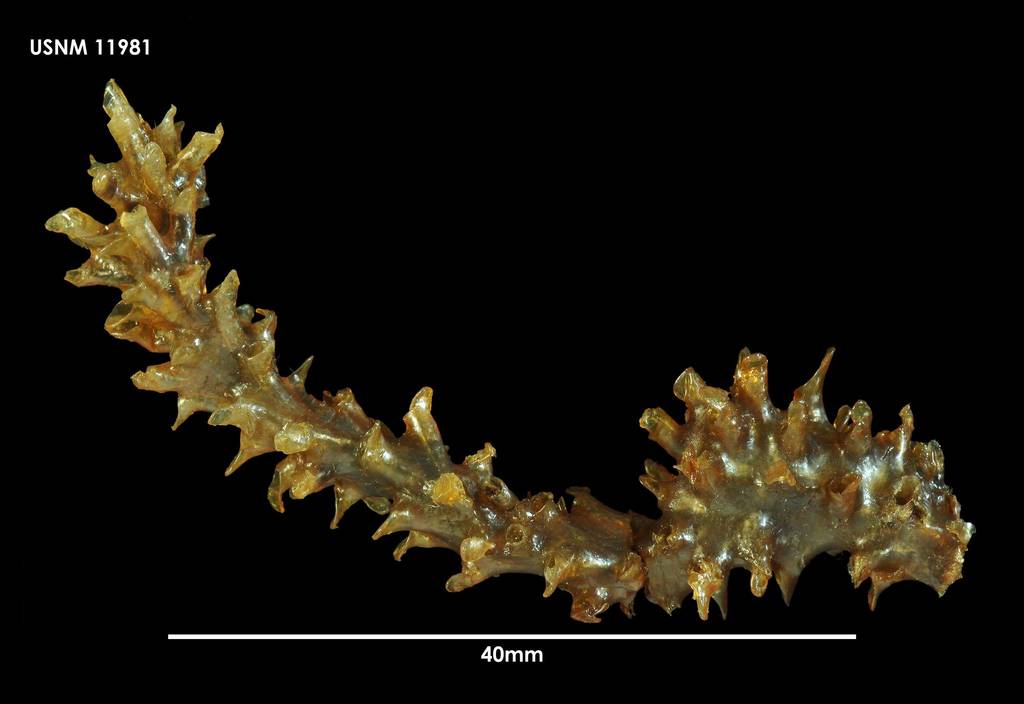
Pterobranchs
Graptolithoidea
Graptolites are a group of colonial animals, members of the subclass Graptolithina within the class Pterobranchia. These filter-feeding organisms are known chiefly from fossils found from the Middle Cambrian (Miaolingian, Wuliuan) through the Lower Carboniferous (Mississippian). A possible early graptolite, Chaunograptus, is known from the Middle Cambrian. Recent analyses have favored the idea that the living pterobranch Rhabdopleura represents an extant graptolite which diverged from the rest of the group in the Cambrian.
Fossil graptolites and Rhabdopleura share a colony structure of interconnected zooids housed in organic tubes (theca) which have a basic structure of stacked half-rings (fuselli). Most extinct graptolites belong to two major orders: the bush-like sessile Dendroidea and the planktonic, free-floating Graptoloidea. These orders most likely evolved from encrusting pterobranchs similar to Rhabdopleura. Due to their widespread abundance, planktonic lifestyle, and well-traced evolutionary trends, graptoloids in particular are useful index fossils for the Ordovician and Silurian periods.
3 branches of this class, most-observed first
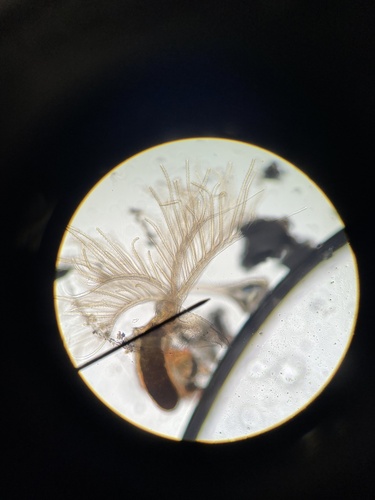
Cephalodiscoidea
orderCephalodiscoidea
Dendrograptidae
familyDendrograptidae
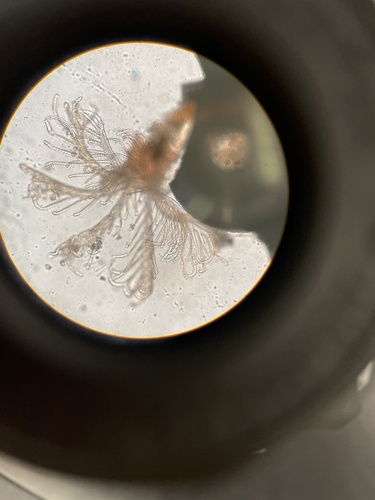
Rhabdopleuroidea
orderRhabdopleuroidea
Where it lives
Recorded sightings
—
geo-referenced records in GBIF, from museums, herbaria and field observers.
Drag the globe to turn it. Dots are where records exist, not a range map; darker means more records.
In the stacks
Searching the stacks…
Every page naming Graptolithoidea in the Biodiversity Heritage Library →
This page is assembled live from iNaturalist, GBIF, Wikipedia, the Source Library and the Internet Archive. It is not yet part of the hand-edited codex. iNaturalist taxon 551168.