
Comb Jellies
Ctenophora
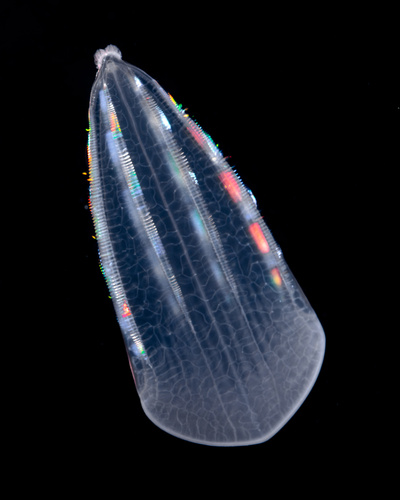
Ctenophora (; from Ancient Greek κτείς (kteis) 'comb' and φέρω (pherō) 'to carry') or ctenophores (), commonly known as comb jellies, is a basal phylum of marine invertebrate animals notable for their unique aquatic locomotion using groups of cilia (commonly referred to as "combs"). They inhabit marine habitats worldwide, with 186 recognised living species.
Ctenophores are the largest animals to swim with cilia, with adult ctenophores range from a few millimeters to 1.5 m (5 ft) in size depending on the species. Their bodies consist of a mass of jelly (mesoglea) with a two-cell-thick layer on the outside, and another lining the internal cavity. The phylum has a wide range of body forms, including the egg-shaped cydippids with a pair of retractable tentacles that capture prey; the flat, generally combless platyctenids; and the large-mouthed beroids, which prey on other ctenophores.
2 branches of this phylum, most-observed first
See this branch on the Wheel of Life →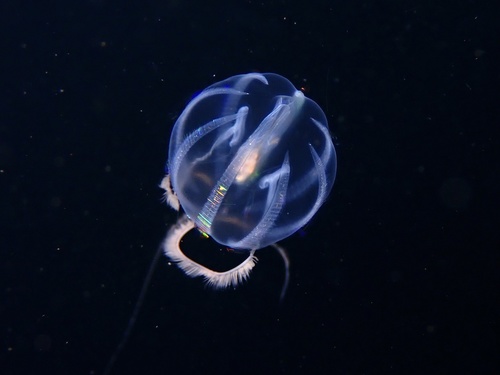
Where it lives
Recorded sightings
—
geo-referenced records in GBIF, from museums, herbaria and field observers.
Drag the globe to turn it. Dots are where records exist, not a range map; darker means more records.
In the stacks
Searching the stacks…
Every page naming Ctenophora in the Biodiversity Heritage Library →
This page is assembled live from iNaturalist, GBIF, Wikipedia, the Source Library and the Internet Archive. It is not yet part of the hand-edited codex. iNaturalist taxon 51508.