- Animals
- ›Arthropods
- ›Chelicerates
- ›Arachnids
- ›Spiders
- ›Mygalomorphs
- ›Avicularioidea
- ›Tarantulas
- ›Pinktoe Tarantulas and Allies
- ›Avicularia
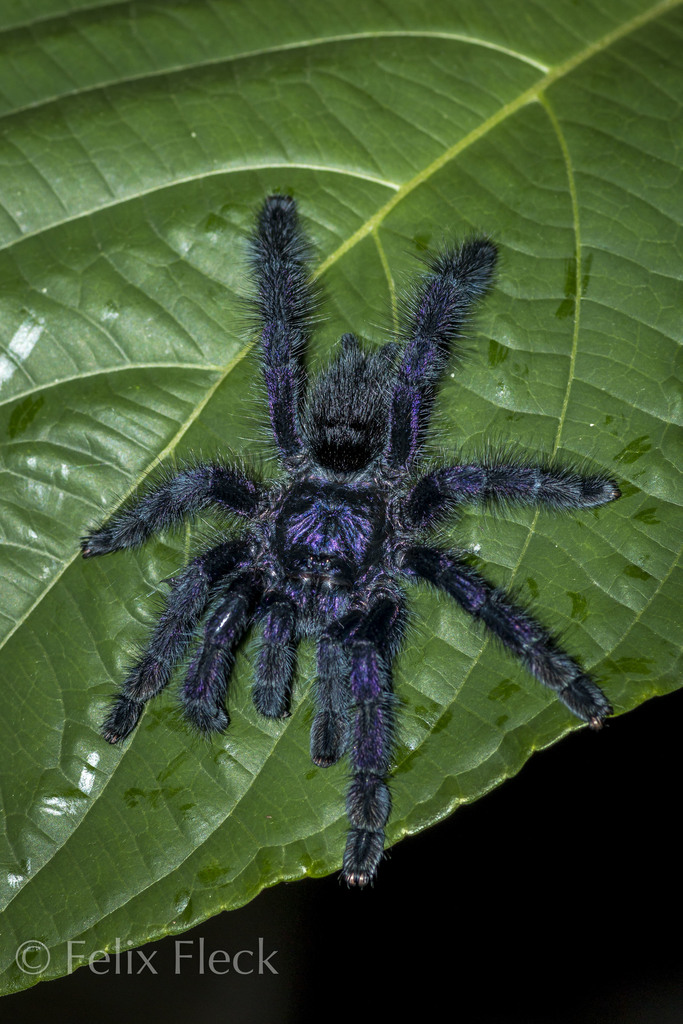
Purple Pinktoe Tarantula
Avicularia purpurea
Avicularia purpurea, also called purple tree tarantula, Ecuadorian purple tarantula or Ecuador purple pinktoe, is a species of spider belonging to the family Theraphosidae (tarantulas).
From the article Avicularia purpurea on Wikipedia (CC BY-SA), quoted section by section
Description
Avicularia purpurea can reach a length of about 13 centimetres (5.1 in), Avicularia. In daylight this spider discloses a quite intense purple-blue iridescence on the dorsal surface of the cephalothorax and on legs, palps and chelicerae. The long setae covering the legs and palps are dark red-brown. The tarsal and metatarsal scopulae are very dark brown. The tarsal tufts are pale cream-pink in colour. The abdomen is velvet-black and covered with stinging hairs.
Range & habitat
This species can be found in very different habitats, but frequently it is present in agricultural areas, especially in the field of grazing cattle. Sometimes it can be found in holes of walls of buildings or in the spaces below the roofs.
Wikipedia: “Habitat”
What it does
Avicularia purpurea is primarily an arboreal spider. This climbing species builds its nests primarily in hollows in the trees, sometimes in the vicinity of epiphytic plants. These spiders eat mostly crickets, cockroaches, meal worms, waxworms and darkling beetles, but they also can catch small rodents. During mating the females become very aggressive towards the males. A few months after mating the female lays up to 120 eggs in a cocoon. Six to eight weeks later between 50 and 120 nymphs hatch.
== References ==
Wikipedia: “Behavior”
Where it lives
Recorded sightings
—
geo-referenced records in GBIF, from museums, herbaria and field observers.
Drag the globe to turn it. Dots are where records exist, not a range map; darker means more records.
In the stacks
Searching the stacks…
Every page naming Avicularia purpurea in the Biodiversity Heritage Library →
This page is assembled live from iNaturalist, GBIF, Wikipedia, the Source Library and the Internet Archive. It is not yet part of the hand-edited codex. iNaturalist taxon 512759.