- Animals
- ›Arthropods
- ›Crustaceans
- ›Typical Crustaceans
- ›Malacostracans
- ›Decapods, Isopods, and allies
- ›Decapods and Krill
- ›Decapods
- ›Crabs, Lobsters, Shrimps, and Allies
- ›Anomurans
- ›Hermit Crabs
- ›Land Hermit Crabs
- ›Coenobita
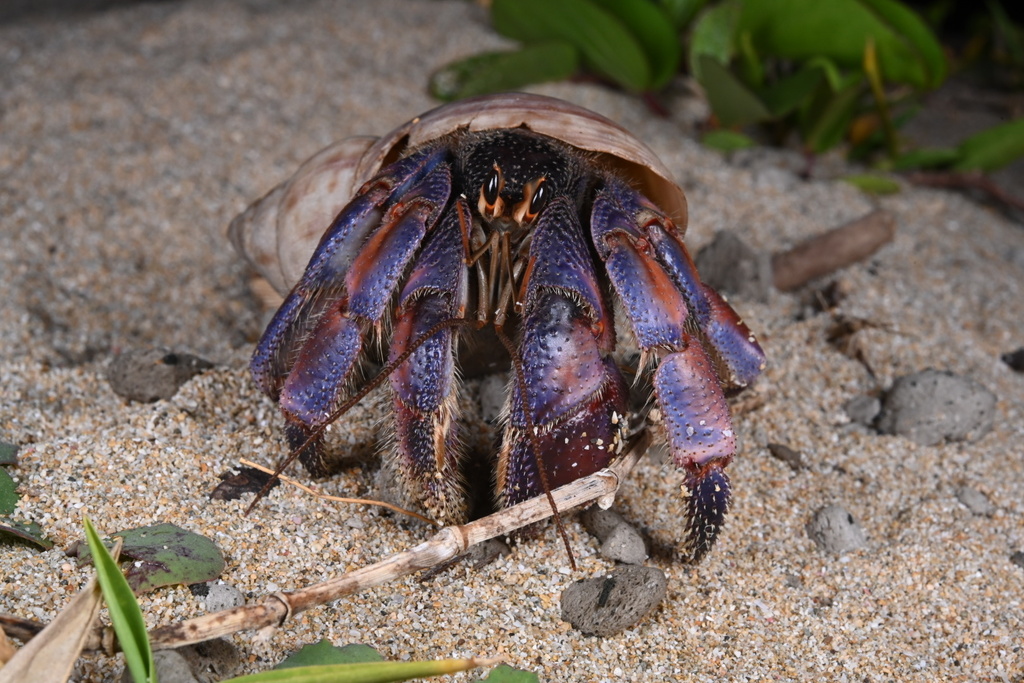
Blueberry Hermit Crab
Coenobita purpureus
Coenobita purpureus, commonly known as the Blueberry Hermit Crab, is a terrestrial species of hermit crab endemic to many tropical and subtropical islands in the North Pacific Ocean including Kikaijima Island, Ryukyu Island, Okinawa, and the Boso Peninsula in Japan. These crabs are typically 3-4 cm in shield length, which is the width of the opening in the gastropod shell they carry at the widest point, and about 7-10 cm in length. They occur in a variety of blue and purple hues, with white or cream eyestalks and two sets of antennae, and ten legs, synapomorphic to its order, Decapoda. The species is popular among aquarium enthusiasts, but due to the encountered difficulty of breeding them in captivity, they are typically wild caught, which could impact the species’ numbers, leading them to become endangered in the near future.
From the article Coenobita purpureus on Wikipedia (CC BY-SA), quoted section by section
Range & habitat
C. purpureus prefers a tropical and/or subtropical environment, observed in the wild to thrive in humid temperatures between 27-29°C. While they prefer these temperate conditions, they have been observed in a laboratory setting to withstand temperatures as low as about 8°C and as high as 38°C. They populate beaches with rocky crevices or areas of shrubbery which provide a suitable hiding place during the day, though they have also been observed hiding in and under trash on less pristine beaches. The crabs also seem to prefer beaches with rocky tidepools and supratidal zones to deposit zoea larvae in.
Wikipedia: “Habitat”
What it does
C. purpureus are omnivorous scavengers, consuming washed-up fish, detritus, and various forms of vegetation in its natural habitat. In captivity, they show no real preference as a species and will eat a wide variety of fruits and vegetables, including bananas, pumpkin, broccoli, corn, carrots, peppers, as well as leafy greens. Experts in hermit crab husbandry also recommend a small portion of meat in their diet, which can range from raw or cooked beef, to bloodworms, to cockroaches.
Wikipedia: “Feeding and diet”
How it is grown
C. purpureus is very popular in the aquarium and pet trade for their vibrant colors and generally friendly nature. Husbandry experts would recommend a minimum enclosure size of 40 liters for one hermit crab, with a mix of sand and coconut fiber as substrate deep enough for the crab to burrow. They also require access to fresh and salt water, both changes regularly. The recommended tank temperature is between 24-28°C with a humidity level between 80-90%. C. purpureus also needs decorations in its artificial habitat for it to hide in and around, as well as multiple extra gastropod shells for it to choose from.
Wikipedia: “Husbandry”
Where it lives
Recorded sightings
—
geo-referenced records in GBIF, from museums, herbaria and field observers.
Drag the globe to turn it. Dots are where records exist, not a range map; darker means more records.
In the stacks
Searching the stacks…
Every page naming Coenobita purpureus in the Biodiversity Heritage Library →
This page is assembled live from iNaturalist, GBIF, Wikipedia, the Source Library and the Internet Archive. It is not yet part of the hand-edited codex. iNaturalist taxon 510166.