 NL·0182
Herbarium of the Nature Library
- Name
- Auricularia auricula-judae
- Family
- Auriculariaceae
- Native to
- Europe, on elder (Sambucus) and other hardwoods; East Asian 'mu'er' is now treated as A. heimuer
- Habitat
- Temperate forest, Hedgerows, Scrub
Jelly ear (wood ear)
Auricularia auricula-judae
Also calledMu'er 木耳 (Chinese, 'wood ear') · Kikurage (Japanese) · Judasohr (German) · Oreille de Judas (French) · Mộc nhĩ (Vietnamese)
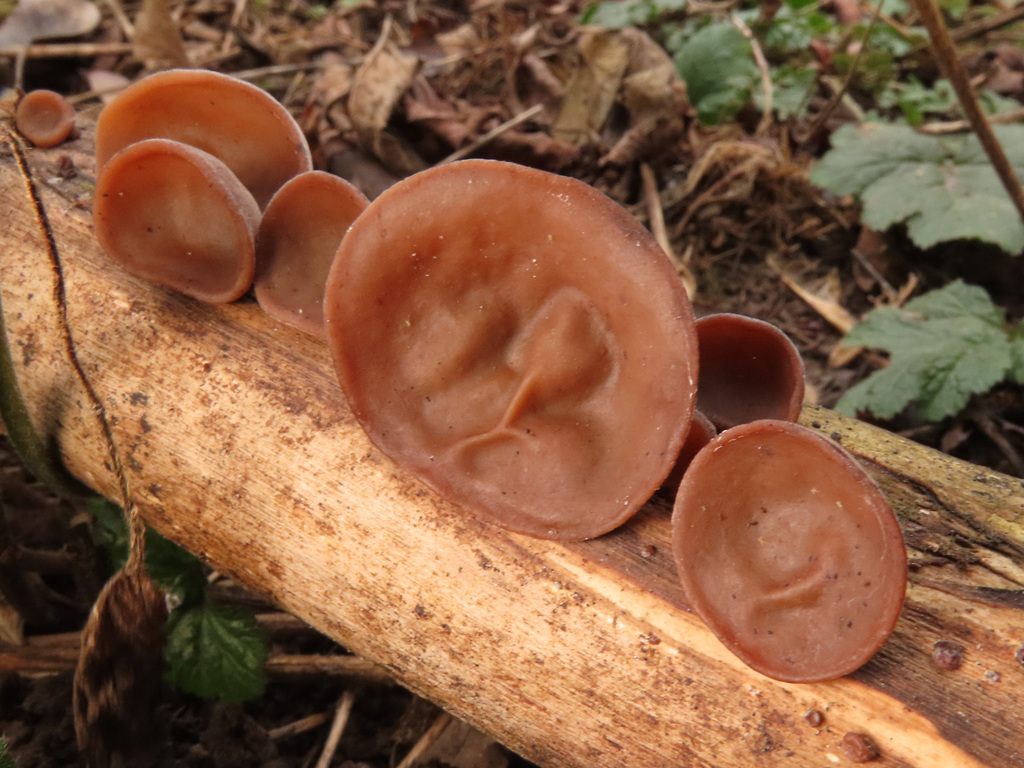
A rubbery, ear-shaped brown jelly fungus, mostly on elder in Europe. It dries hard and revives when soaked. The closely related Asian wood ears (A. heimuer, A. cornea) are among the most-eaten mushrooms on Earth.
Auricularia auricula-judae, commonly known as wood ear, jelly ear or historically as Jew's ear, is a species of fungus in the order Auriculariales. Basidiocarps are brown, gelatinous, and have a noticeably ear-like shape. They grow on wood, especially elder. The specific epithet is derived from the belief that Judas Iscariot hanged himself from an elder tree. Wikipedia
What it can do
- iSurvives drying completely and revives within minutes of rain
- iiDecays dead branches, especially of elder
- iiiContains compounds that inhibit platelet clumping
At the table
Eatenwhole fruiting body (rehydrated briefly, cooked)
Edible and widely eaten cooked, but soak dried wood ear for only a few hours, in the fridge. Wood ear soaked for days at room temperature has caused fatal bongkrekic-acid poisoning from bacterial contamination (Burkholderia gladioli), with deaths reported in China. It thins the blood mildly. There are no deadly lookalikes; other jelly fungi such as witches' butter and Exidia are not dangerous.
In the medicine cabinet
| Tradition | Use |
|---|---|
| Traditional Chinese medicine | Mu'er taken to 'move blood' and nourish the lungs and stomach |
| European folk medicine | Boiled in milk for sore throats; used as eye poultices (recorded in early modern herbals) |
Weight of evidence
Traditional. Long historical use; little or no modern clinical evidence.
Active compounds
polysaccharides (glucans), adenosine-like antiplatelet compounds
Fruiting body & spores
Spores
Spore print white; spores sausage-shaped (allantoid), smooth, about 15–23 × 4–8 µm
- Dispersal
- Wind-borne basidiospores from the smooth inner surface
How to cultivate it
Hardiness (USDA zones)
- Light
- Shade outdoors; indirect light indoors
- Water
- High humidity; tolerates drying between rains
- Soil
- Hardwood logs (elder, oak, beech) or supplemented sawdust bags
- Propagation
- Plug or sawdust spawn
- To harvest
- Sawdust bags about 2 months; logs 6–12 months
- Climates
- Temperate, Subtropical
- 1Inoculate fresh hardwood logs with plug spawn, or sterilised sawdust bags with spawn
- 2Incubate at about 22–28 °C until colonised
- 3Cut slits in bags (or water logs) and keep humidity high at about 18–28 °C
- 4Pick ears when fully expanded, then dry them for storage
Where it lives
Recorded sightings
—
geo-referenced records in GBIF, from museums, herbaria and field observers.
Native range
Europe, on elder (Sambucus) and other hardwoods; East Asian 'mu'er' is now treated as A. heimuer
Drag the globe to turn it. Dots are where records exist, not a range map; darker means more records.
In the old herbals & bestiaries
Woodcuts and engravings matched from the Source Library’s scanned books by name. Plates marked “relative” show a close kin rather than this exact species. Click a plate to read the page it came from, with translation.

In the stacks
Searching the stacks…
Every page naming Auricularia auricula-judae in the Biodiversity Heritage Library →
Marginalia
Its name comes from the medieval legend that Judas Iscariot hanged himself from an elder tree, whose ears grew from it after. 'Judas's ear' was garbled to 'Jew's ear' in English. Chinese texts describe growing mu'er on logs from at least the Tang dynasty (7th century CE).
Curiosity
Dried wood ear can expand to several times its size within an hour of soaking.
Kinship
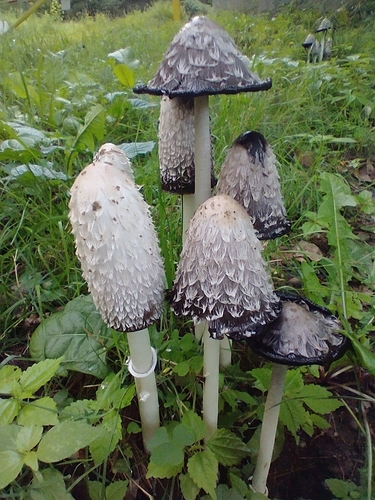

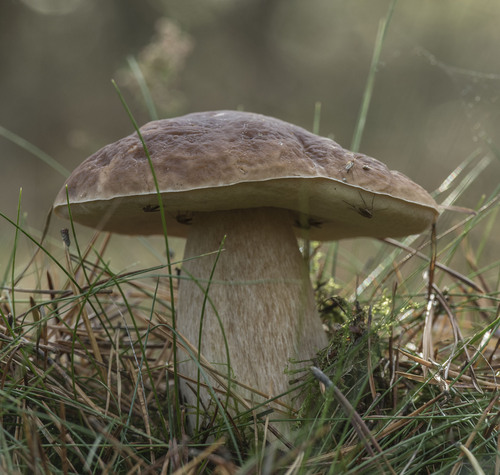
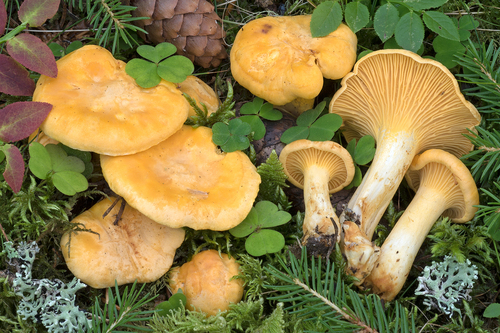
Photographs: iNaturalist contributors under the licences shown. Records: GBIF.org. Historical plates: Source Library (CC BY-SA 4.0; originals public domain). Summary text: Nature Library editors and Wikipedia (CC BY-SA). Medicinal and edibility notes are historical and educational, not advice. iNaturalist taxon 50813.